

Mental health in the age of artificial intelligence…Does technology replace human relationships?
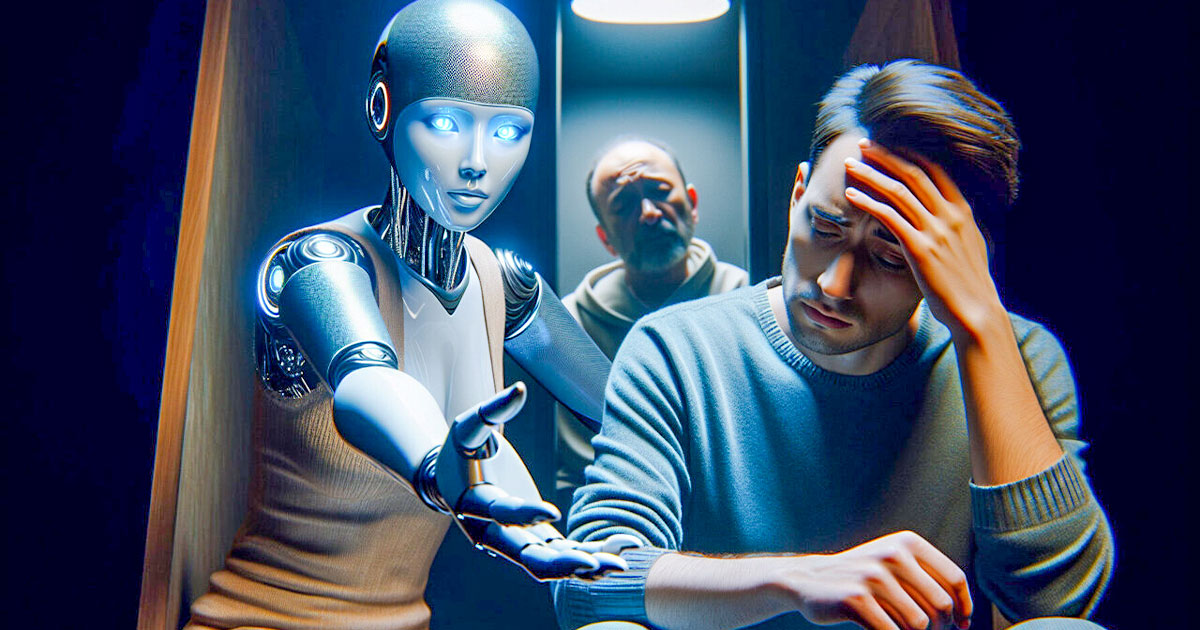

Mental health in the age of artificial intelligence.. Does technology replace human relationships?
The world is witnessing a rapid expansion in the use of artificial intelligence applications in various aspects of daily life, from searching and providing information, to providing emotional support and forming virtual friendships. With the emergence of chatbots and virtual companions, new patterns of relationships between humans and technology have begun to form, which raises increasing questions about the impact of these developments onmental health__, happiness, and quality of life.
In this context, a recent study addressed the relationship between artificial intelligence and human happiness, and discussed whether the connections created with chatbots and virtual companions can replace traditional social relationships.
Why do some people turn to virtual companions?
With increasing feelings of loneliness and social isolation among some groups, artificial intelligence applications have begun to provide a space for continuous interaction and emotional support without judgment or social pressure, which has led millions of people to consider them as virtual companions.
Studies indicate that the Replika platform, which presents itself as a “smart friend,” has more than 42 million users around the world. One study related to the development of relationships with artificial intelligence also showed that 68% of users of chatbots consider them similar to humans to some degree, while 90% of them believe that they are intelligent, and 78% believe that they are able to show empathy, while 75% believe that they possess some kind of awareness.
These indicators reflect the extent of the transformation that the concept of human communication is witnessing in light of the rapid development of technology, which opens the door to broader questions about the nature of the relationships that can arise between humans and machines and their impact on mental health and human relations.

How has artificial intelligence changed human relations?
Artificial intelligence applications and virtual companions have begun to occupy an increasing space in some individuals’ social relationships, whether through digital friendships or romantic relationships with virtual characters.
In Japan, it is estimated that more than 1.5 million people suffer from a state of social isolation known as “hikikomori,” with some preferring to rely on virtual companions rather than traditional relationships. Reports also indicate that about 3,700 people have submitted marriage requests through theGatebox platform associated with the famous hologram character “Hatsune Miku”, while one marriage has already been registered.
These phenomena reflect the transformations taking place in the concepts of friendship and social relationships in the age of artificial intelligence, which has prompted researchers to study the impact of these new patterns of interaction on psychological health, happiness, psychological well-being, and quality of life.

Mental health and social relationships
The researchers relied on the ideas of the French philosopherPaul Ricoeur, who believes that happiness is achieved through individual achievements, as well as human relationships and interaction with society. Happiness, according to this perception, arises from mutual bonds and a sense of belonging and communication with others.
This vision is consistent with the results of a famous study conducted by Harvard University, which was based on about 80 years of data related to the lives of 268 students who entered the university in 1938. The study showed that strong social relationships are among the most important factors associated with longevity, good health, and life satisfaction, and that they represent a more important indicator of happiness and well-being than wealth or social status.

The results also indicated that close relationships contribute to reducing feelings of loneliness and delaying physical and cognitive decline, which enhances the quality of life in the long term. These results gain special importance in light of the third goal of the Sustainable Development Goals (SDGs), which is concerned with ensuring a healthy life and promoting well-being for all, as mental health and reducing social isolation have become major issues related to improving the quality of life and enhancing the well-being of individuals and communities.
In light of these results, a growing question arises about the extent to which artificial intelligence applications and virtual companions can provide the same psychological and social benefits that real human relationships give.
Can artificial intelligence replace human relationships?
Researchers believe that artificial intelligence applications and social robots can contribute to reducing feelings of loneliness and providing psychological and informational support, thanks to their ability to continuously interact, respond quickly, and adapt to the needs of users.
However, the study confirms that these technologies remain unable to provide the basic elements on which true human relationships are based, due to several fundamental reasons:
- Algorithmic simulation:The machine automatically imitates and simulates feelings.
- Incapability of legal and moral responsibility: Artificial intelligence does not have free will, and therefore cannot be held morally or legally accountable for any action or advice.
- One-sided relationships: The robot is programmed to always fulfill your desires, which deprives you of exercising “mutual moral responsibility” (such as granting care, justice, and true sacrifice to the other party), which is the obligatory condition imposed by human nature for happiness and psychological flourishing.
Researchers believe that excessive reliance on virtual companions may affect psychological health and change some traditional concepts of friendship and social relationships, which imposes the need to maintain a balance between benefiting from technology and enhancing real human bonds.
In conclusion,The rapid developments in artificial intelligence reflect a profound change in the nature of human relationships, as technology has become capable of providing new forms of support and social interaction. However, scientific and philosophical evidence indicates that genuine human connections remain an essential element for achieving happiness, psychological well-being, and enhancing a sense of belonging within a community.
In this regard,The Earth Guards Foundation highlights the importance of mental health as an integral part of sustainable development, and emphasizes that technology can represent a supportive tool for improving the quality of life, provided that human relations and community cohesion remain at the heart of efforts to build healthier and more sustainable societies for future generations.


