

Strengthening technical cooperation and training between Egypt and Sudan in the field of specifications and quality

Enhancing technical cooperation and training between Egypt and Sudan in the field of specifications and quality
TheSustainable Development Goals (SDGs)are based on supporting technical cooperation in everything that can make the lives of the peoples of the world more sustainable, and this is through the integration of the dimensions of sustainable development socially, economically and environmentally. These are the goals that are consistent with the national agenda “Egypt Vision 2030”.
This is because technical cooperation and qualifying specialized cadres contribute to raising productivity efficiency, supporting digital transformation, and strengthening infrastructure, with a focus on technological innovation, and increasing reliance on artificial intelligence applications.
Hence, the Egyptian General Organization for Standardization and Quality seeks to achieve these goals, and this is through an effective national strategy, and through the paths of international cooperation represented by the seventeenth goal: establishing partnerships to achieve the goals.
So I am following up with youThe Earth Guards FoundationIn this article, I highlight the efforts of the Egyptian General Organization for Standardization and Quality, led by Dr. Khaled Sofi, “President of the Authority and President of the International Organization for Standardization (ISO), which efforts were represented by Egyptian-Sudanese cooperation in the fields of standardization and quality; So keep reading.
Developing quality field competencies
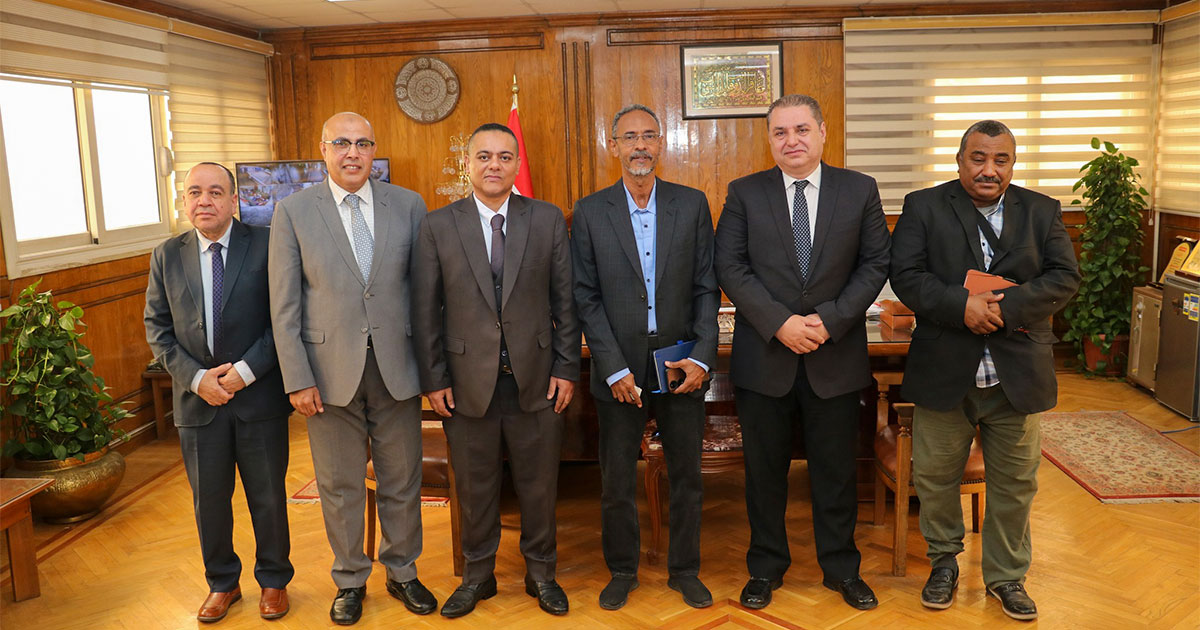
Dr. Khaled Sofi, “President of the Egyptian General Authority for Standardization and Quality, and President of the International Organization for Standardization ISO,” received a high-level delegation from the Sudanese Organization for Standardization and Metrology, within the framework of supporting bilateral relations and enhancing joint technical cooperation between the two countries.

This visit comes within the framework of Egypt’s keenness – represented by the Egyptian General Organization for Standardization and Quality – to expand its bilateral relations and exchange technical expertise, in a way that supports industrial development and keeps pace with modern technological developments, especially applications of artificial intelligence and digital transformation.
The visit focused on supporting and qualifying technical cadres, and enhancing Egypt’s regional and international role in the quality system, in line with “Egypt Vision 2030,” which seeks to achieve a green economy and achieve all Sustainable Development Goals (SDGs), especially in light of the rapid changes witnessed in the fields of modern technology.
In this regard, Dr. Khaled Sofi, “President of the Egyptian General Organization for Standardization and Quality, and President of the International Organization for Standardization ISO,” welcomed the visit of the Sudanese delegation, and stressed the Authority’s keenness to enhance ways of cooperation with the Sudanese Organization for Standardization and Metrology, based on the close historical relations between the two countries.
Field tour of the Authority’s laboratories
The visit included a field tour inside the laboratories of the Egyptian General Authority for Standardization and Quality, where the Sudanese delegation was briefed on the modern technical capabilities, starting with the chemical laboratories in which tests are conducted according to the latest standard specifications, passing through the petroleum, plastic and rubber materials laboratories, all the way to the engineering laboratories specialized in safety and efficiency tests, including the resistance of materials to heat and electricity, the efficiency of lamps, and the degrees of protection for electrical appliances.

Enhancing cooperation in the textile sector
The tour also included a visit to textile factories, where the latest technological breakthroughs and international measuring devices were reviewed, while confirming the readiness of the factories to provide technical support and specialized training to Sudanese cadres, ensuring that the products conform to the highest international standards.
In the same context, the feasibility of establishing a joint laboratory for environmental testing of textile products was discussed, a project welcomed by the Sudanese Standards and Metrology Authority. This is in preparation for its implementation in the next stage, based on joint technical cooperation.
A strategic step to deepen regional cooperation
This visit embodies the efforts of the Egyptian General Authority for Standardization and Quality in enhancing regional and international cooperation, and exchanging technical and training expertise, in a way that contributes to developing the industry and achieving integration between countries, with a focus on raising the efficiency of industrial performance and providing a sustainable industrial environment.
From the above, it shows us that technical cooperation is a strategic dimension and a real tool for building industrial systems that are more competitive and sustainable in light of the rapid transformations that the global economy is witnessing. Because enhancing integration between standards and quality institutions in Arab and African countries contributes to unifying technical standards, raising the quality of products, and facilitating the movement of regional trade, in a way that supports the Sustainable Development Goals (SDGs) related to industry, innovation, and building strong institutions.
From this standpoint,The Earth Guards Foundationsees this partnership between the Egyptian General Authority for Standardization and Quality and the Sudanese Authority for Standardization and Metrology as a practical model of cooperation based on knowledge transfer and capacity building, which opens the way for the development of industrial value chains and the promotion of economic integration regionally and internationally. In order to sustain the lives of current and future generations.


