

Health Care Authority.. The success of a new medical technology at Al-Nasr Specialized Hospital in Port Said
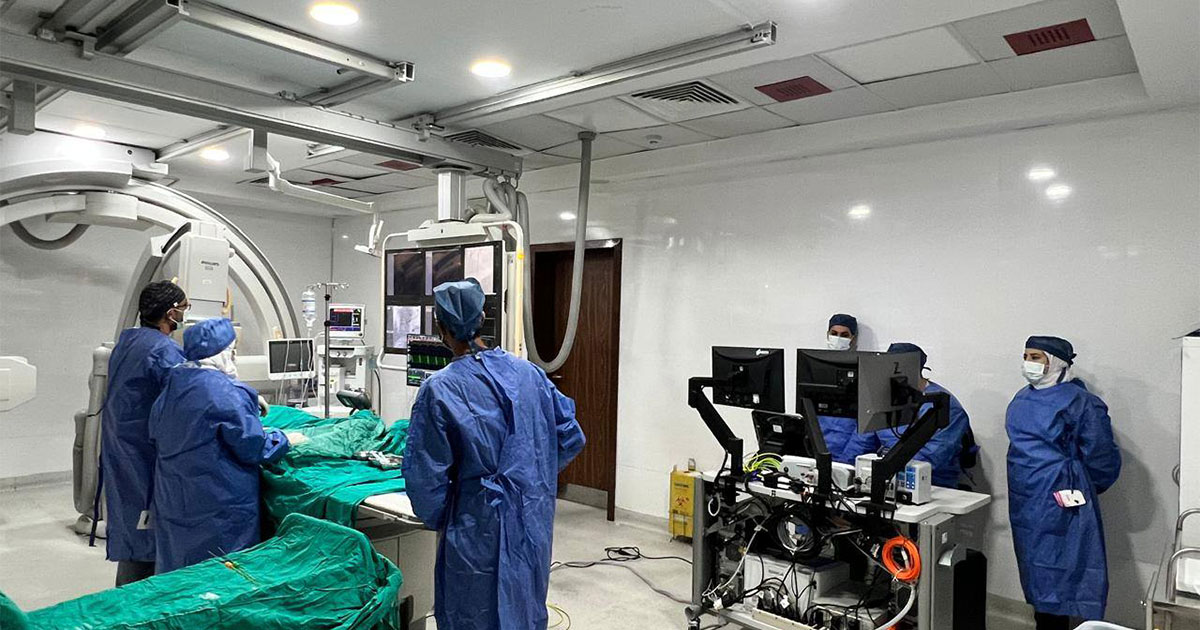

Health Care Authority.. The success of a new medical technology at Al-Nasr Specialized Hospital in Port Said
The health care system in Egypt has witnessed remarkable development in recent years, driven by a comprehensive vision aimed at building an integrated health system that ensures the availability of high-quality medical services and geographical and social justice. The state has tended to expand the establishment and development of hospitals and primary care units, and to modernize the health infrastructure, in addition to investing in the human element through continuous training and qualification of medical personnel, which contributes to raising the efficiency of performance and improving the level of services provided to citizens.
This trend is an essential pillar for achieving the Sustainable Development Goals (SDGs), as health care is closely linked to quality of life, economic productivity, and comprehensive human development. The comprehensive health insurance system also reflects a practical model for integrating the social dimension with the economic, by providing advanced health services without financial burdens, which enhances the principle of health justice and confirms the state’s commitment to achieving sustainable development that puts people at the heart of its priorities.
A new therapeutic technique for the first time in the Canal Region
In a new medical achievement that reflects the qualitative development in the level of health services provided within the facilities of the General Authority for Health Care under the leadership of Dr. Ahmed Al-Sobky, the General Authority for Health Care announced the success of performing a precise and advanced medical intervention known as “Cardio Neuroablation”, for the first time within the Canal Territory, under the umbrella of the comprehensive health insurance system, at Al-Nasr Specialized Hospital in Port Said Governorate.
The authority explained that this advanced medical intervention was performed on a woman who was suffering from repeated fainting spells as a result of a severe slowdown in the heartbeat, as the nerve ganglia cauterization technique is one of the latest global therapeutic methods used in cases of fainting associated with increased activity of thevagus nerve, without the need to implant a permanent pacemaker.

Precise medical intervention under the umbrella of comprehensive health insurance
For his part, Dr. Ahmed Al-Sabki, Chairman of the General Authority for Health Care, explained that this procedure is done through cardiac catheterization, and relies on cauterization of the endings of the vagus nerve after a careful and comprehensive assessment of the condition, ensuring that the most suitable patients are selected for this type of intervention, stressing that the technology represents a qualitative leap in the treatment of heart rhythm disorders.
Dr. Ahmed Al-Sabki indicated that the cost of this advanced medical intervention amounts to about 400 thousand pounds outside comprehensive health coverage, and it was conducted entirely under the umbrella of health insurance, within the framework of the authority’s commitment to providing the latest international medical technologies to citizens without burdening them with any financial burdens, and in a way that consolidates the principle of health justice.
A remarkable development in the level of medical equipment and technical capabilities
The head of the Health Care Authority confirmed that the success of this intervention reflects the remarkable development in the level of medical equipment and technical capabilities witnessed by the Authority’s hospitals and the great progress in the levels of health care, in addition to the availability of qualified and trained medical personnel at the highest level, which contributes to the localization of precise interventions within the governorates and reducing the need for referral outside the region.
Noting that the Authority’s possession of qualified and trained medical personnel at the highest level is the basic foundation for the success of localizing advanced therapeutic technologies within the Authority’s facilities, he pointed out that the continuous investment in training and continuing medical education is directly reflected in the quality of health services provided, and enables medical teams to implement the most accurate medical interventions in accordance with the latest international standards, ensuring the safety of patients and achieving the best therapeutic results within the comprehensive health insurance system.

Elite experts and specialists in electrocardiology
This precise medical intervention was carried out under the supervision and participation of an elite group of specialists in electrocardiology, headed by Dr. Ahmed Taher, Professor of Critical Cases and Cardiac Electrophysiology at the Sharif Mokhtar Unit in Kasr Al-Aini, and Dr. Mohamed Atta, Electrocardiology Consultant at Al-Nasr Specialized Hospital, along with the hospital’s distinguished nursing team, which included Professor Aya Ibrahim Al-Gharib, a nursing specialist, and Professor Mayada Nasser Lawandi, a technician. Nursing.
In conclusion, this precise medical achievement reflects the major transformation that the health care system is witnessing in Egypt, as advanced therapeutic techniques are no longer limited to limited centers, and have become part of integrated health services that reach citizens within their regions.
The success of the nerve ganglion cauterization procedure at Al-Nasr Specialized Hospital demonstrates the ability of the comprehensive health insurance system to absorb the latest international medical practices and localize them within the country’s hospitals efficiently and safely.
For its part,The Earth Guards Foundation confirms that investment in health infrastructure and qualified medical personnel constitutes a basic foundation for achieving health justice and supporting comprehensive Sustainable Development Goals (SDGs) that place people at the heart of their priorities, especially the goal related to providing good health and well-being, through a modern health system that balances the quality of service, its sustainability, and its availability without financial burdens, including Enhances confidence in national health institutions.


