

The Minister of Agriculture meets with veterinary medicine leaders to discuss ways to maintain health and food security
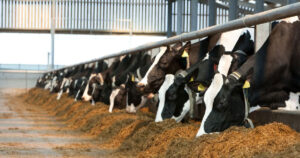

The Minister of Agriculture meets with leaders of veterinary medicine to discuss ways to maintain health and food security
Food security represents one of the pillars of societal stability, as it is directly linked to human health and quality of life. At the heart of this concept stands livestock and poultry as a major source of safe and nutritious protein, which makes caring for them a health necessity before it is an economic option.
The higher the efficiency of the system ofveterinary carevaccination and control, the more this will reflect positively on food safety, the risk of common diseases will decrease, and the immunity of all society will be strengthened. On the contrary, any negligence in this file may open the door to health and economic repercussions that directly affect the citizen.
Hence, developing veterinary services, supporting small breeders, and raising production efficiency extends its impact to enhancing the concepts of sustainability in resource management and achieving a balance between human, animal, and environmental health. The development of livestock according to modern scientific foundations represents a long-term investment in the health of society, and the consolidation of a development path that places food security at the top of priorities, in line with the Sustainable Development Goals (SDGs), especially the second goal related to eliminating hunger, and the third goal related to good health and well-being, through a safe and sustainable food production system.
Field action to support livestock
In this context, Mr. Alaa Farouk, Minister of Agriculture and Land Reclamation, held an expanded meeting with the leaders of the General Authority for Veterinary Services, the Ministry’s production, wealth and animal health officials, and the directors of the veterinary medicine directorates in all governorates of the Republic, in the presence of Engineer/ Mustafa Al-Sayyad, Deputy Minister of Agriculture, in order to follow up on the progress of work and determine the priorities of the next stage in the livestock and poultry wealth file.
The Minister of Agriculture emphasized the utmost importance of enhancing continuous cooperation and coordination with governors throughout the republic, stressing that concerted efforts between the directorates of veterinary medicine and agriculture and the executive bodies is the basic guarantee for the success of vaccination and epidemiological investigation campaigns and overcoming the obstacles facing veterinarians in the field, to ensure that veterinary services and national initiatives reach all breeders in villages, hamlets and remote areas.

Activating the role of veterinary extension to spread awareness
The Minister stressed that the basic foundation for success is integration, cooperation, and teamwork, indicating that the ultimate goal is to support breeders, especially young ones, directing the necessity of continuous communication with them on the ground, and activating the role of veterinary guidance to raise their awareness and inform them of the best breeding practices.
He also directed to increase livestock vaccination rates to include villages, hamlets, and remote areas through the “house to house” system, and to cover markets and farms with intensive vaccination campaigns to raise the immunity of herds against epidemic diseases, which has a positive impact on supporting good health for citizens within the framework of supporting the third goal of the Sustainable Development Goals (SDGs) on good health and well-being.
Facilitating communication with veterinary units and devices
The Minister directed the activation of the central and subsidiary operating rooms to follow up on any reports and deal with them immediately, in addition to expanding the spread of the hotline to facilitate communication between breeders and veterinary units and devices, around the clock.
The meeting also dealt with strategic files to increase livestock productivity, as the Minister directed the need to strengthen the initiative to develop dairy collection centers to ensure the quality of the final product, while expanding the project to improve breeds and artificial insemination to maximize meat and dairy productivity, which contributes significantly to achieving food security.
Raising production efficiency and combating epidemics
The Minister also noted the importance of educating poultry breeders about switching to a closed rearing system, because of its significant impact in raising production efficiency and protecting poultry from weather fluctuations and diseases. It is an intensive production method within a fully controlled environment (circular sheds or ponds), relying on electronic management of ventilation, heat, and lighting.
The Minister of Agriculture stressed the need to continue ongoing epidemiological investigations and close follow-up of markets, and to develop proactive plans to confront any challenges, stressing the interest in training and qualifying veterinarians and raising their technical and practical capabilities to keep pace with modern developments and technologies, which is reflected in achieving the sixteenth goal of the Sustainable Development Goals (SDGs) related to achieving peace, justice and strong institutions.
Based on the above, food security and public health represent the cornerstone of the state’s strategies to achieve food security, as recent experience in developing livestock and poultry shows how effective veterinary care and continuous vaccination can be the first line of defense for human health and food quality.
The article highlights the importance of integration between executive agencies, veterinary medicine directorates, and small breeders, while adopting modern scientific production methods, to enhance productivity and establish sustainable practices that protect the environment and support the long-term well-being of society.
The success of initiatives in field campaigns, veterinary extension, breed improvement, and artificial insemination shows how government effort meets community partnerships and civil society associations, in order to achieve institutional integration and facilitate the spread of awareness and exchange of knowledge.
From this standpoint,The Earth Guards Foundation confirms that the process of strengthening livestock and vaccinating them against epidemic diseases constitutes a living model for achieving good health for citizens within the framework of supporting the third goal of the Sustainable Development Goals (SDGs) on good health and well-being, and strengthening cooperation among all concerned parties contributes to achieving the seventeenth goal of the Sustainable Development Goals (SDGs) in question. By establishing partnerships to achieve the goals, and the intensification of these efforts reflects the state’s keenness to continuously achieve food security and health sustainability for citizens.


