

Artificial intelligence in emergency medicine…a health revolution for a more sustainable future
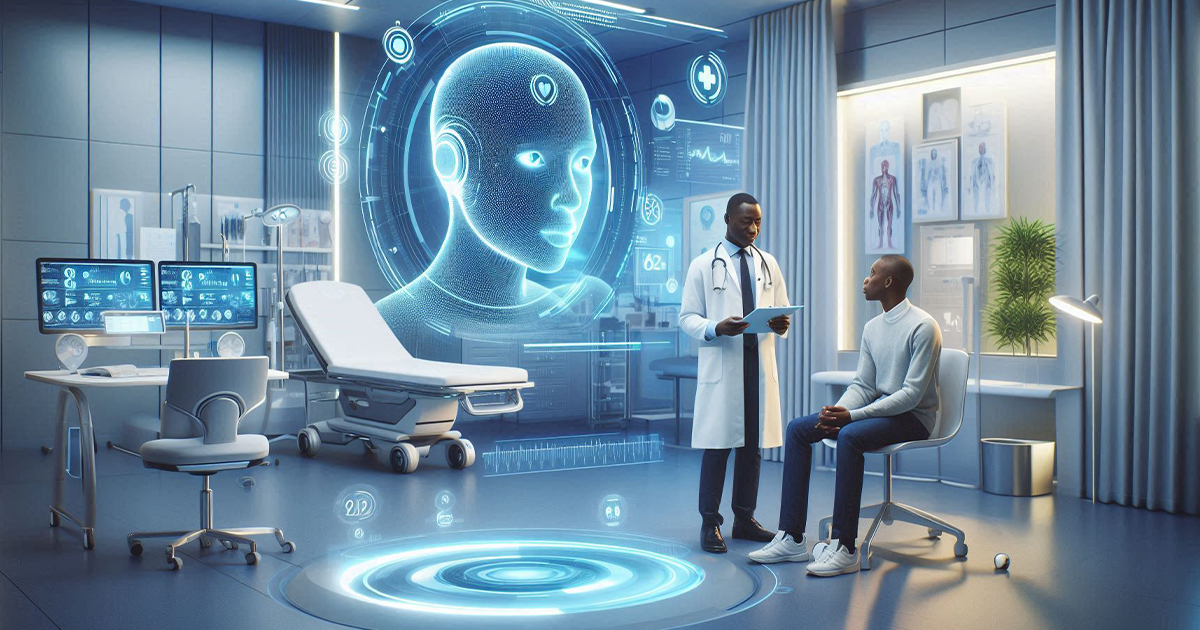
Artificial intelligence in emergency medicine…a health revolution for a more sustainable future
Artificial intelligence has become a global engine that is reshaping the field of health care. It is a field that combines computer science, mathematics, and advanced algorithms. To give doctors tools to learn, which helps them make decisions in complex medical situations.
In emergency departments – in particular – artificial intelligence has become an innovative medical solution, as it contributes to improving medical diagnosis, increasing the speed of decision-making, and managing medical personnel with high efficiency.
In this context, unprecedented computing power and electronic health data helped transform artificial intelligence from a theoretical idea into an element of medical practice. Although its adoption is still limited – due to regulatory challenges and technical problems – its future appears promising in supporting health emergencies and saving lives.
Hence a fundamental question arises: How can this technology contribute to building more resilient and sustainable health systems, in line with the Sustainable Development Goals (SDGs), especially the third goal related to good health and well-being? Therefore, in this article,The Earth Guards Foundation will discuss how artificial intelligence is changing the future of emergency medicine, the benefits and challenges it provides, and measuring the extent of its importance in achieving global health sustainability.
Applications of artificial intelligence in emergencies
In emergency departments where time means life or death, artificial intelligence offers patients exceptional value; Because its algorithms have proven their ability to analyze huge data quickly and accurately. Which helped doctors prioritize patients more efficiently.
It also highlights its usefulness and necessity in predicting the outcome of critical cases, such as strokes or sepsis. This increases the chances of survival and reduces the rates of medical errors.
In the field of medical imaging, artificial intelligence applications have reached a mature level. It can do deep learning, read X-rays, and perform CT and ultrasound scans with high accuracy.
All of these tools have proven their ability to detect cerebral bleeding, fractures, or pulmonary collapse in record time. This speeds up the start of treatment steps and reduces the traditional delay in medical diagnosis. To enhance doctors’ confidence, artificial intelligence techniques have emerged that allow understanding the mechanism of decision-making.

Clinical decision support systems also play a pivotal role in the steps of integrating real-time data into medical records. In order to generate instant recommendations. It has already been successful in predicting sudden cardiac arrest and improving antibiotic management for sepsis patients.
Applications are not limited to hospitals; It has become possible to use chatbots to guide patients and analyze the language of communications to speed up the detection of cardiac arrests in emergency centers. The concept of a “digital twin” also opens the door to virtual models of the patient that simulate the course of the disease and its response to treatment. Which enhances opportunities for personalized and effective care.
Benefits of Artificial Intelligence for Healthcare
The great advantage of artificial intelligence lies in its speed and ability to process huge amounts of data, which means faster and more accurate diagnosis at critical moments that cannot wait. Some models have proven superior to human specialists in specific tasks; Which makes it a real supporter of health systems.
Also, its ability to predict the number of patients expected to arrive in emergency departments helps hospitals manage human and material resources efficiently. Thus reducing congestion, enhancing health equity, and preparing for health disasters; All of this is in direct harmony with the Sustainable Development Goals (SDGs).
On the other hand, artificial intelligence can reduce the psychological and professional pressure that may fall on doctors and nurses, by automating administrative tasks and creating automated medical summaries. So that the result is reduced professional burnout, improved patient satisfaction, and provided a more equitable work environment for health sector workers.

These technologies can also analyze medical errors or adverse cases, which gives health institutions valuable data to develop evidence-based policies, enhance transparency and accountability, and drive continuous improvement. Thus, artificial intelligence becomes part of the process of building more sustainable and humane health systems.
Ethical and technical challenges
Despite these capabilities, integrating artificial intelligence into medical emergencies is not without challenges. The most prominent of which are: data quality; AI models are vulnerable to inherent biases in databases, and this may lead to the marginalization of some groups, such as women and minorities. This contradicts the principle of health justice, which is a fundamental pillar of sustainability.
Developing countries also face great difficulties in integrating smart systems into their health infrastructure, and even in developed countries, decision support systems may face difficulty adapting to daily medical workflow.
Data privacy also remains a serious concern. Because these automated models rely on huge amounts of sensitive medical information. And with what is known as the “Black Box” problem, which makes the mechanisms of artificial intelligence decision-making ambiguous and difficult to interpret; The need to enhance transparency and accountability is increasing; This is why there is a discussion about the necessary legislation and oversight to ensure that these systems are used in a safe and ethical manner.

Towards a healthier, more sustainable future
Artificial intelligence represents a revolutionary force capable of creating a qualitative shift in medical emergencies. It enhances efficiency, increases the speed of medical diagnosis, and reorganizes resources in a more equitable and sustainable way. However, there remains an urgent need for an ethical and legislative framework that governs its use and ensures that technology is in the service of humans and not against them.
Therefore, it is important for artificial intelligence to have a strong relationship with the goals of sustainable development. So that we can see ways to improve health care in a balanced manner, and this is what callsThe Earth Guards Foundation to confirm that this digital revolution is not a luxury, but rather a necessity for a more equitable and sustainable health future, where technology integrates with human values; In order to protect humans and their environment at the same time.


