

Localizing the Mobile Phone Industry: Important Steps to Support the Egyptian Economy
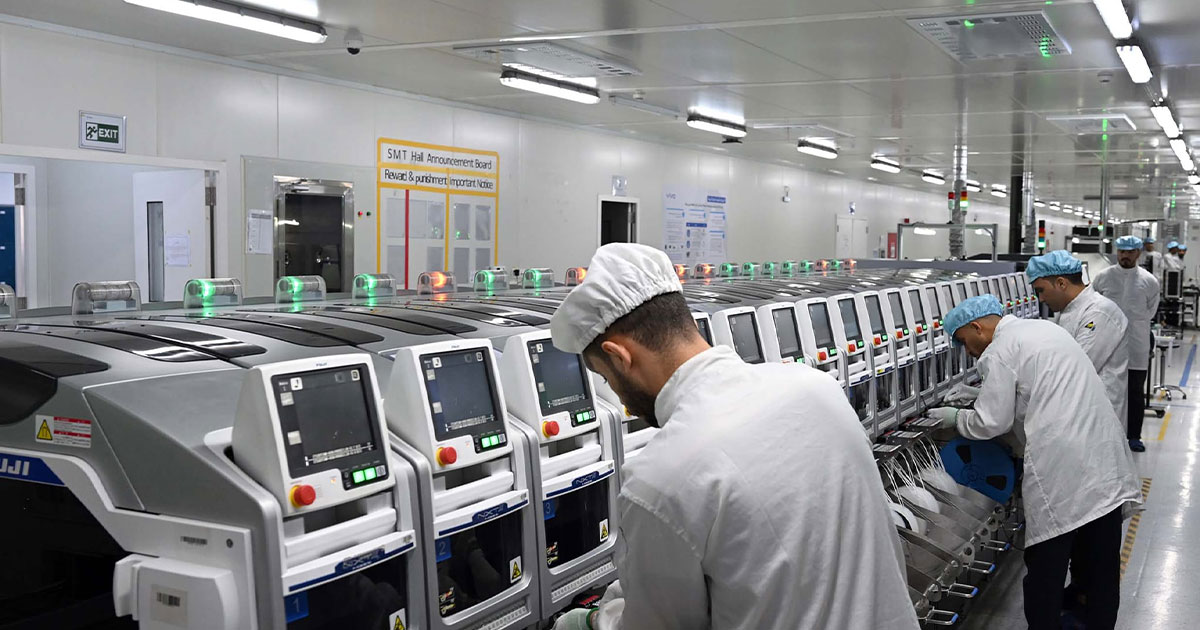

Localization of the mobile phone industry…important steps to support the Egyptian economy
In recent years, the state has worked to achieve comprehensive industrial development as one of the basic drivers of comprehensive, sustainable development. In this context, the state has sought to localize technological industries as part of its efforts to localize technological industries, as it is one of the most important axes of modern industrial transformation. The Ministry of Communications and Information Technology has succeeded in making Egypt a destination for attracting global investments in the mobile phone industry in light of the implementation of the Egypt Manufactures Electronics initiative.
The government issued a set of strong policies to support local manufacturing in addition to a wide package of government incentives that contributed to expanding the production base and increasing manufacturing capacity, which received wide international praise.It enhanced the productivity of national industry.
International expectations for the growth of the phone manufacturing sector in Egypt
These efforts have achieved great international resonance, as Fitch Solutions expects strong growth for the mobile phone market in Egypt by 2031, with the expansion of local assembly and supportive government policies, which strengthens Egypt’s position as a regional export center.
The agency also indicated that these partnerships help increase production and enhance confidence in Egypt as a manufacturing base with regional export potential to Africa and the Middle East region.

As Euromonitor confirmed, Egypt is close to becoming a leading center for manufacturingsmart phonesin the Middle East region, with intensive efforts being made to increase the proportion of local components.Instead of focusing on assembly only.
Business Insider Africa also indicated that the mobile phone market in Egypt is witnessing remarkable growth, thanks to the positive policies adopted by the government, such as tax exemptions and improving infrastructure.
Government programs and incentives contributed to attracting major brands
In support of investment in the localization of the mobile phone industry in Egypt, the government issued a package of government programs and incentives that contributed to attracting major international brands that led to the expansion of the local production base. The phone industry entered the export burden rebate program, and also obtained an exemption from the National Telecommunications Authority’s fee on components necessary for manufacturing.
In addition to unifying the customs tariff on some production requirements within the limits of 2% instead of10%, in addition to an exemption from the Ministry of Finance and Development fee on parts and components needed for manufacturing and locally manufactured phones, provided that the value added and export percentage is 40%.
Egypt manufactures electronics
The state had launched in 2016 the “Egypt Manufactures Electronics” initiative, which aimed to develop the electronics industry and make it one of the main pillars of economic growth and a driver of exports, in addition to the system for strengthening the governance of telephone devices in January 2025, to localize the mobile phone industry and combat illegal practices, through inquiring, registering, and paying fees electronically through the “Telefifi” application.

The value of mobile phone exports increased 92-fold
These government efforts and measures have resulted in enhancing local production and increasing the value of exports.The value of exports of mobile phone devices and components has increased by about 92-fold, to reach $12 million in 2024, compared to $0.129 million in 2019, in addition to attracting 15 brands to manufacture mobile phones locally with a production capacity estimated at about 20 million units annually, and with investments of about $200 million.
The Egyptian markets are filled with a group of electronics factories belonging to international brands that invest in the mobile phone industry and contribute to increasing local production. The value of their investments amounts to more than 800 million dollars, with a production capacity of more than 18 million units annually.
The Earth Guards Foundation appreciates the efforts made to advance the industrial sector and localize industries, especially the technological industries, because of their major role in achieving comprehensive sustainable development and increasing production.Locally, reduce dependence on imported products, and make Egypt a leading center for smartphone manufacturing in the Middle East, with efforts to increase local components in line with Egypt’s Vision 2030.


