

Vision 2030: How Public Park Development Contributes to Sustainable Development Goals

Vision 2030.. How does the development of public parks contribute to achieving the Sustainable Development Goals (SDGs)?
Public parks are one of the most charming and beautiful family destinations. In addition to being entertainment places, they represent bridges that connect people to nature and green spaces. Therefore, Cairo is witnessing a continuous development movement in public parks, as it includes nearly 300 distinct public parks, and the development movement included the Obelisk Park located on the banks of the Nile and the Azbakeya Park.
The government opened a few weeks ago one of the largest public parks in Egypt after its development, which isFustat Hills Park, and the government is continuing the major development movement by developing the Zoo and Orman Gardens, which stand as witnesses to the charming Biodiversity of the planet.
Revival projectDeveloping the Zoo and Orman Parks
In this context, the government is following the park development movement, and therefore the Zoo and Orman Parks are undergoing a comprehensive development and restoration process that represents a qualitative leap aimed at transforming the two parks into a global educational and entertainment destination in line with modern standards.
The project is being implemented in accordance with an integrated vision to restore them to their regional and international status, and millions of Egyptian families are awaiting the official announcement of the opening date of the Zoo and Orman Park in Giza after the end of the comprehensive development process.
Dr. Mostafa Madbouly follows up on the development plan
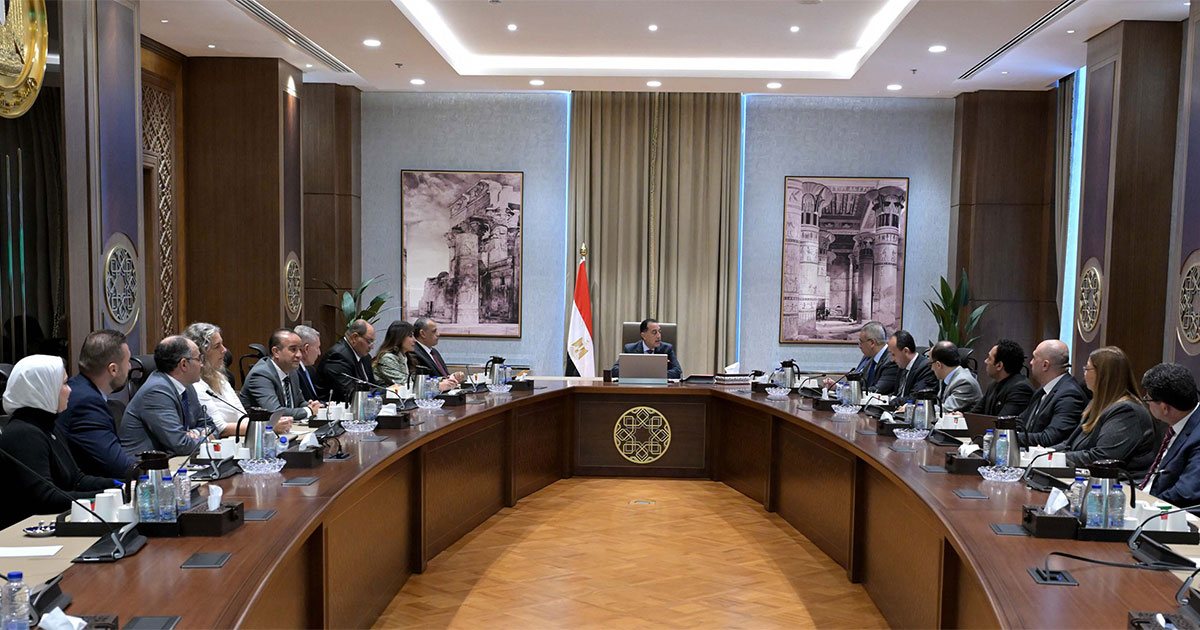
Concerning this, Prime Minister Dr. Mostafa Madbouly held a meeting to follow up on the steps of implementing the project to develop the Zoo and Orman Parks in Giza Governorate within the comprehensive plan aimed at developing the parks.General.
In the presence of Engineer Mohamed Salah El-Din Mustafa, Minister of State for Military Production, Mr. Alaa El-Din Farouk, Minister of Agriculture and Land Reclamation, Ms. Catherine Drucker, Director of the Zoo for Animal Affairs, and Mr. Alban Hesko, Director of the Zoo.
Dr. Mostafa Madbouly stressed that the government is following with great interest the pace of implementing the project to develop the two parks, based on its importance in light of their distinctive historical character, and looks forward to reviving them again, completing the development process according to the established time plan, and managing and operating them in an optimal way.
Dr. Mostafa Madbouly said: This project represents a dream for the government that we are all working to achieve… and our goal is for it to see the light soon, with professional management from the private sector, which preserves the investments being pumped in.
Review of stagesProject
The meeting dealt with the scheduled development stages, which included the adoption of specialized international organizations for designs, restoration and development work, such as the European Association of Zoos (EAZA), the World Association (WAZA), and the African Union (PAAZA).
In addition to granting them international certificates of trust, and following an advanced scientific methodology in treating the unique natural environment in the two parks, in addition to training the staff working in the two parks according to the highest international standards, in keeping with the development vision, ensuring that operation is compatible with international standards, and selecting the most efficient and qualified personnel.
It is worth noting that the development stages did not neglect the process of transporting animals to temporary housing to ensure their safety until the completion of development, and opened the way for the start of development workAfrican savannahand the Asian region, within a comprehensive modernization plan.To provide integrated natural environments with international standards.
The official spokesman for the Presidency of the Council of Ministers pointed out that the consultants of the revival and development project and representatives of the company operating the two parks proposed during the meeting a return to the original name to be “Animal Garden” and “Orman Garden”, in order to adhere to their identity among the masses of citizens who have pioneered it for decades.
Project Executive Plan
It should be noted that the project is based on an area divided between the “Orman Park” and the “Zoo” in addition to the service and infrastructure areas implemented in the project. The presentation presented to the Prime Minister explained that the project is divided into 3 main areas:
- The first area on an area of 55.36 acres.
- The second area has an area of 37.76acres.
- The third area, on an area of 20.23 acres.
In conclusion, theThe Earth Guards Foundation believes that the project to develop the Zoo and Orman Parks is achieving balanced progress in its various elements, starting with construction and infrastructure work, all the way to operational preparations, and this comes within the framework of government efforts to reopen the two parks in a modern way worthy of their historical and environmental value. It places them on the map of global parks, which reflects the tireless work to achieve comprehensive Sustainable Development Goals (SDGs) socially, economically and environmentally, in line with Egypt’s Vision 2030.


