

Expanding the use of frequency spectrum…an unprecedented step in the development of communications in Egypt

Expansion in the use of frequency spectrum…an unprecedented step in developing communications in Egypt
In recent years, the development of communications has become a pivotal element in building a modern economy capable of keeping pace with global digital transformations. Advanced telecommunications networks are not only useful for improving the quality of calls or Internet speed, but they represent a basic basis for providing advanced educational and health services, promotingelectronic commerce, and supporting small projects and digital innovation.
The new investments in the communications sector reflect Egypt’s commitment to strengthening its digital infrastructure, which contributes to achieving sustainable development by expanding digital inclusion, raising the efficiency of services, and preparing the environment for future applications, and putting the country on a balanced and sustainable technical and economic growth path.
The largest frequency deal in the history of the telecommunications sector
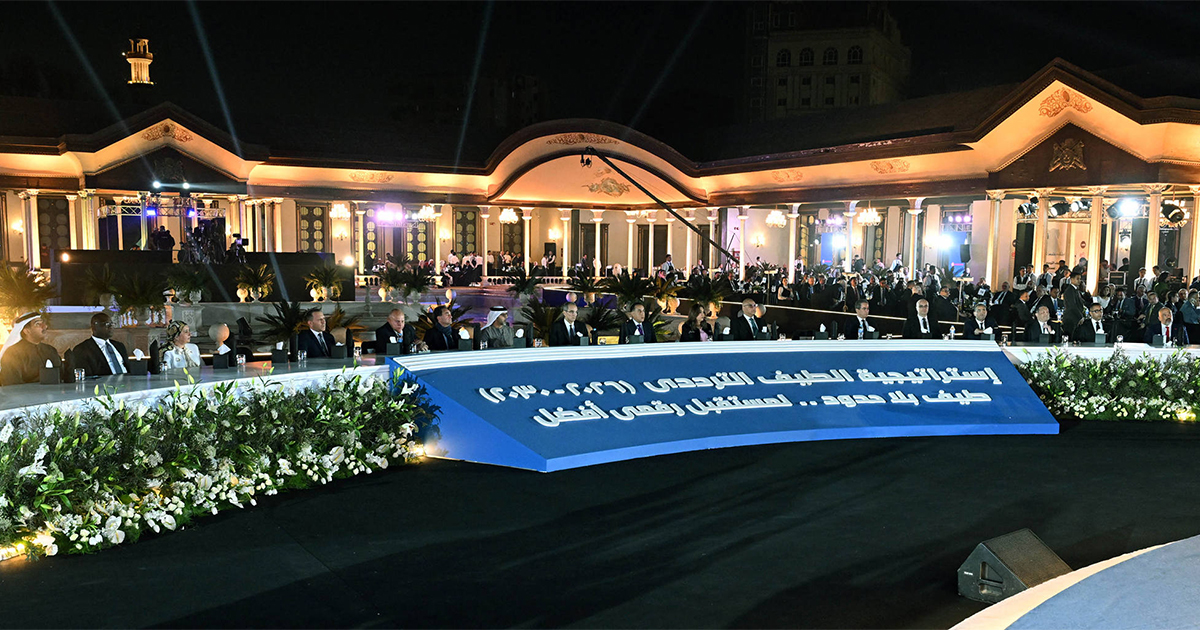
With this in mind, Dr. Mostafa Madbouly, Prime Minister, witnessed, at Muhammad Ali Palace in Shubra, the signing ceremony of the largest frequency deal in the history of the telecommunications sector since the beginning of the provision of mobile services in Egypt, which was established by the Ministry of Communications and Information Technology, in the presence of Dr. Manal Awad, Minister of Local Development, Acting Minister of the Environment, Eng. Ayman Attia, Governor of Qalyubia, Mr. Ahmed Al-Maslamani, Chairman of the National Media Authority, and Major General Hani. Mahmoud Mansour, Director of Signals for the Armed Forces, and a number of officials.
The ambassadors of the United Kingdom, the United Arab Emirates, and France, as well as a number of parliamentarians, also participated in the activities, along with many executive leaders in the telecommunications sector, and representatives of concerned bodies, authorities, and telecommunications companies in Egypt. The Prime Minister was received by Dr. Amr Talaat, Minister of Communications and Information Technology, and Engineer/Mohamed Shamroukh, CEO of the National Telecommunications Regulatory Authority.

New frequency bands for telecommunications companies
The Prime Minister attended the signing ceremony of agreements to allocate frequency spectrum to mobile operators. The deal includes providing new frequency space to the four telecommunications companies, with a total of 410 MHz. To simplify the concept, the frequency spectrum can be likened to the paths that call signals and wireless Internet take to reach users. The more bandwidth available, the more capable these networks become of dealing with larger numbers of users and providing faster and better services.
The value of the deal amounted to approximately $3.5 billion, as the volume of new frequency slots is equivalent to the total frequency slots that have been allocated to mobile companies since the start of providing mobile services inside Egypt.
A qualitative shift in the field of management and exploitation of frequency resources
This comes within the framework of the launch of the Frequency Spectrum Strategy 2026-2030, and the NTRA’s offering of the new frequency bands represents a qualitative leap in the field of management and exploitation of frequency resources, which contributes to supporting the sustainability and development of communications, improving the quality of communications services provided to citizens, as well as enhancing the quality of fifth generation services, market competitiveness, and networks’ readiness for digital transformation, in a way that supports the implementation of Egypt’s digital strategy.
It also keeps pace with the steady increase in demand for data services and advanced digital applications, supports digital innovation, and consolidates Egypt’s position as an advanced regional center in the field of communications and information technology.
Reshaping the communications infrastructure in Egypt
This massive expansion in frequency capacities comes in continuation of what was achieved in June 2025 with the launch of fifth generation (5G) services, ensuring that networks are ready to accommodate future applications.
The minister pointed out that signing agreements to make radio spectrum available today, with their enormous investment value and clear strategic significance, is not a passing technical measure, but rather a long-term strategic step, in which the state’s vision converges with the private sector partnership, to reshape the communications structure in Egypt, and the digital infrastructure, in both its parts – mobile and fixed Internet services – has always remained a fundamental pillar in the process of developing communications and building digital Egypt.
This huge step in the development of communications demonstrates that digital infrastructure is an essential pillar of comprehensive sustainable development. Opening the frequency spectrum and making additional bandwidths represents a long-term investment in the country’s ability to respond to the requirements of the digital economy and contemporary society, from digital education to smart health and advanced government services.

This achievement also highlights how partnership between the public and private sectors can create a sustainable model for growth that achieves digital inclusion, increases Egypt’s ability to compete regionally and internationally, and ensures that citizens benefit significantly from modern digital applications.
At the same time, the deal demonstrates that achieving the Sustainable Development Goals (SDGs) depends on the integration of digital infrastructure with a comprehensive vision for the economy, education, and innovation; Every additional megahertz in the frequency spectrum represents a step towards a future that is more efficient, more sustainable, and more capable of enabling citizens to truly participate in the comprehensive digital transformation journey.
For its part,The Earth Guards Foundationemphasizes the importance of this step towards developing communications in Egypt because of its major role in achieving the comprehensive Sustainable Development Goals (SDGs) in their social, economic and environmental dimensions, especially Goal (11) sustainable cities and local communities, Goal (16) peace, justice and strong institutions, and Goal (17) a decade. Partnerships to achieve the goals, and Goal (9) Industry, Innovation and Infrastructure, as well as to achieve a more advanced and sustainable digital future for current and future generations.


