

World Sustainable Development Summit 2026: an international platform to discuss sustainable transitions
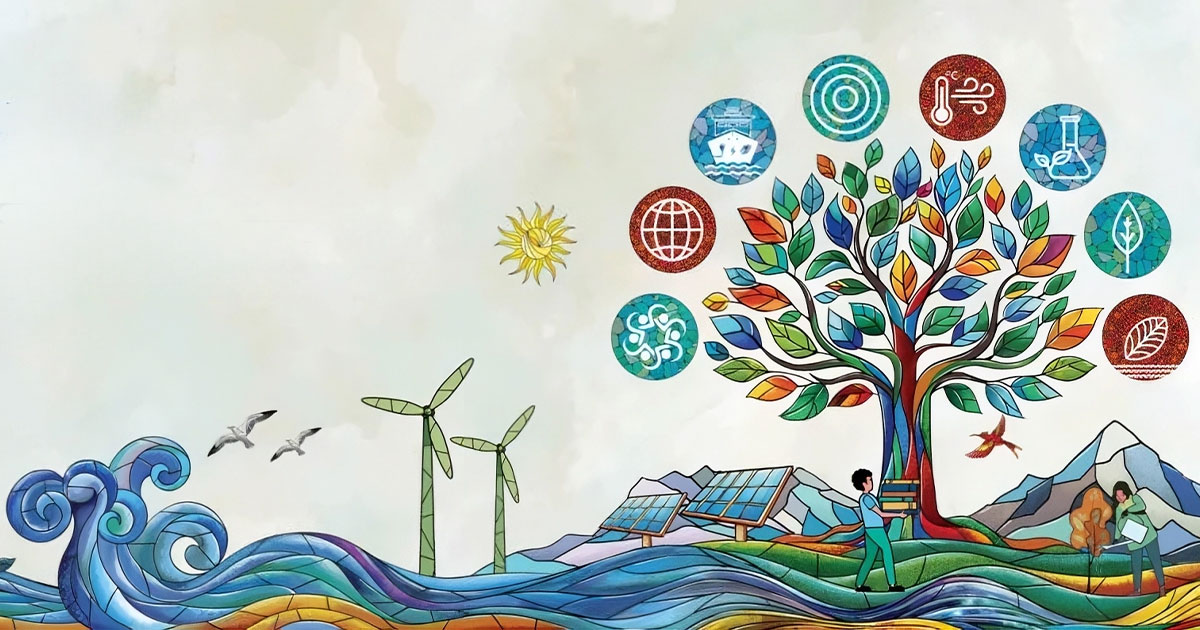

Global Sustainable Development Summit 2026: An international platform to discuss sustainable transitions
Sustainable developmentAt the current stage, it faces a set of intertwined challenges, extending from the slow progress in achieving the 2030 goals to the complexities of climate financing and the required transformations in production and consumption patterns. International assessments show that the current path does not keep pace with the scale of the economic and environmental challenges, and prevents the further achievement of the third goal: good health and well-being. This requires a deeper review of implementation mechanisms and coordination of efforts between governments, the private sector and civil society.
During this phase, the Indian capital, New Delhi, will host from February 25 to 27, 2026, the activities of the twenty-fifth edition of the World Sustainable Development Summit (WSDS 206), organized byThe Energy and Resources Institute (TERI), and this session represents the silver jubilee of the summit, which has established its position as an international platform for dialogue on sustainable development issues and action. Climate.
This year’s edition comes under the slogan “Transitions for Sustainable Development: Vision, Values, and the Voice of Partnership,” at a time when discussion is increasing about the need for structural transformations that go beyond theoretical pledges towards more comprehensive practical applications, especially in the areas of climate financing and clean energy, redirecting patterns of industry and trade, and employing modern technology, in addition to enhancing the role of multilateralism and international coordination in advancing the path of sustainable development towards tangible results.
Sustainable Development Summit: Background and Institutional Path
The Global Sustainable Development Summit was launched in 2001 as an annual initiative organized by the Energy and Resources Institute (TERI), to be held regularly in the Indian capital, New Delhi, as an independent platform for dialogue on issues of sustainability and climate action. Over the course of more than two decades, the summit has become a fixed date on the international agenda at the beginning of each year, with its activities usually extending for three days during which it brings together high-level plenary sessions, specialized thematic tracks, and closed meetings for decision-makers.
The 2026 edition will be held to celebrate the twenty-fifth anniversary of its launch, which gives it an evaluative character in addition to its dialogue role. Over the course of its journey, the summit has evolved from a forum focusing on energy and environmental issues to a platform that discusses a broader scope that includes the green economy, technology, governance, and climate change financing, reflecting the breadth of the concept of sustainable development itself.
The summit is also linked to a number of initiatives led by TERI, including the “Act4Earth” initiative, which focuses on promoting climate action and implementing Sustainable Development Goals (SDGs), making its holding part of an extended institutional path that goes beyond the boundaries of the annual event to a network of continuous activities and dialogues throughout the year. This development in the scope and contents of the summit was clearly reflected in the design of the 2026 edition’s program and its organizational structure.

Crest structure and transformation axes
The program of the World Sustainable Development Summit 2026 extends over three days, combining high-level plenary sessions and specialized thematic tracks, reflecting a trend towards organizing discussions within a gradual framework that moves from the general vision to issues of practical implementation.
First Day
Multiple introductory sessions will be held, concluding with the opening session under the title “Transformations for Sustainable Development: Vision, Values, and the Voice of Partnership,” a title that highlights the value and political dimension that forms the basis of the discussions, and emphasizes that the path of sustainable development is linked to the shared vision as much as it is linked to the implementation tools.
Day Two
It aims to discuss four main axes, including nature-related transformations, the role of industry and trade in the green transition, and harnessing future technology to serve humanity and the planet, in addition to multilateralism as a framework for international cooperation. These topics reflect the expansion of the concept of sustainable development to include economic, technical and geopolitical dimensions, in an attempt to link environmental considerations with industrial and trade policies.
Day Three
This day is devoted to discussing climate finance and clean energy, as they are crucial elements in transforming international commitments into workable projects. This part of the program focuses on financing mechanisms, mobilizing investments, and enhancing cooperation between governments and financial institutions, to support the transition from pledges to implementation.
Platform from the Global South
Since its launch in 2001, the Summit has become one of the most prominent independent international platforms concerned with sustainable development in theGlobal South. Over the past years, it has brought together 59 heads of state and government, 149 ministers, 13 Nobel laureates, and more than 41,000 participants from around the world, strengthening India’s position as a center for global dialogue on sustainability issues.
This geopolitical dimension gives special importance to the 2026 edition, as the role of the countries of the South in formulating sustainable development priorities increases, whether through groupings such as the Group of Twenty (G20) or the BRICS group, which includes Egypt, or through climate negotiation paths at the United Nations. Thus, the summit turns into a space for the intersection of visions between developed and emerging economies, with a focus on financing needs, technology transfer, and capacity building.
From dialogue to implementation
The summit agenda shows recognition that the fundamental challenge for sustainable development is to move from debate to practice. Talking about transformations requires identifying sources of financing, developing regulatory frameworks that stimulate green investment, and strengthening partnerships between the public and private sectors. It also requires integrating environmental and social considerations into urban planning, infrastructure, and energy, to ensure sustainable economic growth without depleting resources.
In this context, issues such as climate finance and clean energy are central, as the success of the global transition depends on the ability of countries, especially developing ones, to access sufficient financial resources and appropriate technology. Here the importance of good governance and transparency is highlighted, as they are crucial factors to ensure the effectiveness of spending and achieve the desired impact.
The twenty-fifth edition of the World Sustainable Development Summit comes at a pivotal moment that requires a frank review of the path of global progress. The accumulated challenges indicate that achieving the 2030 goals requires deeper transformations in economic policies, consumption patterns, and financing mechanisms. Through its focus on vision, values and pluralism, the summit seeks to formulate a framework that enhances the integration of environmental, economic and social dimensions.

TheThe Earth Guards Foundation indicates that such platforms represent an opportunity to enhance coordination between international and local actors, consolidate environmental governance, and support innovation in energy and sustainable infrastructure. Linking the themes of the Sustainable Development Summit to issues of climate action, clean energy, and industrial transformation enhances the opportunities for transforming the dialogue into implementable policies.


