

The National Guard confronts the Minnesota fires.. Have forest fires become a permanent crisis for America?

The National Guard confronts the Minnesota fires.. Have forest fires become a permanent crisis for America?
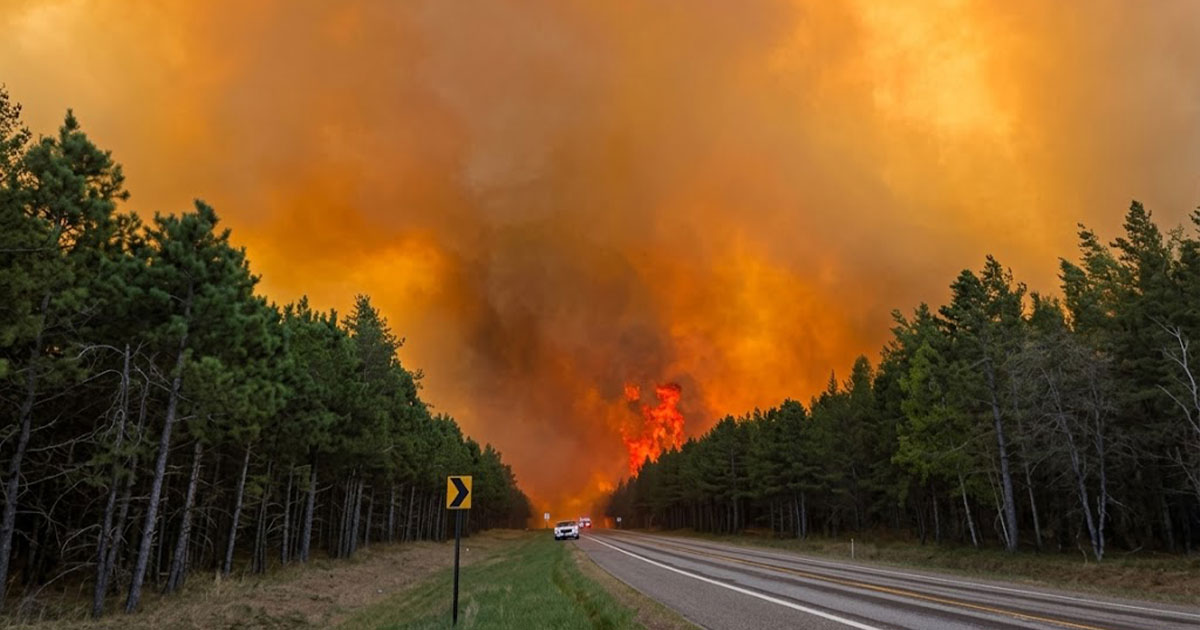
The US state of Minnesotafaced increasing pressure due to the escalation of forest fires in the northern regions of the state, amid dry weather conditions and strong winds that contributed to the rapid spread of the fires. In this context, State Governor Tim Walz declared a state of emergency and deployed National Guard forces to support firefighting efforts and respond to evacuation and emergency situations.
Then the Governor of Minnesota confirmed that these fires were “fast-moving and unexpected,” noting that the authorities had worked to mobilize the necessary resources to protect residents, support evacuations, and secure the affected areas. The National Guard forces also participated in providing equipment and logistical support, along with fire and emergency teams.
The “Stewart Trail” fires in northeastern Minnesota were considered among the most prominent fires, after they spread to more than 355 acres, while the “Flanders” fires in Crow Wing County reached about 1,200 acres, amid continuing dry weather and strong winds that increase the speed of the fire’s spread.
Forest fires and extreme weather conditions
Dry weather conditions and strong winds contributed to the acceleration of the spread of wildfires in northern Minnesota, which made containment and fire control more difficult, as authorities announced that only 30% of the “Stuart Trail” fire was contained.
The authorities also warned that changing wind directions and increasing their speed may complicate the efforts of firefighting teams, especially with the continued dry weather that helps forests and natural areas ignite more quickly.
Reports indicated that emergency teams faced several fires in different areas of the north of the state, amid increasing pressure on emergency and rapid response systems. This reflects the increasing impact of extreme climate events on forest fire rates, especially with the increase in drought periods and the increased risks associated with hot and windy weather.

Forest fires and their impact on communities and infrastructure
The forest fires led to mandatory evacuations of residents from commercial establishments in the areas northeast of Two Harbors. Authorities also closed part of Highway 61 between the Two Harbors and Silver Bay areas for the safety of residents.
Preliminary damage assessments showed the destruction of 34 facilities, including eight main buildings includingResidential homes, in addition to 26 other subsidiary facilities.
This highlights the extent of the impact that forest fires can have on local communities, infrastructure, means of transportation and basic services, which hinders the achievement of the Sustainable Development Goals (SDGs), especially Goal 11 Sustainable Cities and Local Communities, and Goal 16 Peace, Justice and Strong Institutions.
Government Response and Emergency Management
The rapid spread of wildfires prompted Minnesota authorities to expand the government response by using the National Guard to support firefighting and emergency management efforts. This includes providing additional equipment and personnel to support firefighting and evacuation operations and securing affected areas, in addition to coordination between government agencies and local emergency teams.
The authorities also imposed temporary restrictions on air traffic in the regionsaffected by fires, with warnings against using drones near fire sites, as they may cause disruption to aerial firefighting operations.
These measures reflect the importance of strengthening rapid response capabilities and natural disaster management, especially with the increasing fire risks associated with extreme weather conditions. As the impact of forest fires on natural resources and communities increases, calls have increased for developing more sustainable strategies to protect forests and enhance adaptation to climate change.

In conclusion, the developments of the Minnesota fires reflect the magnitude of the environmental challenges associated with the escalation of forest fires in light of the increasing periods of drought and harsh climate conditions, especially with their direct impact on natural resources and local communities. It also highlights the importance of developing more effective strategies for forest management and strengthening warning systems.Early adaptation to extreme climate phenomena, which helps reduce human, environmental and economic losses.
In turnThe Earth Guards Foundationconfirms that the forest fires in Minnesota highlighted the need to strengthen efforts to protect forests and manage natural resources in a more sustainable way, in addition to supporting climate adaptation plans and developing environmental disaster response systems, which contributes to protecting communities and maintaining environmental balance in the long term.


