

Climate Change and Oceans: Risks Threatening Sharks and Ecological Balance
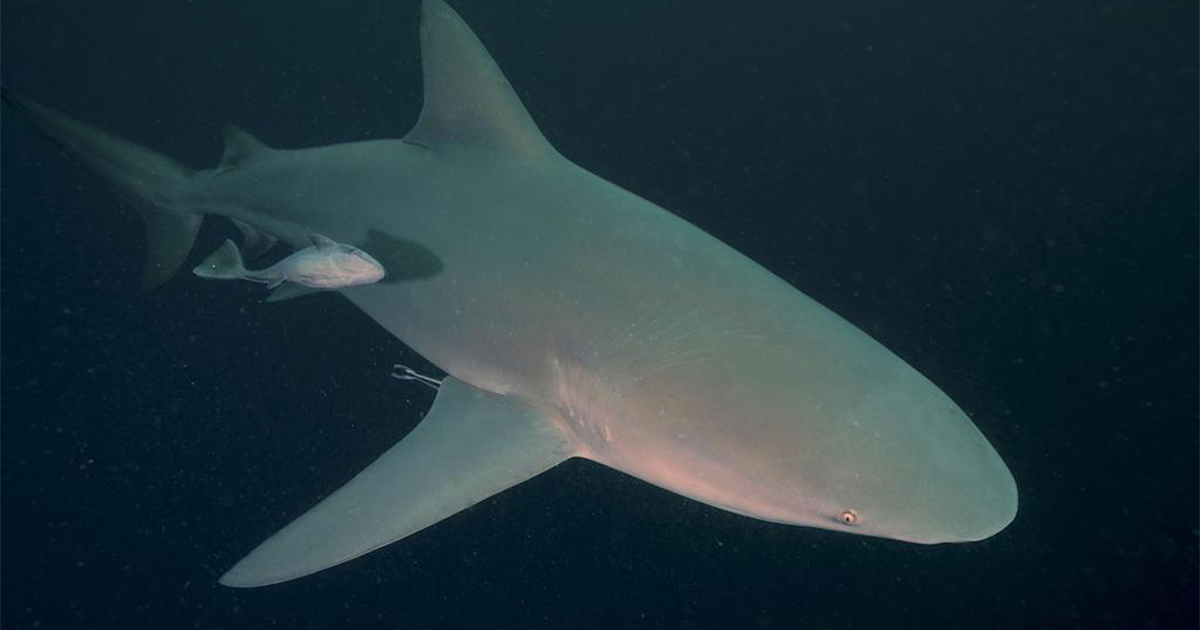
Climate change and oceans… risks threatening sharks and environmental balance
For hundreds of millions of years, sharks have inhabited the depths of the seas and oceans, experienced ice ages and warm ages, and survived enormous natural fluctuations; It has become a symbol of resilience and adaptation to nature, but what it faces today in terms of climate change is completely different from before.
This is because rapid climate change caused by humans is no longer linked to slow natural cycles, but rather has become an accelerating surge in temperature rates, and fundamental changes in ocean chemistry and weather patterns.
Climate change has also become a major reason for shaping the lives of marine organisms, such as sharks andMarine rays (a type of fishThe stingray, which has become at the heart of this climate storm, has been affected by profound changes at the level offood, migration, reproduction, and even at the level of behavior.

If these species have already suffered from poaching and loss of natural habitats, climate pressures put them on the brink of danger. Here two questions arise: How doesclimate change affect these organisms, and what does this mean for the future of the seas and oceans?
To answer these two questions,FoundationEarth Guards highlights in this report the interconnection between climate change and the future of sharks, explaining how protecting them is a major part of the Sustainable Development Goals (SDGs); So keep reading.
What is climate and how does it change?
To understand how climate change affects sharks, we must go back to the basics. Climate is not just fluctuating daily weather, but rather average weather patterns over long periods. It is determined through interconnected elements such as:
- Atmosphere
- Oceans
- Ice cover
- Earth’s rock layer
- The vital fields that embrace life.
Any defect in one of these components leaves a clear imprint on the rest of the parts! The exchange of heat between the atmosphere and the oceans, for example, shapes ocean currents that balance the global climate. When this balance is disturbed, a series of disturbances appear.Such as:
- Rising temperatures
- Melting polar ice
- Sea level increase
We must also realize that the Earth has witnessed repeated cycles of ice ages and warmer periods in its history, but the current pace of change exceeds any natural cycle. Modern scientific reports confirm that the last century witnessed an unprecedented rise in temperatures, and that the last two decades may have been the warmest in more than a thousand years!
What is more dangerous is that this increase is accompanied by changes in the chemistry of the oceans, as their acidity has increased as a result of their absorption of huge amounts of carbon dioxide. This imbalance does not only affect small organisms and coral reefs, but also extends to the tops of the food pyramid, where fish standShark.
Whenever the climate system is disturbed, the nodes of the food chain, on which these ancient predators depend, become loose. Which threatens its role in the oceans, and undermines underwater life in a way that requires stopping it.
Human causes behind climate change
It is natural that the climate changes over the ages, and this is due to two reasons, one of which is fundamental and the other is dependent on it. They are:
Human
Humans are, unfortunately, a primary driver of this accelerating climate change. Since theIndustrial Revolutionhumans began burning huge amounts of coal, oil, and gas; Which led to the release of huge Greenhouse Gases (GHGs) into the atmosphere.
Although the “greenhouse effect” is necessary for life on Earth,Pumping millions of tons of gases above natural rates has made the climate system dysfunctional. The Earth’s temperature has also risen – according to reportsIntergovernmental Panel on Climate Change (IPCC) – by at least one degree Celsius above pre-industrial levels.
Oceans
The other related reason is the oceans and seas, which absorbed more than 93% of the excess heat resulting from human activities. Which led to a change in its chemical properties and an increase in temperature. This absorption makes it less able to continue as a protective shield for humanity against the effects of climate change.
The result is that marine ecosystems are pushed to the brink of collapse, which makes sharks unable to keep up with the speed of change imposed by humans after they have withstood natural transformations.For thousands of years.

Sharks in the face of a changing climate
The effects of climate change on sharks are evident at several levels. Among them:
Immigration
Increasing water temperatures are causing some species to move to areas farther from the equator. Recent studies have predicted that two species of sharks in Australia may be forced to move south at a rate of 65 kilometers every decade. To escape the warm waters.
Food
Many marine prey have begun to move towards the poles in search of better conditions; This leaves the sharks in traditional resource-poor areas. These disturbances threaten the entire ecological balance.
Natural habitats
There are also coral reefs andmangrove foreststhat serve as shelters for reproduction and growth, and are increasingly collapsing due to ocean acidification and powerful storms.
Can this danger be slowed?
Despite the bleakness of the scene, scientists believe that slowing climate change is still possible through radical changes in energy, production and consumption policies, provided that the international community – specifically governments – have a global political will, along with individual and societal commitment.
Individual actions – such as reducing the use of private cars, choosing local foods, and reducing flights – can also be effective. Also, the popular pressure onGovernments and companies adopting more sustainable policies is a pivotal step to achieving the Sustainable Development Goals (SDGs), especially Goal 13 on climate action.

In addition, raising awareness of the vital role of sharks in the oceans is an urgent necessity. Because they are not only terrifying predators, but also “guardians of ecological balance,” as preserving them means preserving the marine life cycle. Thus maintaining the sustainability of the resources on which humans depend.
In conclusion, climate change is not just an issue that concerns sharks alone, but rather is a reflection of the future of all humanity. Because the oceans, which over millions of years formed a natural shield for these creatures, have today become a battlefield between nature and human activities.
And from the above seeHama FoundationEarth Taking into account that protecting sharks and rays is not an isolated environmental issue, but rather a real test of human ability to bear its responsibility towards planet Earth. If we succeed in protecting these creatures from extinction, we will prove our ability to restore balance to ecosystems, enhance their resilience to climate change, and take a fundamental step towards achieving sustainable development by 2030.


