

Prime Minister at TICAD 9: Egypt Committed to Achieving Peace and Sustainable Development
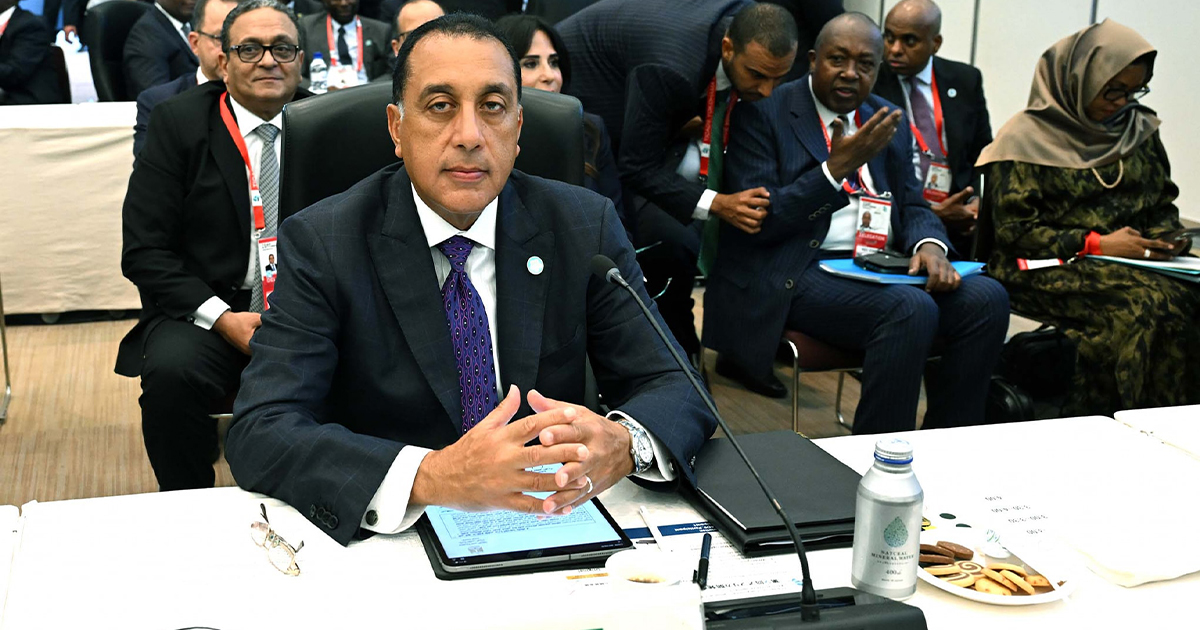
Prime Minister at TICAD 9.. Egypt is working to achieve peace and sustainable development
In the Japanese city of Yokohama, Dr. Mostafa Madbouly, Egyptian Prime Minister, delivered Egypt’s speech on behalf of His Excellency President Abdel Fattah El-Sisi, during the “Peace and Stability” session at the Tokyo International Conference on African Development “TICAD 9”. This speech came to confirm Egypt’s firm vision that political and security stability represent the primary condition for any real progress in the path of sustainable development within the continent.

Egyptian participation gains its importance from its timing and circumstances. Today, the African continent stands at a critical intersection between crises of internal conflict, climate change, and global economic pressures. Therefore, the Egyptian speech was a reminder to international partnersInvesting in sustainable development in Africa cannot be separated from establishing peace and building confidence among peoples, and hence Egypt’s presence came to renew its commitment to its historical roles as the bridge that connects Africa to the world.
Africa faces interlocking crises that hinder sustainable development
The Prime Minister explained during his speech that the African continent is making strenuous efforts to bring peace to volatile regions, such as Sudan, eastern Congo, the Sahel region, and Somalia, but these efforts collide with ongoing complications. Crises do not only stem from armed conflicts, but also result from scarcity of resources, changing climate patterns, and worsening poverty, all of which are issues that place sustainable development plans in a fragile position that is unable to withstand.
At a time when the African peoples are making repeated attempts to establish stability, support remainsThe international community is insufficient to confront these complex crises, and here Dr. Mostafa Madbouly stressed that the absence of development resulting from the absence of support leads to the reproduction of the spiral of conflict.

Egypt presents its vision for post-conflict reconstruction and development
In his speech, the Prime Minister presented Egypt’s pioneering experience in post-conflict reconstruction and development under the umbrella of the African Union. Cairo established the “Reconstruction Center” to be a regional platform to support countries emerging from conflicts. It also established the Egyptian Agency for Partnership for Development to provide technical support and training programs. These initiatives reflect Egypt’s solidarity with its brothers, and also confirm its belief that sustainable development begins with rebuilding humanity.
Post-conflict development is not just financial investments or infrastructure projects.Rather, it is a comprehensive process that includes strengthening institutions, supporting national interests, and empowering local communities to regain their ability to produce and participate. Hence Egypt’s call for the integration of regional and international efforts in this file, considering that stability in one African country automatically contributes to the stability of the entire Middle East.
Egypt’s partnership with Japan is a model for supporting peace and development
The Prime Minister explained that cooperation between Egypt and Japan represents a model for building partnerships based on mutual respect and serving the common goals of peace and development. Through TICAD, Japan has demonstrated its serious commitment to Africa, not only with aid, but also by promoting long-term investments that provide real opportunities for growth.
Dr. Mostafa Madbouly touched on the announcement of the fifth edition of the “Aswan Forum for Peace and Development”Sustainable Development”, which will be held next October. He explained that this forum represents a unique platform that discusses the deep interrelationship between peace and development in the African context. It should be noted that the announcement of the forum at the heart of the TICAD conference reflects a clear Egyptian political will for Cairo to be a pivotal center for continental dialogue.

Towards a comprehensive vision linking peace and sustainable development
The Prime Minister concluded his speech by emphasizing that the African continent needs a comprehensive vision that consciously links peace and sustainable development. The absence of one destroys the other, and investment in development without addressing conflicts remains fragile and vulnerable to collapse. Therefore, the Prime Minister stressed that building a sustainable future for the continent requires a real international commitment that goes beyond promises to implementation.
Hama Foundation is looking intoHamaEarth refers to Egypt’s speech at the TICAD 9 conference as having a distinct significance; It reformulates the real equation of development on the continent. There is no peace without development, and no development is valuable if social justice is absent from it. From this standpoint, it confirms that the current moment requires international partners to move from the language of pledges to implementation. Africa is not a margin in the development equation, but rather a pillar of the world’s stability and its common future.


