

First EgyptAir Flight Powered by Sustainable Aviation Fuel Lands at Cairo International Airport
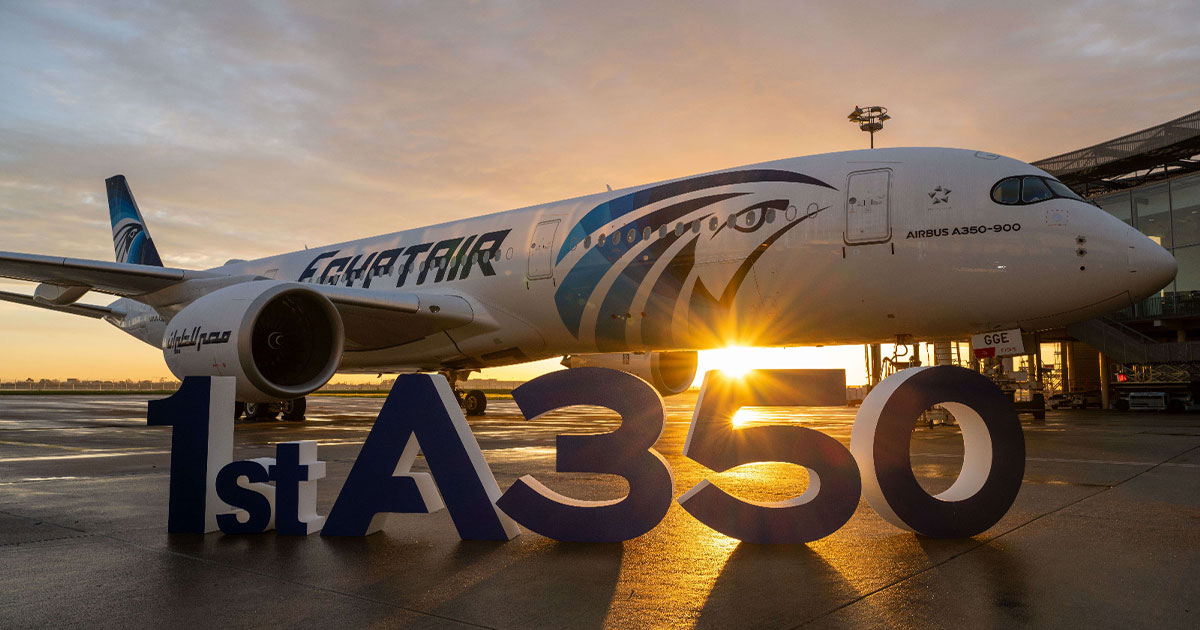

The first Egyptian aircraft using sustainable aviation fuel (SAF) arrives at Cairo International Airport
The modernization of aviation fleets is one of the main indicators of the development of the air transport industry and its ability to keep pace with global shifts in operational efficiency and environmental sustainability. In this context, the addition of new generation aircraft to national fleets is a step that reflects a strategic direction towards enhancing competitiveness, expanding the scope of operation, and improving the quality of services provided to travelers at the regional and international levels.
This trend is gaining particular importance with the growing global interest in reducingcarbon emissions and relying on more fuel-efficient technologies, in addition to developing the travel experience on long-haul flights. It also reflects the integration and use of modern technological solutionsSustainable Aviation Fuel (SAF) is a clear direction towards building an air transport system that is more compatible with the requirements of sustainable development and supporting the green economy.
Airbus A350-900
In this context, the first Airbus A350-900 aircraft arrived at Cairo International Airport, where it was received by Dr. Sameh El Hafny, Minister of Civil Aviation, and a number of leaders from the ministry and the EgyptAir Holding Company and its subsidiaries, officially joining the fleet of the national company EgyptAir. A flight was also operated using a mixture of sustainable aviation fuel (SAF), which is a type of biofuel designed for use in aircraft, and this is what makes it an attractive option for achieving environmental sustainability goals. In the aviation sector, especially Goal (7) related to providing clean and affordable energy, and Goal (13) related to climate action.
This represents a strategic step towards a new phase within the plan to modernize the fleet and enhance its operational capabilities, which is consistent with Goal (9) related to industry, innovation and infrastructure, thus supporting EgyptAir’s position as a leading national carrier in the region.

Expansion of the air network of EgyptAir Airlines
EgyptAir is the first company in North Africa to operate this advanced model, as this aircraft comes as part of a deal concluded by the company with Airbus to include 16 A350-900 aircraft. These aircraft are expected to play a pivotal role in expanding the EgyptAir network, as they are distinguished by their ability to fly long distances with high efficiency, allowing the operation of direct, non-stop flights to long-range destinations, including cities in the United States of America such as Los Angeles, in addition to a number of destinations. InEast Asia, which enhances the company’s competitiveness and increases its presence in international markets.
This deal also reflects EgyptAir’s move towards relying on new generation environmentally friendly aircraft that contribute to reducing carbon emissions through the use of sustainable aviation fuel (SAF), in line with the global trends of the aviation industry and environmental sustainability – Goal (13) concerned with climate action – as well as the vision of the Egyptian state to shift towards more efficient and sustainable air transport systems and support efforts to reduce emissions and promote the green economy.
The first carrier in Africa to choose the Astrova system
With this, EgyptAir has become the first carrier in Africa to choose the advanced “Astrova” system from Panasonic Avionics to equip its new Airbus A350-900 aircraft, which provides an advanced level of comfort and operational efficiency for passengers.Through an advanced interior design that takes into account the requirements of long-haul flights.
This contributes to improving the travel experience and supporting the company’s ability to operate long-distance airlines efficiently and stably, in line with the environmental sustainability strategy through the possibility of using sustainable aviation fuel (SAF) blends to reduce carbon emissions and achieve higher fuel efficiency.
The most modern and efficient aircraft in the world
The A350 is one of the most modern and efficient aircraft in the world, and relies on the latest aerodynamic technologies and new-generation Rolls-Royce engines, which achieves a saving of up to 25% in fuel consumption and carbon emissions compared to previous aircraft, as well as providing modern entertainment systems and advanced levels of comfort for passengers.
For his part, the pilot/ Ahmed Adel, Chairman of the Council, statedManagement and Executive Managing Director of the EgyptAir Holding Company, saying: The addition of the A350-900 aircraft to the EgyptAir fleet represents a vital and important step within the fleet modernization plan, as these aircraft have high operational efficiency in fuel consumption, extended flight range, and advanced capabilities to achieve optimal exploitation of the long-range operating network, which contributes to increasing passenger capacity on high-demand routes and opening new markets.
He added: Relying on this advanced generation of aircraft enhances the flexibility of the company’s network and operational planning, as well as its full compatibility with environmental sustainability trends through the possibility of operating using a sustainable aviation fuel mixture (SAF), which supports EgyptAir’s strategy to shift towards more efficient and sustainable operations in the medium and long term.

In conclusion, it represents joiningThe first Egyptian aircraft to use sustainable aviation fuel (SAF) to the EgyptAir fleet is an important step towards enhancing operational efficiency and reducing carbon emissions, supporting environmental sustainability in the air transport sector. This trend reflects the state’s commitment to transitioning to more efficient and sustainable air transport systems, and allows the development of long-range operating networks with greater efficiency, thus raising EgyptAir’s competitiveness at the regional and international levels.
For its part,The Earth Guards Foundation believes that adopting modern environmentally friendly aircraft contributes to promoting Sustainable Development Goals (SDGs) economically and environmentally by reducing emissions and improving fuel efficiency, which supports the green economy and creates a sustainable air transport environment that is compatible with the requirements of long-term sustainable development.


