

The Minister of Supply meets with the Polish Deputy Minister of Agriculture to discuss ways to achieve food security
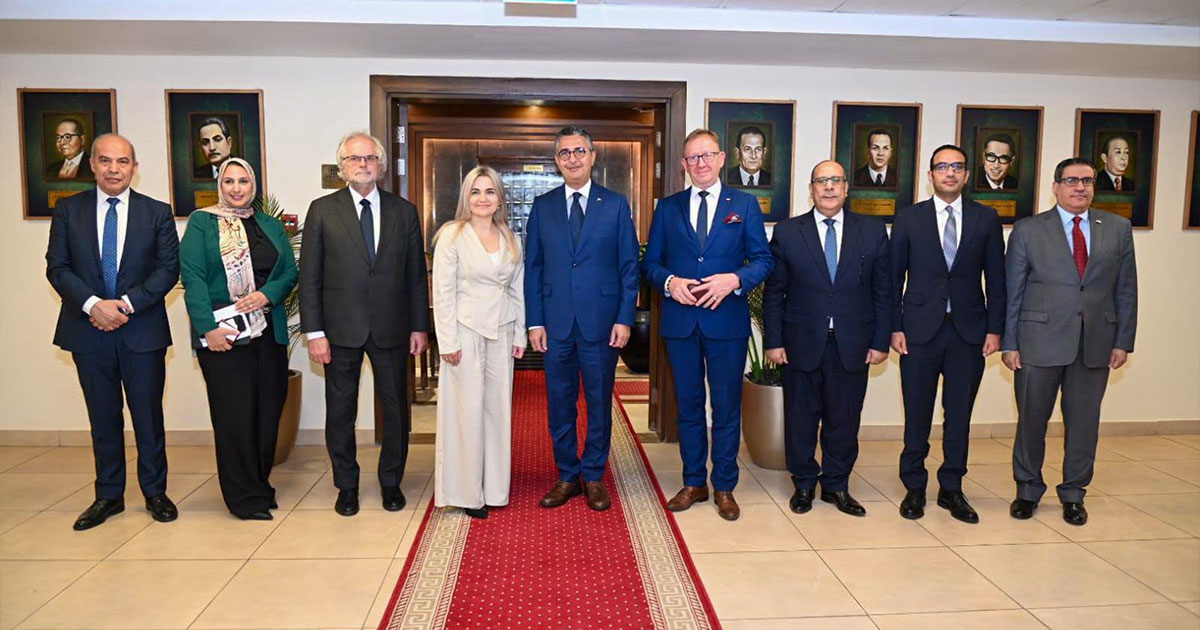

The Minister of Supply meets with the Polish Deputy Minister of Agriculture to discuss ways to achieve food security
Global food markets are witnessing serious challenges and rapid fluctuations, and therefore enhancingfood securityhas become one of the strategic priorities of countries, especially with the increasing impact of international crises, economic fluctuations, and supply chains on the availability of basic commodities and market stability.
Hence, efforts to diversify import sources and develop storage and supply systems are gaining increasing importance to ensure the sustainability of food supplies and enhance countries’ ability to confront global changes.
In this context, international partnerships and bilateral cooperation stand out as an essential foundation for exchanging experiences, transferring technology and expanding areas of trade and investment in the food sector, in line with Sustainable Development Goals (SDGs), especially the second goal on eliminating hunger and enhancing food security, and the seventeenth goal calling for strengthening international partnerships to achieve development.
Polish delegation to enhance joint cooperation
In this spirit, Dr. Sherif Farouk, Minister of Supply and Internal Trade, received an official delegation from the Republic of Poland headed by Mrs. Mazojata Gromadzka, Deputy Minister of Agriculture and Rural Development and Secretary of State, and in the presence of Mr. Mihaw Morkoczynski, Ambassador of the Republic of Poland to the Arab Republic of Egypt, Mr. Robert Talos, Vice-Chairman of the Agriculture and Rural Development Committee of the Polish Parliament and former Minister of Agriculture, and Mrs. Dorota Swierczewska, Deputy Head of the mission, along with a number of officials and representatives of Polish companies.
The meeting was attended by the Ministry of Supply and Internal Trade, Mr. Mustafa Ismail, Vice President of the General Authority for Supply Commodities, Dr. Alaa Nagy, Managing Director and CEO of the Holding Company for Food Industries, Dr. Ashraf Sadiq, CEO of the Egyptian Holding Company for Silos and Storage, Mr. Ahmed Kamal, Assistant Minister for Projects and the Ministry’s official spokesman, and Dr. Doaa Nabil, Assistant to the Minister. For international relations and agreements.

This is to discuss ways to enhance joint cooperation between the two countries in the fields of food security, agriculture, and trade in food commodities, within the framework of achieving Goal (2) of the Sustainable Development Goals (SDGs), which calls for the complete eradication of hunger, in addition to Goal (16) for peace, justice, and strong institutions, and Goal (17) concerned with establishing partnerships to achieve the goals.
Enhancing trade cooperation in the food security sector
During the meeting, the two sides reviewed opportunities to enhance trade cooperation between Egypt and Poland, especially in the fields of grains, meat, and strategic food commodities, in a way that contributes to supporting the food security system and enhancing the intra-trade movement between the two countries. The discussions also dealt with ways to increase Egypt’s imports of Polish wheat, within the framework of the Egyptian state’s strategy aimed at diversifying sources of imports of strategic goods and securing the needs of the local market.
Dr. Sherif Farouk stressed that the Ministry of Supply and Internal Trade pays great attention to enhancing cooperation with international partners in various fields related to food security, noting that Egyptian-Polish relations are witnessing remarkable development in recent years, which opens broad horizons for joint cooperation in many vital sectors.
Developing a grain storage system to enhance food security
The minister added that Egypt has an advanced infrastructure in the field of storing and trading grains, and that the state is continuing to implement its plans aimed at strengthening its capabilities in the field of food security, in a way that keeps pace with global changes and ensures the sustainable availability of basic goods to citizens.
The meeting also touched on the existing cooperation between the two sides in the field of establishing and developing silos, as the minister praised the fruitful partnership with the Polish side in the field of localizing the silo industry and transferring technology and modern technical expertise to Egypt, in a way that supports the state’s efforts in developing the strategic grain storage system, increasing storage capacities, reducing losses, raising the efficiency of trading operations and maintaining the quality of crops.
An important Egyptian-Polish partnership
For her part, Mrs. Mazojata Gromadzka stressed her country’s keenness to enhance cooperation with Egypt as an important strategic partner in the Middle East and Africa region, praising the great achievements made by the Egyptian state in developing the infrastructure for storing and trading grains and managing strategic reserves, and stressing the Polish side’s aspiration to expand areas of cooperation and joint investment during the next stage.

At the conclusion of the meeting, the two sides agreed to continue coordination, exchange technical expertise, and study new cooperation opportunities in the fields of food security, grain trade, and related industries, in a way that achieves the common interests of the two countries and contributes to strengthening Egyptian-Polish economic and trade relations.
In light of the focus witnessed in the Egyptian discussions with the Polish delegation on diversifying sources of import of strategic goods, expanding areas of trade cooperation, and developing the silo and storage system, it is clear that efforts to enhance food security in Egypt are based on two complementary paths: The first is to secure the flow of basic goods by building various international partnerships, and the second is to raise the efficiency of the internal system through expanding infrastructure, strategic storage, and reducing waste.
In turn,Homat Al-Earth Foundation confirms that the Egyptian-Polish partnership reveals an important aspect of the state’s strategy to achieve food security, which is the combination of providing current needs and investing in future capabilities through technology transfer, exchange of expertise, and the development of industries related to storing and trading grains, which contributes to building a more efficient and flexible system, capable of supporting the needs of citizens and keeping pace with challenges. Changes taking place in global food markets.


