

Al-Sisi presents at the Seventh Summit a comprehensive vision for stability in the Middle East and protecting development paths
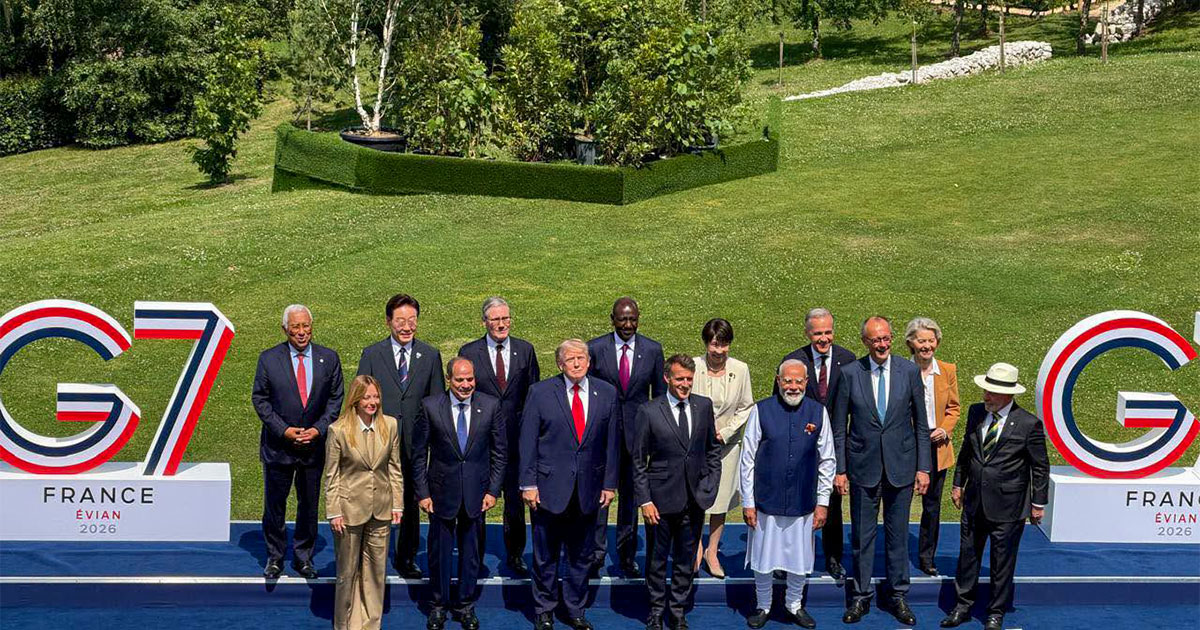

Sisi presents at the G7 summit a comprehensive vision for stability in the Middle East and protecting development paths
After the world witnessed in the past few days momentum around theSummit of Seventhe issues of justice, peace and regional stability topped the agenda of the international community, as one of the basic conditions for achieving the Sustainable Development Goals (SDGs) – especially the sixteenth goal – and protecting the social and economic gains of peoples.
This is because as the scope of conflicts and the extent of armed conflicts expand, investment opportunities decline, supply chains are damaged, and pressures on resources and services intensify, while consolidating security and cooperation between countries opens a wide scope and horizon for building economies more capable of growth and facing global challenges.
In the Middle East in particular, the issues of security, energy, water, and international trade are intertwined in a way that makes any effort to establish peace, justice, and strong institutions a pivotal step towards a more stable and prosperous future.
In order to achieve these goals, President Abdel Fattah El-Sisi’s participation in the work of the Group of Seven Summit, or the Group of Seven Industrialized Countries (G7) Summit, came to confirm the importance of adopting comprehensive approaches that address regional crises. Based on the conviction that lasting stability can only be achieved through strengthening international cooperation.

What is sustainable stability?
In the session that brought together the leaders of the member states at the Seventh Summit – along with a number of regional and European leaders – President Sisi stressed that achieving sustainable stability in the Middle East requires addressing the roots of the existing crises, most notably the Palestinian issue, stressing that reaching a just and lasting settlement based on the two-state solution remains the only path capable of ending decades of tension and instability.

In a related context, President Sisi warned of the dangerous repercussions of the measures that lead to reducing the spaces available to Palestinians inside the Gaza Strip, stressing the need to stop these policies immediately, in addition to rejecting any steps aimed at annexing the West Bank. Because this represents a direct threat to the chances of achieving justice and peace in a comprehensive manner.
Therefore, the session witnessed broad agreement among a number of participating leaders on the importance of moving to the next stage of efforts to stop the war in the Gaza Strip, and working to revive the political path leading to the establishment of a Palestinian state, in addition to emphasizing the necessity of maintaining the security of international navigation and the stability of global energy markets.

The relationship between Egyptian and Arab security
At the broader Arab level, President Sisi explained that the Arab region has paid heavy prices due to the continuation of armed conflicts and protracted conflicts, which was reflected in the humanitarian conditions and economic indicators, and its direct impact on efforts to achieve the Sustainable Development Goals (SDGs).
President Sisi also affirmed Egypt’s full support for the security and stability of the Arab countries, stressing that the security of the Gulf states is an integral part of Egyptian national security, and maintaining the stability of the region requires respecting the sovereignty of states and rejecting any interventions or attacks that threaten their security or undermine their national institutions.
To achieve this sustainable stability, President Sisi’s vision touched on the importance of building a collective security system. Any regional system based on international law and the principles of good neighbourliness, taking into account issues of water and energy security, and the protection of international sea lanes, as they are essential elements that guarantee the stability of the global economy and the continuation of international trade.

Foundations of security and stability
On the other hand, President Sisi renewed at the Seventh Summit the call for establishing a zone free of nuclear weapons and all weapons of mass destruction in the Middle East. So that the countries of the region can work to strengthen the bonds of trust between them and each other, and consolidate the foundations of security and stability in the long term.
At the conclusion of the discussions, President Sisi stressed that the Egyptian-Israeli peace treaty represents a practical model for the possibility of resolving conflicts through dialogue and political agreements, calling for exploiting the current moment to push for comprehensive settlements that will put an end to conflicts and open a wide scope for a new phase of regional stability.
And from here you findThe Earth Guards FoundationIn this Egyptian vision presented by President Sisi at the G7 Summit, there is a close link between peace, justice and all Sustainable Development Goals (SDGs); Because societies that enjoy security and stability become more capable of attracting investments, developing infrastructure, achieving economic growth, and enhancing the well-being of citizens, generation after generation.


