Africa Regional Forum 2026.. a continental station to accelerate the achievement of Sustainable Development Goals (SDGs)
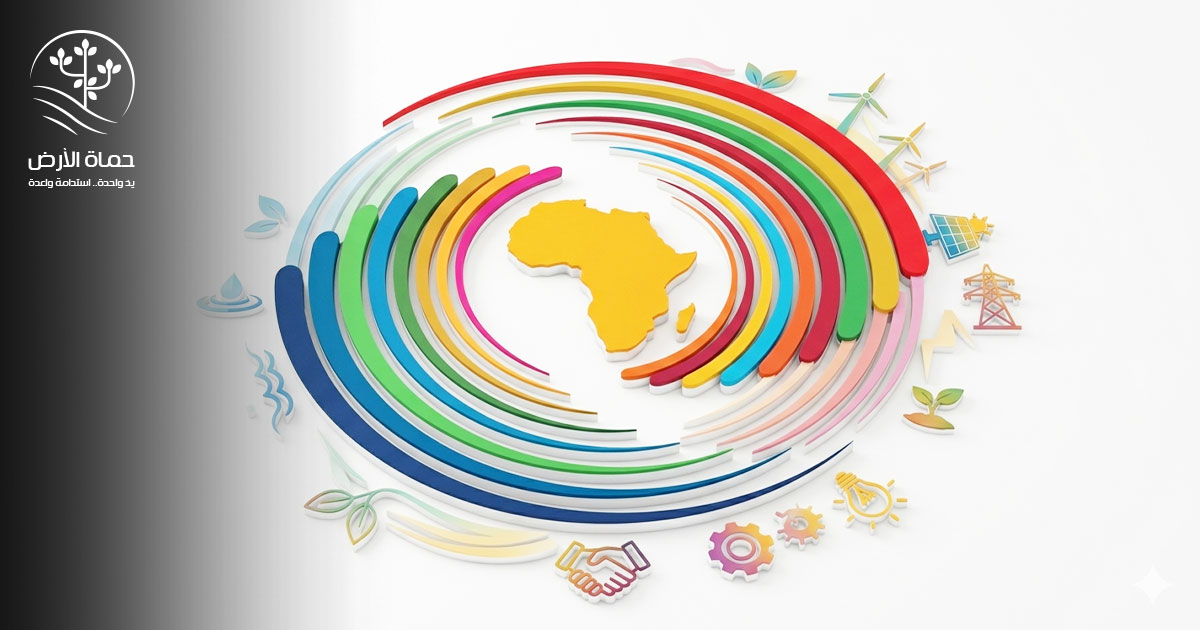

Africa Regional Forum 2026…a continental station to accelerate the achievement of Sustainable Development Goals (SDGs)
As the year 2030 approaches, pressure is increasing on countries to accelerate the pace of implementing the Sustainable Development Goals (SDGs), in light of accumulated challenges related to financing, infrastructure, and climate change. These challenges are directly related to a number of Sustainable Development Goals (SDGs), most notably eradicating poverty, strengthening infrastructure, and climate action. In this context, Africa stands out as one of the regions facing a clear gap between declared goals and actual levels of implementation, which reinforces the importance of regional coordination to accelerate progress.
The Africa Regional Forum for Sustainable Development 2026 comes within this framework, as a major platform for evaluating progress, exchanging experiences, and formulating more effective policies. The Forum is also closely linkedto the High-Level Political Forum for Sustainable Development, which represents the global framework for reviewing the implementation of the Sustainable Development Goals (SDGs), giving it an international dimension that goes beyond the regional scope.
The Africa Forum is a platform to accelerate the implementation of the Sustainable Development Goals (SDGs)
The Africa Regional Forum for Sustainable Development 2026 will hold its twelfth session during the period from 28 to 30 April 2026 in Addis Ababa, Ethiopia, under the slogan: “Transforming course: transformative and coordinated actions to implement the 2030 Agenda and the 2063 Agenda”, with broad participation from governments and regional and international institutions, along with representatives of the private sector, civil society and experts.
The organization of the forum comes within the framework of joint efforts led by the Economic Commission for Africa, in cooperation with the African Union Commission, the African Development Bank and a number of United Nations organizations, in the context of preparing for global discussions related to sustainable development, in a way that supports accelerating the implementation of Sustainable Development Goals (SDGs), especially with regard to clean water, clean energy, and sustainable economic growth.
The forum constitutes a major annual platform for following up on the implementation of Sustainable Development Goals (SDGs) at the regional level, as it provides a space for exchanging best practices and discussing common challenges, which contributes to improving the efficiency of development policies. This forum also reflects a trend towards enhancing collective action, as achieving development goals is no longer only a national responsibility, but rather a joint global effort that requires regional and international coordination to confront complex challenges.

Agenda 2030 and Agenda 2063: Integrating development goals in Africa
The Forum works within a dual framework that combines the global 2030 Agenda and the African Union’s 2063 Agenda, which reflects an attempt to integrate international goals with regional priorities. This integration aims to achieve comprehensive development that takes into account African specificity, while maintaining commitment to global goals.
This approach enhances the ability of countries to harmonize their development policies, which supports the implementation of Sustainable Development Goals (SDGs) in a more effective manner, and reduces overlap or duplication in development programs, thus enhancing the harmonization of policies related to quality education, health, equality, and providing decent work opportunities.
Main axes that reflect development priorities in Africa
The forum focuses on a set of themes that reflect development priorities on the continent, including water, energy, infrastructure, sustainable cities, and international partnerships. These sectors are among the most prominent areas that require urgent intervention to accelerate the achievement of Sustainable Development Goals (SDGs).
This focus reflects a growing awareness of the importance of these sectors in supporting economic growth and improving the quality of life, especially in light of the challenges associated with climate change and population growth.
Supporting national reviews and strengthening regional coordination
The Forum plays an important role in supporting countries that are preparing to submit their voluntary national reviews, which are an essential part of the process of following up on the implementation of the Sustainable Development Goals (SDGs) at the global level. This support contributes to improving the quality of reports and enhancing the ability of countries to accurately evaluate their progress.
Regional coordination also represents one of the basic pillars for achieving tangible progress in implementing the Sustainable Development Goals (SDGs), as it contributes to unifying efforts and exchanging experiences between countries. It also helps develop joint policies that address cross-border challenges, such as water and energy security.
In this context, the Forum enhances opportunities for mutual learning and encourages the adoption of innovative solutions applicable in different contexts within the continent. This also reflects the importance of building institutional capacities, enabling countries to deal with development challenges more efficiently and flexibly.
Challenges of achieving the Sustainable Development Goals (SDGs) in Africa
Despite the efforts made, Africa still faces major challenges in achieving the Sustainable Development Goals (SDGs), including the financing gap, weak infrastructure, and the effects of climate change, especially in light of increasing population pressures and high demand for basic services such as water, energy, and transportation.
These challenges are exacerbated by the limited institutional capabilities in some countries, in addition to the heavy reliance on external financing, which makes the implementation of development projects vulnerable to global economic fluctuations. The disparity between countries in terms of resources and capabilities creates a gap in levels of progress, and makes it difficult to achieve balanced results at the continent level.
In this context, there is a need to strengthen international partnerships, increase investments, and develop policies that support sustainable growth, which contributes to overcoming these challenges. Supporting innovation and adopting technological solutions also represents one of the important paths to accelerating implementation, in addition to improving the efficiency of resource management and enhancing regional integration, in a way that supports achieving more comprehensive and sustainable progress.

Preparing for the post-2030 period
At the conclusion of the forum’s work, it is expected to issue a presidential summary and a comprehensive report that reflects the most prominent regional recommendations and positions, provided that these outputs will be submitted to the High-Level Political Forum for Sustainable Development, thus contributing to formulating global directions for implementing the Sustainable Development Goals (SDGs).
As the end of the 2030 Agenda timeframe approaches, the Forum also assumes additional importance in formulating a future vision for sustainable development in Africa. This includes setting new priorities and building long-term strategies in line with global changes. This trend also contributes to ensuring the continuity of development efforts, thus enhancing the ability of countries to achieve sustainable progress beyond current goals.
In conclusion, the Africa Regional Forum for Sustainable Development is a true test of the continent’s ability to move from the diagnosis stage to the implementation stage. Africa suffers from a historical gap between the abundance of capabilities and the speed of transforming them into tangible development results, which makes this forum a space to rearrange priorities according to a more realistic logic that links urgent needs and long-term visions.
The link between the 2030 Agenda and the 2063 Agenda carries a strategic significance that goes beyond the procedural dimension, as it reflects an African endeavor to build a development model that benefits from international frameworks without losing its specificity or ignoring its local priorities.
In this context,The Earth Guards Foundation confirms that the true value of such forums is not only embodied in the volume of discussions or the breadth of participation, but rather in their ability to transform regional consensuses into clear implementation paths that enhance the efficiency of resource management and support integration among African countries in facing common challenges, thus establishing a more balanced phase between economic growth and sustainability. Environmental and social justice.