

South Valley University Ranked in 2025 Times Higher Education Impact Rankings
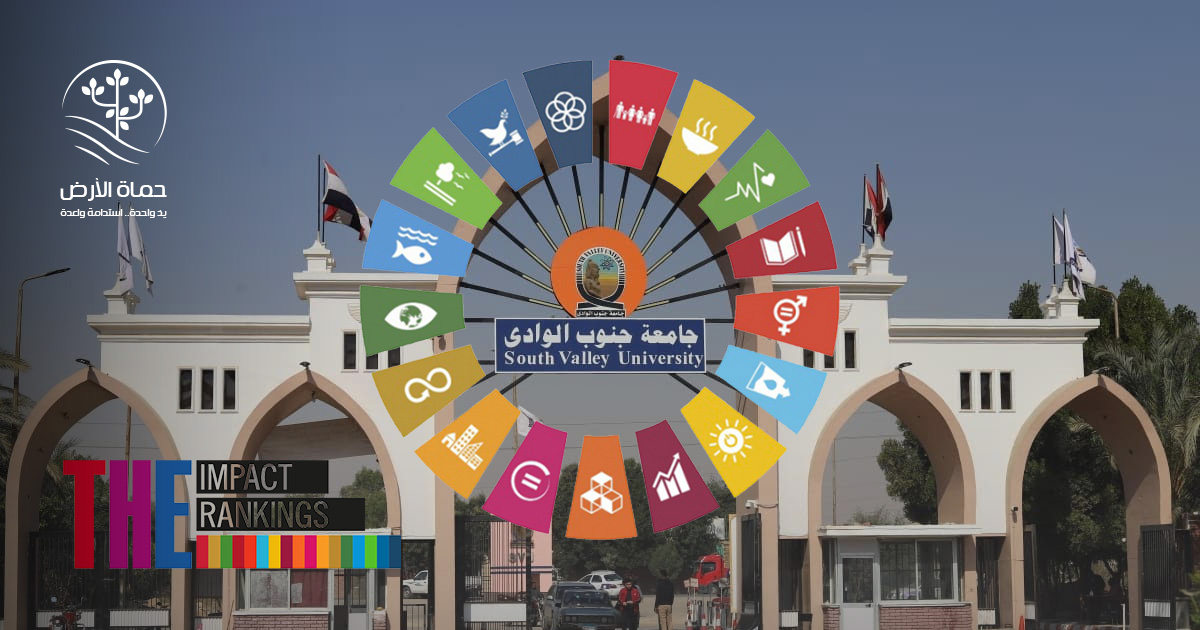

South Valley University in the 2025 Times Sustainable Development Ranking
In an academic achievement added to the balance of Egyptian higher education, South Valley University announced its entry for the first time into theBritish Times University Impact Rankings 2025 (THE Impact Rankings), which is considered one of the most prominent global indicators to measure the extent of universities’ commitment to achieving the United Nations Sustainable Development Goals (SDGs).
This listing is an international testimony to the university’s development and its pivotal role in advancing development at the local and global levels. Therefore,Earth Guards sheds light in the following lines on this achievement, which reflects Egypt’s efforts in the field of sustainable development. So keep reading.
Higher education achieves development goals
The official announcement was made by Professor Dr. Ahmed Akkawi, President of South Valley University, who explained that this achievement represents the result of continuous strategic efforts to enhance the university’s position regionally and internationally, stressing that supporting environmental and community issues is among the university’s priorities through its academic and research programs.
The university was listed in the category (601-800) globally out of 2,526 participating universities out of 130 countries, and in the fifth category locally out of 51 Egyptian universities, which embodies a clear institutional ambition and a real will to provide a pioneering university model that combines community service, environmental protection, and the development of scientific research.
End Hunger
For his part, the professor pointed outDr. Mohamed Wael Abdel Azim – Vice President of the University for Postgraduate Studies and Research – noted that the University has achieved advanced positions in all Sustainable Development Goals (SDGs), in a precedent recorded for the first time in its entire academic history. The university has jumped by more than 100 global positions compared to last year, a strong indication of the effectiveness of its educational and research policies.
One of the most prominent successes achieved by the university was the ranking in the category (101–200) globally in the goal related to the complete eradication of hunger, out of 955 universities, in addition to the position (301–400) globally in the goal of clean water and sanitation, and the position (401–600) in the goal of peace, justice, and strong institutions, as well as the rank (101–200) in the goal of establishing partnerships to achieve Objectives.
This superiority in the Sustainable Development Goals (SDGs) does not merely represent a numerical ranking, but rather reflects a realityTangible on campus and in the surrounding community; The university implements multiple programs to combat poverty and enhance food security, and adopts broad environmental initiatives, in addition to its efforts to establish a culture of societal peace.
Abdel Azim stressed that these positive results would not have been achieved without the integration between the various colleges and departments within the university, as well as the effective support of faculty members and students, and their participation in activities that are directly related to issues of sustainability, governance, and social justice.
Times Global Index
The Times classification is considered one of the most credible and influential classifications in evaluating higher education institutions in the world, as it is based on measuring university performance based on seventeen of the Sustainable Development Goals (SDGs) approved by the United Nations,Such as quality education, health, clean energy, and climate action.
The classification is based on three main pillars:
- الإنتاج البحثي المنشور في المجلات العلمية بالتعاون مع دار النشر العالمية (Elsevier).
- Community and awareness initiatives.
- University governance and administration, and the extent of their commitment to environmental and social responsibility.
South Valley University has distinguished itself in these three axes, especially in the field of multidisciplinary research cooperation, and in designing community programs that address pressing local issues, such as water and food security, women’s empowerment, and biodiversity preservation.
The Vice President of the University for Postgraduate Studies and Research also indicated that the universityNot only did it achieve an honorable overall position, but it also ranked among the top 200 universities globally in four main objectives, which reflects the breadth of its excellence in both the academic and societal aspects. Which represents a strong motivation to continue the process of improvement and development.
An Egyptian model for sustainable education
These results are a clear testimony to South Valley University’s commitment to the principles of sustainable development, and to its provision of an educational model that combines academic excellence with environmental and social responsibility. This achievement was not the result of coincidence, but rather came as a result of systematic planning and diligent collective effort that strengthened the university’s presence locally and globally.
The university’s inclusion in the Times classification indicates not only the quality of its academic and research performance, but also its pioneering role in leading societal change and its effective contribution to achieving Egypt’s vision.2030, which places sustainability at the heart of its public policies, especially in the education sector.
In this sense,Earth Guardsindicates that with this achievement, South Valley University has written a message of hope towards a more just and sustainable future, as Egyptian universities play a pivotal role in building societies capable of adapting and thriving.


