

From fields to waste bins…the food waste crisis and the solutions proposed

From fields to waste bins…the food waste crisis and the solutions proposed
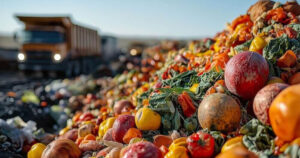
The global debate onfood wasteis escalating as one of the most dysfunctional manifestations of contemporary production and consumption systems. The problem is no longer limited to surplus on store shelves or leftovers in homes. It has turned into an environmental, economic and social issue with a global reach.
Recent estimates indicate that food systems are responsible for about a third of emissions resulting from human activities, while food waste alone contributes about 8 to 10% of these total emissions annually. In this context, calls are increasing to reconsider the way food is managed from field to table, given that reducing food waste represents a direct gateway to addressing climate and resource pressures.
It is clear from the course of the discussion that addressingfood waste requires an approach that goes beyond partial solutions, as it touches on interconnected dimensions that include the environment, the economy, and social justice. Food loss means depletion of water, energy and agricultural land, in addition to financial losses and lost opportunities to feed groups suffering from food insecurity. Hence the importance of moving from the logic of waste management to the logic of redesigning the entire system.
Food waste and the transition from a linear to a circular economy
The increase infood wasteis linked to the structure of a food system that is based on a linear model that begins with production and ends with waste. In this model, goods move from farms to factories and then to stores and consumers, with a wide margin of loss at each stage of the chain. As unconsumed quantities accumulate, the water, energy and land used in their production turn into an additional environmental burden that doubles the climate impact.

On the other hand, sustainability experts call for adopting a circular model that repurposes surplus as a resource that can be invested. This approach is based on the concept of the “Triple Bottom Line,” which is a management framework that evaluates the performance of institutions according to three balanced dimensions: economic profit, environmental impact, and social responsibility. According to this perspective, reducing food waste becomes part of a comprehensive business strategy, not just a charitable initiative.
By tracking food stocks and accurately measuring losses, institutions can estimate the financial losses resulting from waste, and develop mechanisms to recover it through two main paths:
- Redistribution, by directing consumable surplus to food banks and community associations via digital platforms that organize transportation and storage operations.
- Recycling or secondary utilization, such as converting food waste into organic fertilizer or other industrial inputs within the framework of the circular economy.
In this sense, reducing food waste turns from waste management into redesigning the food value chain, enhancing economic efficiency and reducing emissions at the same time. However, the completion of the shift towards a circular model remains dependent on addressing the waste from its beginning, that is, at the stage of agricultural production itself, where a significant percentage of food waste occurs before it reaches the markets.
Agricultural transformation and reducing losses at the source
Tacklingfood waste begins from the agricultural production stage, where large quantities of crops are exposed to loss after harvest as a result of poor storage or market fluctuations. Climate experts recommend the need to expand the cultivation of crops that are more capable of adapting to extreme climatic conditions, thus reducing production losses and enhancing food security. Developing storage facilities on farms also represents an effective tool to reduce waste, especially in areas that lack appropriate infrastructure.
Besides, manufacturing value-added products from surplus crops, such as converting fruits and vegetables into canned or processed products, offers an opportunity to extend their marketing life. Some government programs in some countries support this trend by providing low-interest financing to modernize storage and processing facilities.
With the expansion of alternative markets that link producers directly to consumers, the possibility of the surplus being wasted decreases and it is reintegrated into the economic cycle. At this point, the challenge shifts from the fields to the distribution channels, where a significant portion of food waste occurs within commercial supply chains.
Supply chains and the role of large companies
The restaurant and business sector represents about 28% of all food waste globally, putting companies in a pivotal position in remediation efforts. In this context, several practical paths have emerged that can reduce waste within supply chains, the most prominent of which are:
- Food Rescue Systems:Linking surplus food to associations and communities in need through digital platforms that organize transportation and distribution operations.
- Marketing irregularly shaped products (Wonky Food): Accepting vegetables and fruits that do not meet traditional aesthetic standards instead of excluding them from the offer.
- Modernizing storage and tracking technologies: using digital measuring systems to monitor loss in warehouses and reduce spoilage.
- Adjusting internal policies: prioritizing long-term sustainability over quick profit considerations.
These tools reflect a gradual shift in perception of food waste within the commercial sector, as reducing waste has become linked to operational efficiency and reducing costs and emissions simultaneously. While companies are resetting their policies, consumer behavior remains an influential factor in the food waste equation.
Consumer behavior as a complementary solution
At the household level, it is estimated that about 37% of food waste occurs in homes. This reflects the role of purchasing habits and consumption patterns in exacerbating the problem. Organizing purchases, planning meals, and understanding the meaning of expiration dates on products contribute to reducing wasted quantities. Expanding the scope of home composting – by converting food waste into natural fertilizer to fertilize the soil – can reduce the accumulation of organic waste in landfills, which is linked to reducing methane emissions.
However, individual behavior remains part of a broader system, where commercial advertising, store display standards, and pricing policies influence consumer decisions. Hence, awareness represents an important lever, especially when integrated with structural reforms in supply chains.

In conclusion,The dimensions offood wastereveal a challenge that intersects with multiple development goals, from enhancing food security to reducing emissions and improving the efficiency of resource use. Reducing waste contributes to supporting the second goal on eliminating hunger, the twelfth goal on responsible consumption and production, in addition to the thirteenth goal on climate action. With the realization that food is a strategic resource linked to social and economic stability, managing the surplus becomes a matter of good governance.
Earth Defenders Foundation believes that dealing with food waste requires a shift in thinking, so that each stage in the food chain is viewed as an opportunity to maximize value and reduce waste. Redesigning the food system on a circular basis, strengthening public-private partnerships, and expanding investment in infrastructure and awareness represent practical paths to building a more balanced system. In light of increasing climate pressures and rising global demand for food, reducingfood waste remains a pivotal step towards achieving sustainable and more resilient development.


