

The Prime Minister participates in the inauguration of the Julius Nyerere Dam in Tanzania, implemented by an Egyptian alliance
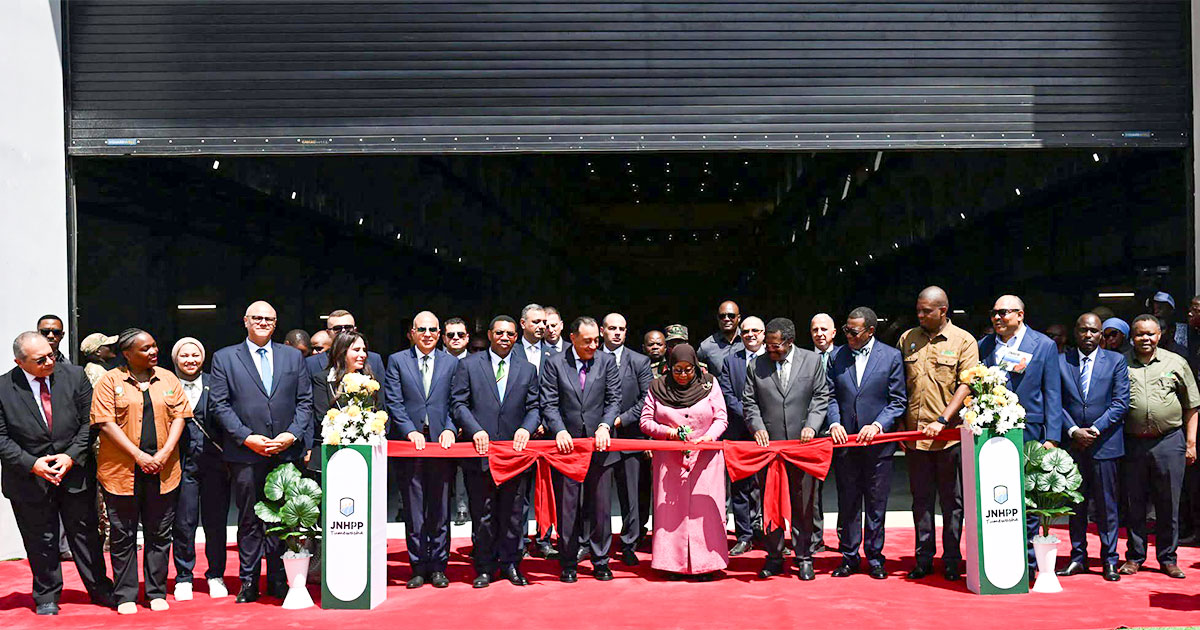

The Prime Minister participates in the inauguration of the Julius Nyerere Dam in Tanzania, implemented by an Egyptian coalition
Egypt continues to strengthen its partnerships with the countries of the African continent; Based on a firm vision of the importance of expanding areas of joint cooperation, and supporting the relations that bring it together with the peoples and countries of the continent on the basis of mutual interests and exchange of experiences, which opens the way for an Egyptian alliance of Egyptian companies capable of supporting paths of cooperation anddevelopmenton the continent.
This approach comes within the framework of an Egyptian presence based on a historical, cultural and geographical extension that makes African cooperation one of the main paths in Egyptian policy, and opens broader horizons for joint action in priority areas of development.
Hence, Egypt is moving to employ its expertise and the capabilities of private sector companies to support cooperation with African countries, in a way that enhances mutual trust, pushes relations towards deeper and more sustainable levels, and makes the Egyptian-African partnership a practical framework for cooperation and achieving common interests.
This trend reflects the importance of building effective partnerships between African countries, in line with the seventeenth goal of the Sustainable Development Goals (SDGs): establishing partnerships to achieve the goals, and supports expanding the scope of Egyptian-African cooperation in priority development areas.
An Egyptian coalition implements a strategic project
In this sense, Dr. Mostafa Madbouly, Prime Minister, participated on behalf of His Excellency President Abdel Fattah El-Sisi, President of the Republic, at the beginning of the official opening activities of the Julius Nyerere Dam and Hydroelectric Power Station project in the United Republic of Tanzania, accompanied by Her Excellency Dr. Samia Suluhu Hassan, President of the United Republic of Tanzania, and in the presence of the high-level delegations of the two countries.
His Excellency conducted an extensive inspection tour of the project site, which was implemented by an Egyptian coalition consisting of national Egyptian companies. The joint field tour included an inspection of the most prominent stations and vital facilities of the project to determine their completion and readiness for operation. The two sides began by inspecting the hydroelectric power station building (Power House), which includes 9 giant water turbines with a capacity of 235 megawatts each, with a total production capacity of 2,115 megawatts.
This is in addition to inspecting the 400 kilovolt interconnection and switchyard station, which is responsible for transmitting the energy generated from the production units and integrating it into the general electricity grid in Tanzania through the “Shalinzi 1” and “Shalinzi 2” interconnection circuits.
The project supports Tanzania’s efforts to enhance its capabilities in the field of energy, in line with the seventh goal of the Sustainable Development Goals (SDGs): clean and affordable energy, in addition to contributing to the development of energy infrastructure in line with the ninth goal: industry, innovation and infrastructure.

Actual operation of serving the Tanzanian people
The Prime Minister, accompanied by Her Excellency the President of the United Republic of Tanzania, also inspected the Main Dam, which is one of the largest dams on the continent of Africa. It is a concrete dam extending 1,036 meters in length and 131 meters high, and the bridge built at the top of the dam’s body (Dam Crest Bridge), linking the two banks of the Rufiji River. Behind it, the dam holds a giant storage lake with a capacity of about 34 billion cubic metres, and is equipped with With 7 water outlets to control and drain water flows.
After the inspection tour, Dr. Mostafa Madbouly participated with Her Excellency President Dr. Samia Suluhu Hassan in the unveiling ceremony of the memorial plaque marking the inauguration and official opening of the project and the start of its actual operation to serve the brotherly Tanzanian people and support the development process in the country. Joint memorial photos were also taken that brought together the Prime Minister, the President of the United Republic of Tanzania, the two high-level delegations, and representatives of the Egyptian coalition implementing the project to document this occasion. Historical.
High-level attendance from both sides
The high-level delegation accompanying the Prime Minister participated in the tour, the unveiling ceremony and the official inauguration, which included Dr. Hani Sweilem, Minister of Water Resources and Irrigation, Engineer Randa El Menshawy, Minister of Housing, Utilities and Urban Communities, and Ambassador Sherif Ismail, Egyptian Ambassador to the United Republic of Tanzania, along with officials and representatives of the Egyptian coalition implementing the project.
A high-level Tanzanian delegation also participated in the activities, including Dr. Emmanuel John Nshimbe, Vice President of the United Republic of Tanzania, Dr. Hussein Ali Mwinyi, President of Zanzibar and Chairman of the Revolutionary Council, and Dr. Mwigulu Nshimba, Prime Minister of the United Republic of Tanzania, Speaker of Parliament, Chief Justice, Minister of Energy, and Chairman of the Parliamentary Standing Committee on Energy and Minerals.

In conclusion, the Julius Nyerere Hydroelectric Dam and Station project, implemented by an Egyptian alliance, is evidence of the depth of the Egyptian-African partnership, when relations move from a framework of understanding and cooperation to an actual ability to implement strategic projects based on Egyptian experience and respond to the development needs of African countries. The presence of an Egyptian coalition of private sector companies in a project of this size, and the associated capabilities in energy production, water resources management, and infrastructure development, gives the partnership a practical dimension that goes beyond participation in a single project, confirming the ability of Egyptian-African cooperation to build joint expertise and open new paths to sustainable development.
For its part,The Earth Guards Foundation confirms that the Egyptian-Tanzanian experience gains its value from its ability to combine the depth of relations with their tangible results. The partnership turns into energy that is produced, resources that are managed efficiently, and infrastructure that is built to serve the needs of the people, which makes the Egyptian alliance in this project an extension of the Egyptian role in the continent, and also gives it a practical content based on joint work and the exchange of experiences, which enhances the ability of Egypt and its African partners to transform the available capabilities into projects that advance development paths and establish more solid and sustainable cooperation.


