

Egypt’s Irrigation Minister meets with French officials to discuss water resource development projects
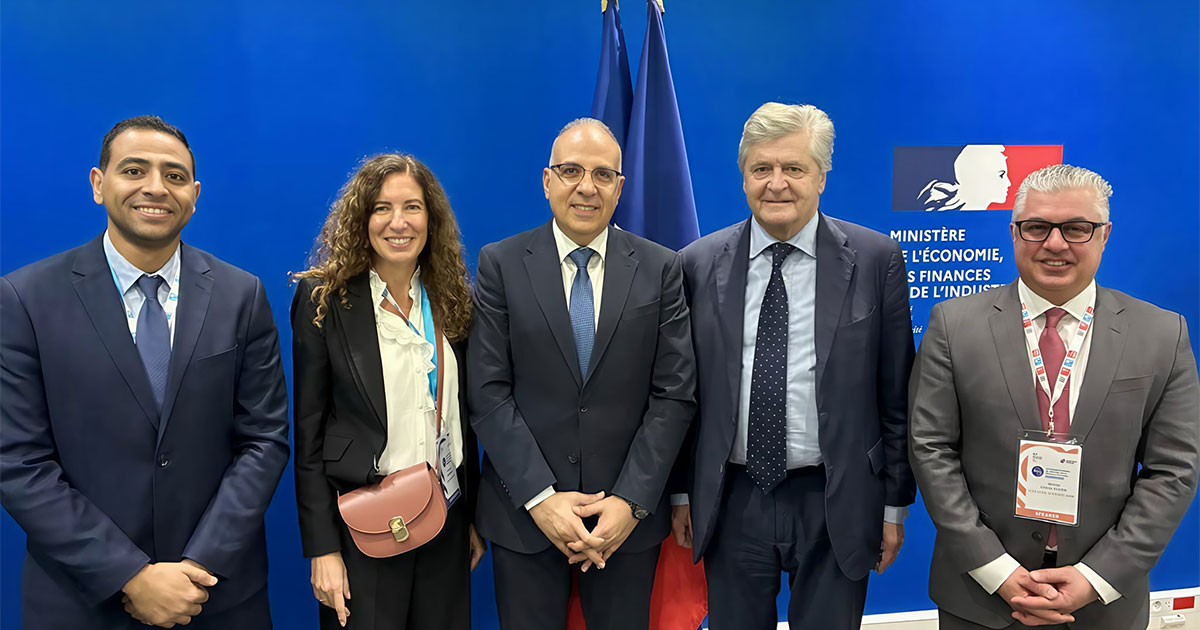
The Minister of Irrigation meets a number of French officials to discuss water resources development projects
The efforts of the government and state institutions continue to enhance cooperation with neighboring countries, institutions and international bodies to discuss ways of cooperation and sustainable development in various fields, andThe Earth Guards Foundationreviews the latest developments in cooperation with international institutions in the field of water resources development.
“Africa’s Ambition”… Strengthening African-French partnerships
Dr. Hani Sweilem, Minister of Water Resources and Irrigation, participated in the annual “Ambition Africa” conference, which was held in the French capital, Paris, with the aim of strengthening economic partnerships between African countries and France. He also met a numberAmong the French officials, most notably the Deputy Director of the French Development Agency (AFD), and Mrs. Barbara Bombili, the Ambassador in charge of the environment in the French government, to discuss ways to enhance water cooperation.

The conference also addressed areas of cooperation in the African water file, headed by Egypt and the French side, to enhance response to the needs of African countries, build a new partnership framework between Africa and France, continue sending experts to support the implementation of this strategy, develop a joint mechanism for technical assistance to prepare projects and build capacity, give priority to financing projects, and hold periodic workshops to formulate joint activities between the facility and the French side.

There, Dr. Hani Sweilem expressed his appreciation for the great and continuous cooperation with the French Development Agency in water and sanitation projects and developing capabilities to confront changes.Climate in Egypt.
Review of ongoing areas of cooperation between the two countries
During the side discussions, the Minister reviewed the position of a number of ongoing areas of cooperation between the two countries to improve the irrigation system and water resources, such as: modernizing the delta barrage management system, and modernizing the control systems for the Ismailia Canal, in which the review of technical reports has been completed, and preparations are being made to launch tender and contracting procedures before the end of this year.
The preparation position for the launch of the Fourth National Drainage Program was also presented, funded by the French Development Agency, the African Development Bank, the German Construction Bank, and the European Union.
The meeting also discussed the possibility of cooperation with the French side, the features of the strategic plan for the rehabilitation of lifting stations, which aims to determine priorities for rehabilitation, renewal, and establishing new stations in accordance withOperational needs, as the plan includes a complete census of existing and new stations, an assessment of the operational status, and identification of areas in which the private sector can contribute to improving performance.
Cooperation with the French Development Agency (AFD)
The French Development Agencyplays a fundamental role in French-Egyptian cooperation, working since 2006 to support social, economic and environmental transformation processes in Egypt, by promoting private sector growth and sustainable development through impactful investments in emerging markets.
The French Development Agency is intensifying its efforts to accompany Egypt in the transformation processes it has been undertaking in recent years and is also responding to a number of Egyptian needs, especially in the field of adaptation to climate change, training and creating new job opportunities.

In the field of sustainable development, the French Development Agency has various tools to cooperate with the Egyptian government to achieve its goals related to comprehensive sustainable development in line with Egypt’s Vision 2030, mainly in the field of sustainable infrastructure (energy, transportation, water, and sanitation) and in the field of financing climate projects and supporting the private sector and business community, in addition to social areas, such as social protection programs.
The Egyptian administration continues to seek to enhance international cooperation in various sectors of the economy, in line with Egypt’s Vision 2030, andHomat Al-Earth Foundationcontinues the government’s efforts to achieve comprehensive Sustainable Development Goals (SDGs) and raise the quality of life of the Egyptian citizen.


