

Artificial intelligence in the fields: Does digital agriculture pose a threat to agricultural diversity?
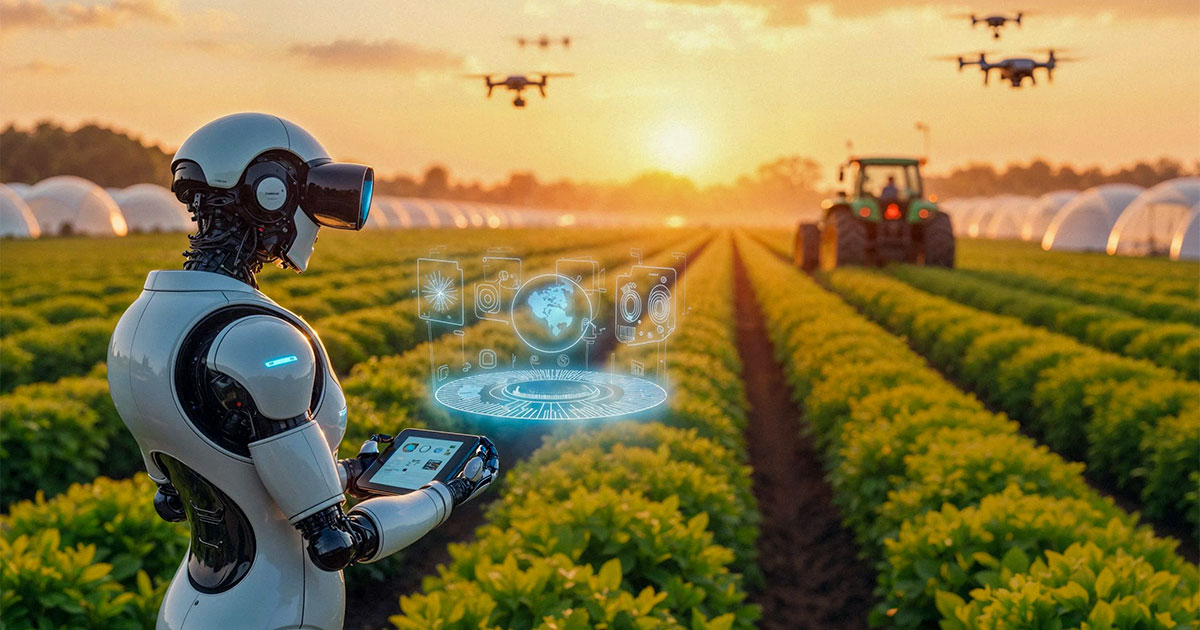

Artificial intelligence in the fields: Does digital agriculture pose a threat to agricultural diversity?
The agricultural sector is witnessing rapid transformation as digital technologies and smart systems enter the heart of the food production process. Artificial intelligence, big data, and satellite tools are starting to play an increasing role in soil analysis, climate monitoring, and guiding agricultural decisions. While these technologies are viewed as an opportunity to improve productivity and enhance resource efficiency, questions are rising about their impact on the shape of the global food system and the future of farmers’ decisions.
In this context, a report issued by theInternational Panel of Experts on Sustainable Food Systems (IPES-Food) network warned that the expansion of the use of artificial intelligence in agriculture may give big technology companies an increasing role in determining what is grown and how it is grown, which opens a broader debate about the balance of power within the global food system.
The rise of artificial intelligence in agriculture
In recent years, major technology companies such as Google, Microsoft, Amazon, IBM and Alibaba have entered the agriculture sector by developing digital tools based on artificial intelligence and data analysis. These tools rely on information collected from satellites, drones, and soil sensors, in addition to climate and agricultural production data.
This data is used to provide recommendations to farmers about the type of crops suitable for planting, the timing of irrigation, and the amount of fertilizers or pesticides required. As these applications expand, what is knowndigital agriculturehas become a rapidly growing market, with its value currently estimated at about $30 billion, with expectations that it will rise to more than $80 billion over the next decade.
However, the expansion of this market is not limited to developing new technical tools, as it extends to reshaping the method of agricultural decision-making itself, which raises questions about the limits of the role that algorithms can play in food production management.

Algorithmic farming and its impact on farmers’ decisions
The concept of algorithmic agriculture refers to the reliance of agricultural decisions on the recommendations of digital systems that analyze agricultural and environmental data. In this model, some elements of decision-making may move from the farmer himself to digital platforms that provide algorithm-based recommendations.
Critics of this trend believe that these platforms may create a centralized agricultural model, where technology companies and their partners in the agricultural sector determine production trends, instead of making decisions based on the needs of local farmers or the characteristics of different agricultural environments. As the scope of these tools expands, the most prominent question becomes: Will these digital recommendations remain a helpful tool for farmers to ensure the achievement of food security and the elimination of hunger (Goal 2), or may they gradually become an influential element in determining the shape of global agricultural production?
Danger of declining agricultural diversity
Among the concerns this shift raises is the possibility that widespread reliance on algorithms will reduce agricultural diversity. Digital systems often focus on the most popular and profitable crops in global markets, such as corn, wheat, rice, soy, and potatoes.
This focus may lead to the marginalization of local crops that have been developed by farming communities over many generations, such as some traditional grains in Africa or Asia, which may affect food security in these regions. Over time, this may contribute to the weakening of agricultural biodiversity, an essential component of the ability of food systems to adapt to climate change and changing environmental conditions. From here, the discussion moves from a mere technical issue to a broader issue related to the resilience of the global food system and its ability to confront shocks.

The global food system between centralization and fragility
Some experts warn that the expansion of digital agriculture may reinforce the centralization of the global food system, as agricultural production may become more tied to multinational companies that provide seeds, data and agricultural technologies. In this case, farmers may find themselves increasingly dependent on integrated packages of seeds, equipment and agricultural inputs linked to algorithmic recommendations.
Although this model may raise productivity in some cases, it may also make the food system more vulnerable to global shocks, whether climate crises, trade disruptions, or geopolitical disputes. The discussion about integrating artificial intelligence into agriculture is thus becoming part of a broader dialogue about how to achieve a balance between economic efficiency and food system resilience.
Agricultural innovation from the bottom up
In contrast to this centralized model, some experts call for promoting agricultural innovation that originates from the farming communities themselves. This includes supporting farmers’ local knowledge and encouraging agricultural practices that preserve biodiversity and enhance the adaptive capacity of agricultural systems, which necessarily positively impacts the achievement of overall Sustainable Development Goals (SDGs).
Experiences in several regions of the world indicate that farmers are able to develop innovative solutions based on local resources, such as protecting hundreds of traditional potato varieties in Peru, local seed conservation efforts in China, or farmers in Tanzania using social media to exchange information about the weather and markets. These models highlight the possibility of combining technological innovation with local knowledge, rather than one replacing the other.

In light of these transformations, the use of artificial intelligence tools in the field of agriculture remains a tool that can contribute to improving resource management and increasing food production, but at the same time it raises important questions about who owns agricultural data? Who determines production trends? How can we ensure that farmers remain at the heart of the decision-making process?
The Earth Guards Foundation believes that the employment of technology in the agricultural sector should take place within a framework that supports sustainability and enhances the independence of agricultural communities. Digital technologies can play an important role in improving production and resource management Goal (12) Responsible consumption and production, but they remain more effective when used to support farmers and protect agricultural diversity, in line with the Sustainable Development Goals (SDGs) related to eliminating hunger (Goal 2), promoting sustainable production patterns and protecting ecosystems.


