

An expanded meeting with the International Finance Corporation to review the aspects of developing the investment environment
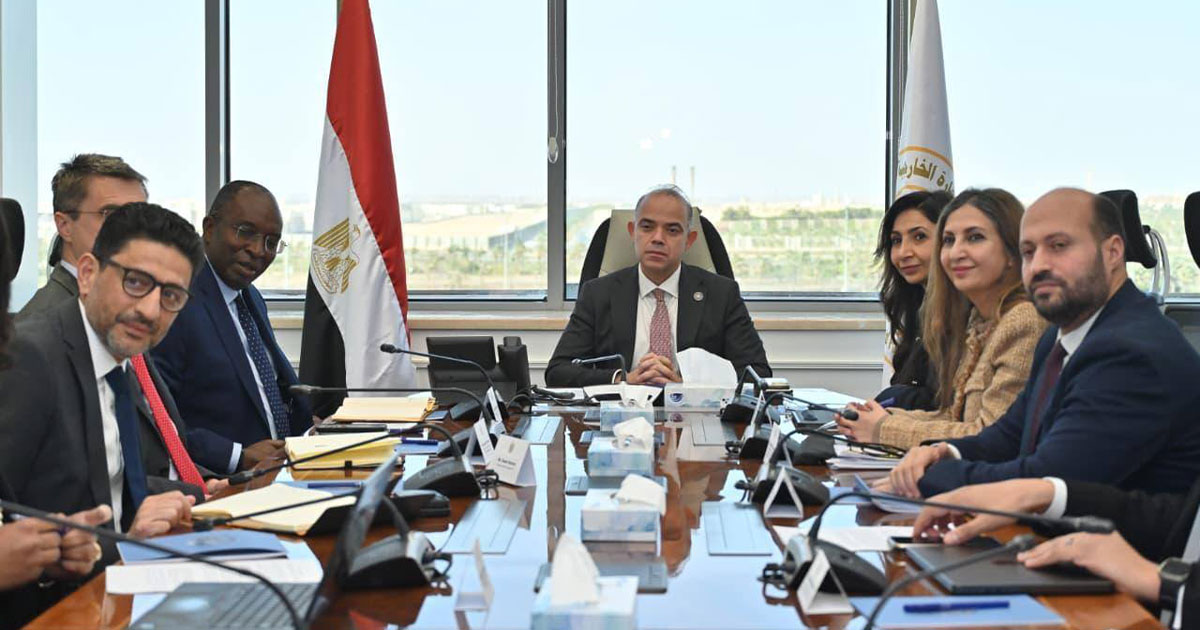

An expanded meeting with the International Finance Corporation to review the axes of developing the investment environment
In light of the accelerating competition between countries to attract investments and enhance growth rates, developing the investment environment has become a crucial element in building economies that are more flexible and able to adapt to global changes. This development has extended to include adopting modern models based on digital transformation, enhancing transparency, and linking economic policies with innovative financing tools that support sustainability and open new horizons for the private sector.
The importance of developing the investment environment is highlighted in its ability to achieve a balance between driving economic growth and responding to the requirements of sustainable development, by supporting investment in the green economy, empowering emerging companies, and expanding the scope of international partnerships.
In this context, the state is moving towards adopting an integrated vision to modernize the business environment, which contributes to attracting quality investments, raising the efficiency of resource management, and enhancing the competitiveness of the national economy at the regional and international levels.
Meeting with representatives of the International Finance Corporation (IFC)
In addition to the above, Dr. Mohamed Farid Saleh, Minister of Investment and Foreign Trade, held an expanded meeting with representatives of the International Finance Corporation, during which he discussed the most important aspects of his plan aimed at developing the investment environment in Egypt, and discussed the mechanisms of partnership and cooperation between the two parties in implementation.
Strategies were also reviewed to promotesustainable financing, support emerging companies, and activate the tools of the digital and green economy, in addition to a group of practical initiatives aimed at developing investment governance, enhancing digital transparency, and launching advanced capacity-building programmes, as well as innovative strategies to expand the carbon market and link it to social responsibility, in a way that supports efforts to develop the investment environment, restructure and attract investments, and these efforts also enhance the achievement of the goal. 8: Decent work and economic growth, Goal 12: Responsible consumption and production, and Goal 17: Partnerships to achieve the goals.
The Minister stressed that the development and reform plan within the framework of developing the investment environment is based on restructuring the management of the investment file in Egypt in a systematic and transparent manner, based on clear performance indicators and accurate measurement mechanisms, indicating that the evaluation of the Ministry’s affiliated entities will depend on key indicators that include the volume of targeted foreign direct investment, the number of new companies, and priority strategic sectors, provided that these indicators will be followed up via a data dashboard updated monthly to ensure objectivity and accuracy in the evaluation.
The Minister explained that the Ministry aims to modernize databases and link them to a modern business system to ensure full control over information related to exports and imports, which contributes to making accurate and effective investment decisions, stressing that providing accurate data from companies, including financial statements and tax compliance, will be a basic condition for obtaining government services, and supporting transparency is linked to Goal 16: Peace, justice, and strong institutions.

Investment funds and enhanced technical support
The meeting dealt with the launch of investment funds for emerging companies, where the development of a professional organizational structure for these funds was discussed to ensure the sustainability of financing and the success of Egyptian projects, and to attract international partners to contribute to setting criteria for selecting projects and monitoring their performance to ensure their success in the long term, while emphasizing the importance of the financial and administrative sustainability of these funds.
The two sides also discussed opportunities for cooperation with the International Finance Corporation in several mechanisms, including providing technical support and targeting global investors interested in carbon credits, and encouraging local companies to purchase these credits as part of their environmental commitments, in addition to linking the purchase of carbon credits to social responsibility programs, so that companies’ environmental commitments are transformed into direct financing for farmers or small environmental projects that contribute to reducing emissions, which contributes to achieving Sustainable Development Goals (SDGs) and shifting towards a green economy.
Enhancing the carbon market and the digital transformation of trade
The meeting also discussed the importance of creating an official register of carbon projects with the aim of documenting efforts to reduce emissions, in addition to launching an integrated platform to present these projects to international financiers, thus contributing to attracting climate finance. Expanding the issuance and trading of renewable energy certificates (I-RECs) was also discussed to enhance the attractiveness of investments in the clean energy sector.

The Minister reviewed the plan to launch a regulatory laboratory for foreign trade (TradeTech Sandbox), which aims to provide an experimental regulatory environment for trade technology, based on big data and advanced analysis, to support opening new markets and increasing exports. This system allows the integration of concerned authorities’ data with international data, providing an accurate view of markets and export opportunities, while involving artificial intelligence companies in developing advanced analytical solutions.
Capacity building and expanding investment partnerships
The development plan emphasized the importance of the human element as a fundamental pillar for the success of the strategy, by raising the efficiency of employees and enabling them to manage investments using scientific methods, thus enhancing the quality of investment services and ensuring the sustainability of institutional knowledge, in addition to supporting investment marketing capabilities in a systematic manner.
The meeting also discussed preparing accurate maps for stakeholders to identify target investors and link investment opportunities to market needs, based on data analysis.
At the conclusion of the meeting, it was emphasized to expand cooperation with the International Finance Corporation, within the framework of implementing an integrated vision based on digital transformation, transparency and capacity building, in a way that supports attracting quality investments and enhancing the competitiveness of the national economy.

In conclusion, the Ministry’s efforts reflect an integrated approach in developing the investment environment by integrating digital transformation, sustainability, and building human capabilities. This approach combines enhancing transparency, supporting emerging companies, and expanding international partnerships, which paves the way for attracting quality investments, increasing exports, and achieving a sustainable balance between economic growth and environmental responsibility, thus enhancing the competitiveness of the Egyptian economy at the regional and international levels.
For its part,The Earth Guards Foundation highlights these international partnerships that work to enhance environmental investments, support small and medium enterprises in the green economy, and link companies’ environmental commitments to social responsibility.
These efforts contribute to achieving the Sustainable Development Goals (SDGs), especially Goal 7: Clean and affordable energy by supporting renewable energy, Goal 13: Action for climate by reducing emissions, and Goal 8: Decent work and economic growth.


