

The story of lost rice and soaring prices in Japan
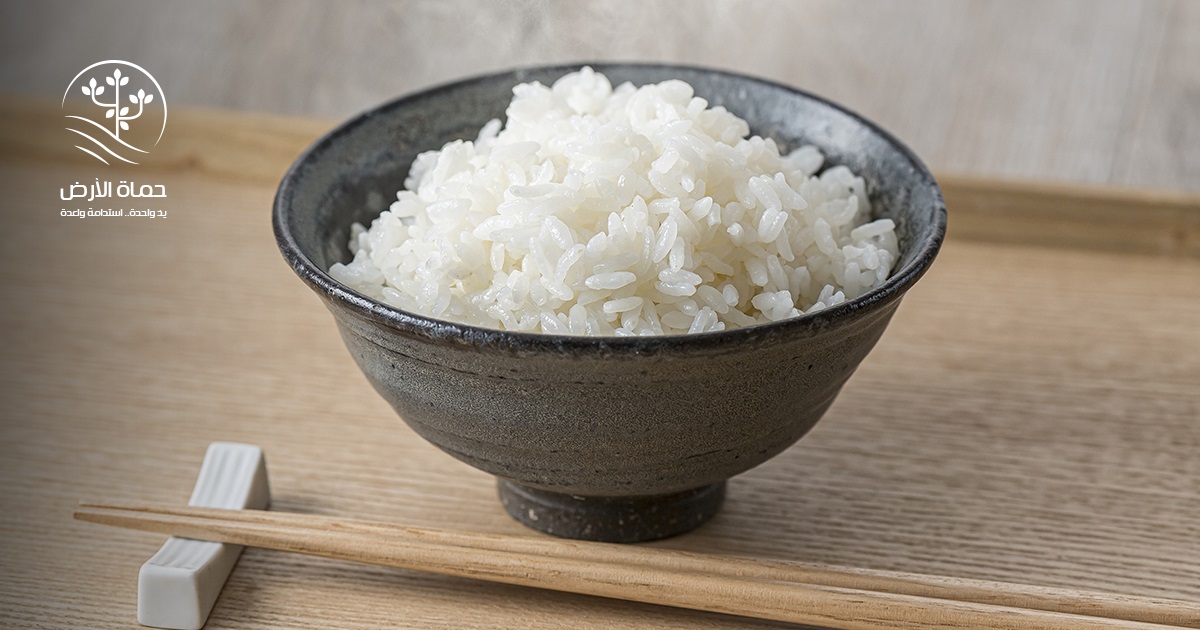

The story of lost rice and the burning prices in Japan
With the accelerating pace ofclimate change, its effects are no longer just future predictions, but have become a tangible reality that is reshaping the foundations of the economy, culture and societies around the world, and these transformations are clearly evident in many vital sectors, most notably agriculture, which is facing increasing pressures as a result of extreme weather phenomena.
While some regions are gradually adapting to these transformations, others are suffering from severe crises that threaten their food security. One of the countries recently suffering from these negative effects is Japan, where rice cultivation has long been considered an essential part of its national and agricultural identity. Today, Japan faces an unprecedented crisis that threatens the continuity of production of this vital crop, as a result of the intersection of several factors, including short-term agricultural policies, increasing heat waves, the spread of pests, and violent weather phenomena.
Recently, rice prices have witnessed a noticeable increase, and the supply in the markets has decreased. Which raised citizens’ concerns and left a wide resonance in the corridors of politics, reflecting the absence of sustainable development plans that balance production and resource protection. Hence,Defenders of the Earth will shed light in this article on the roots of the crisis, analyze its repercussions on food security, and explore possible solutions to it; So keep reading.
Rice is a symbol of Japanese culture
In Japan, rice is not just a staple food, but rather the cornerstone on which culture and society are built. The famous “japonica” beans, with a sticky texture and oval shape, accompany almost every meal, and are associated with religious occasions, celebrations and family holidays, as if it were a rope connecting the Japanese to their ancient roots. Therefore, any disruption in the availability of rice is considered a threat to the nation’s identity.
Although rice consumption has declined over the past decades due to changes in dietary patterns, its cultural and emotional importance has not diminished. The Japanese still prefer it over bread or pasta, and families still take pride in preparing different types of “onigiri” and “sushi” at home, and each plate of rice tells a story about the past, and nourishes a sense of belonging to the land and tradition.
How did the rice crisis begin?
The rice crisis in Japan did not erupt suddenly, but rather was the result of accumulations that began with climate change in the summer of 2023, when an unprecedented heat wave struck Japan, and temperatures recorded record levels exceeding 40 degrees Celsius in some areas. These harsh conditions caused crop stress and the spread of agricultural pests that destroyed large areas of rice fields.
Besides, previous Japanese government policies were based on pushing farmers to reduce the area under rice cultivation in order to balance supply and demand; Which led to a change in rice consumption patterns in Japan, and although these policies were effective in times of abundance, they became a burden in light of the scarcity of the crop.
The crisis was exacerbated by the Russian-Ukrainian war, which led to a rise in global wheat prices. This prompted many Japanese people to return to rice as a cheaper alternative, but the recurring climate changes, from drought to heavy rains, affected the rice cultivation cycle, which requires atmospheric stability, in addition to the deterioration of soil fertility as a result of high temperatures. Here it becomes clear that the crisis is not just a problem of supply and demand, but rather a reflection of the failure of agriculture to adapt to a changing and unstable climate.
When the deficit worsened, the government tried to intervene by releasing part of the stored emergency rice reserves, which are usually used in natural disasters. However, this step came late and at a slow pace, as only 10% of these reserves reached the markets while store shelves were almost empty, which led to an explosion of popular anger and the crisis turned into a political issue.
Statement of the Minister of Agriculture who ignited the street
The Japanese were waiting for their government to make firm and quick decisions to return rice to their tables, but they were surprised by a strange statement from the Minister of Agriculture, Taku Ito, in which he said: “I have never had to buy rice, because my supporters always give it to me as gifts.” These words sparked widespread anger, and were considered a complete disconnect from the reality of the ordinary citizen who struggles to meet his basic needs.
The minister later apologized, but he was forced to resign under great public and media pressure, in an attempt by Prime Minister Shigeru Ishiba to contain popular anger, especially with the fateful general elections approaching next July. The minister’s resignation clearly indicated the depth of the crisis, and the government’s failure so far to manage a sensitive food file; Which increased the state of confusion and tension.
In a scene that reflects the scale of the confusion, former Environment Minister Shinjiro Koizumi, a politician known for his previous attempts to reform the powerful agricultural lobby in Japan, was appointed to the position, and he was entrusted with the task of investigating the causes of the crisis and finding a quick solution that would restore people’s confidence in the government.
Intertwined interests deepen the crisis
The crisis does not stop at the borders of production alone, but rather extends to the complex market structure in Japan, where most farmers rely on a traditional system run by agricultural cooperatives, which are highly influential entities with close ties to the ruling party. These associations are considered a safety valve in regulating supply and demand, but today they find themselves in a defensive position after being surprised by the sudden shortage.
These associations were not equipped to deal with sudden climate change; The lack of accurate data on the effects of climate change on production, and the lack of flexible contingency plans, have made this traditional structure ineffective in facing new challenges. According to Masayuki Kanamori, executive officer at the General Federation of Cooperative Societies, the associations were surprised by the current shortage and misestimated the market’s needs. Worse, the Ministry of Agriculture’s data revealed that the rice reserves of the associations and wholesalers decreased by 400,000 tons compared to last year. Reaching a record low of 1.53 million tons only since June 2024.
This shortage also revealed structural problems in the supply chain, the most prominent of which is the market’s increasing dependence on non-traditional sales channels such as e-commerce and private companies. Which makes it difficult to track the movement of rice and determine its availability, and the matter became worse when accusations spread against some wholesalers of intentionally hoarding rice with the aim of raising prices and achieving double profits.
Developmental dimensions of the crisis
The rice crisis in Japan cannot be viewed in isolation from its environmental and development dimensions. It reveals the fragility of the national food system as a result of climate change. It also explains lax support for agricultural infrastructure and short-term policies. Which puts the country before the challenges of achieving Goal (2) of the Sustainable Development Goals (SDGs) related to eliminating hunger. The crisis also highlighted the weakness of planning and transparency in stock management and distribution. This negatively affects market flexibility and price fairness, and requires careful policies to ensure sustainability, environmental and social justice in the food value chain.
This crisis is considered an opportunity to reformulate the national agricultural model to keep pace with climate and economic challenges and be consistent with the Sustainable Development Goals (SDGs), especially Goal (13) related to climate action. Rice cultivation, which is linked to Japan’s cultural identity, requires technological innovation and resource recycling to enhance sustainable local production.
Government measures to resolve the rice crisis
In the context of confronting the crisis, Prime Minister Ishiba realizes that the continuation of this crisis may threaten the future of his government, and for this reason he pledged to reduce the price of rice to about 3,000 Japanese yen ($20) per 5 kilograms, a level that is considered acceptable to the majority of citizens. However, he admitted in Parliament that the government does not currently have a clear explanation for its failure to control prices, indicating that the first step will be to precisely determine the amount of rice available and the locations. وجوده.
The new Minister of Agriculture also indicated plans to switch to voluntary government contracts for rice, which would allow the government to better monitor prices and more equitable distribution in the future, but these plans collide with technical obstacles, such as the lack of production capacity necessary to convert brown rice in reserves into pure white rice, which the Japanese prefer.
In light of this confusion, some major stores in Japan began limiting the quantities of rice sold to each customer, and gave them only one bag per visit, in an attempt to contain panic and monopoly. Some also began importing rice from abroad, even though the Japanese consumer does not prefer imported types, which differ in taste and texture from local rice.
مستقبل زراعة الأَرز في اليابان
Apart from temporary solutions, the current crisis seems to be a loud alarm bell alerting the government to the fragility of the Japanese agricultural sector. The average age of a Japanese farmer is 69 years, and their population has decreased by half over the past two decades. To reach only about 1.1 million people in 2024. With the number of farmers dwindling and production costs rising, it is difficult to maintain food self-sufficiency in the near future.
Experts point out that the solution begins with restructuring agricultural policies, providing real incentives to young farmers, and encouraging agricultural innovation and modern technologies. The door should also be opened to expand Japanese rice exports if a future surplus is achieved, and not rely solely on internal markets.
In this sense,Earth Guards believes that the rice crisis in Japan is a strong reminder that food security cannot be separated from sustainable planning and rational management of resources. In times of climate change and geopolitical crises, achieving a balance between production, policies, and consumption becomes more urgent than ever.


