


Economic empowerment of Egyptian families... Maya Morsi’s vision towards comprehensive sustainability
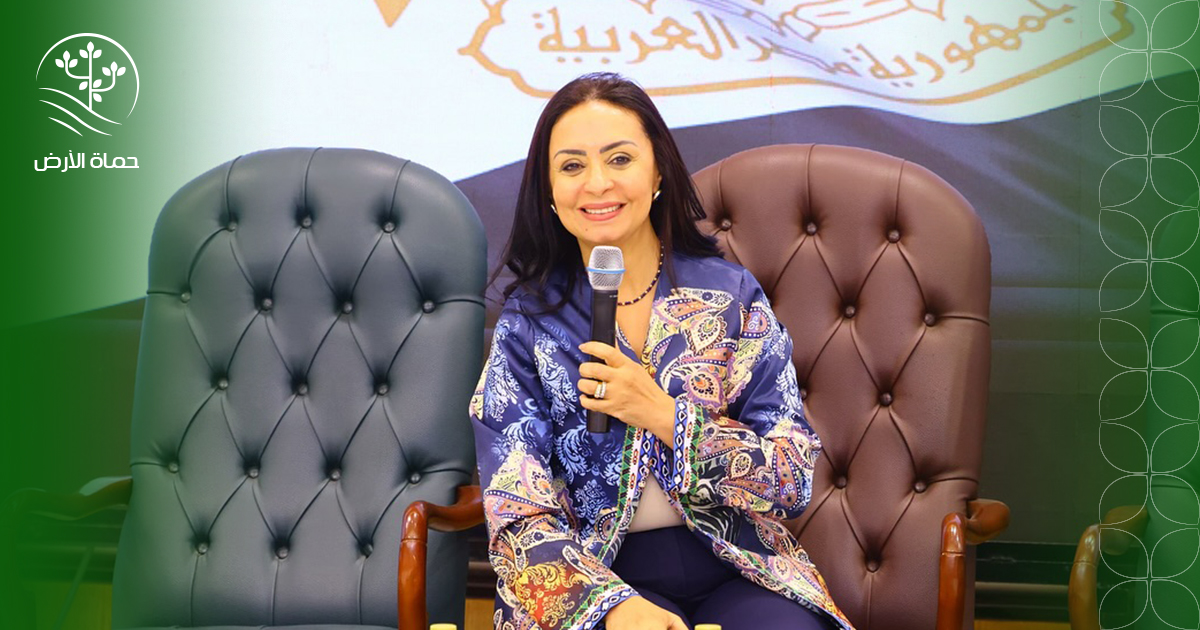
Economic empowerment of Egyptian families... Maya Morsi’s vision towards comprehensive sustainability
Today, Egypt is witnessing a turning point in the development of thesocial protection system; Traditional financial support programs are no longer sufficient to guarantee the dignity of citizens, which requires the adoption of comprehensive models based on the combination of direct care and effective economic empowerment of families, while providing innovative tools that enhance their independence and enable them to truly and sustainably participate in national economic activity.
In this context, Dr. Maya Morsi, Minister of Social Solidarity, stands out as a pivotal element in leading this transformation, as in her leadership of the Ministry, she adopts integrated strategies based on combining cash support, financial and banking services, and training and employment programs, in order to achieve a tangible impact on the lives of citizens.

This integration of care and empowerment - which is consistent with the new Social Security Law - reflects a comprehensive vision based on achieving social justice, with a clear focus on the most needy groups and the middle class. In this article, the Earth Protectors will review the initiatives led by Dr. Maya Morsi to empower families, and link education, health and employment with economic empowerment, in a way that transforms support into actual productive opportunities and promotes sustainable development.
An integrated vision to empower families and link support to production
During the Cabinet meeting chaired by Dr. Mostafa Madbouly, Prime Minister, Dr. Maya Morsi, Minister of Social Solidarity, reviewed the position of implementing the work of the strategic financial system for economic empowerment, stressing its role in transforming traditional financial support into effective empowerment tools.

Dr. Maya Morsi indicated that the system is based on Social Security Law No. 12 of 2025, and works as a pivotal tool for linking cash assistance with productive protection, enabling families able to work to participate in the national economy and enhancing their independence, while gradually integrating beneficiaries of programs such as “Solidarity and Dignity” into sustainable productive activities.
Four integrated tributaries to achieve a tangible impact
Dr. Maya Morsi explained that the strategic financial system for economic empowerment consists of four main tributaries that work in integration to ensure a sustainable impact on the beneficiaries. The first tributary includes the digital infrastructure, which includes the “Tamkeen” platform for linking household data to executive authorities, in addition to tools such as the “Tahwisha” application for digital savings and the “Ayad Misr” platform for marketing handmade products, which contributes to expanding financial and digital inclusion.

The second tributary focuses on financial, financing and insurance products, including soft lending, micro-insurance, and employment and investment programmes. The third tributary covers training and employment through skills development, entrepreneurship, and productive crafts programmes, while the fourth tributary specializes in technical support and marketing, represented by programs such as the “Osul” programs for transferring productive assets, and the “Crowd” initiative to promote strategic agriculture and local food security.
This integrated construction of the four tributaries provides a clear vision of how the system works to transform traditional financial support into a comprehensive network of enabling tools, combining financial inclusion, training, employment, and technical support, so that efforts are integrated to achieve a tangible and sustainable impact on families, while opening real horizons for the participation of beneficiaries in economic activity, which paves the way for reviewing practical initiatives in the fields of education and health.
Linking economic empowerment and education and health programs
In the context of her keenness for economic empowerment to be a comprehensive tool for changing the lives of citizens, Dr. Maya Morsi worked to integrate education and health programs within the strategic financial system. One of the most prominent of these initiatives is the hot school meals program in Fayoum Governorate, which was implemented in cooperation between the Ministries of Education, Social Solidarity, Health and Population, and in partnership with the Egyptian Food Bank.
The pilot phase resulted in 9 primary schools benefiting, as more than 40,000 meals were provided to students and workers, which reflected positively on high levels of attendance and concentration, a decrease in dropouts, in addition to supporting the general health of students.

The expansion plan to be implemented to include more than three million students in the governorates most in need during the 2025-2026 academic year represents a practical embodiment of the strategic vision that links education, nutrition, and economic empowerment. To ensure a sustainable and long-term impact on families and the entire community.
In conclusion,The Earth Guards Foundation believes that linking economic empowerment to education and health programs constitutes an integrated model that redefines social protection in Egypt, from direct support to actual economic independence. Financial tools, digital inclusion, training, and technical support create an integrated network that enables families to participate effectively in the economy, while enhancing their productive, educational, and health capabilities, in a way that achieves a sustainable impact, serves social justice, and promotes sustainable development on the ground.


