

Ahmed Taha, Chairman of Jahar, speaks about Egyptian health quality standards at the “Fidia Academy” conference
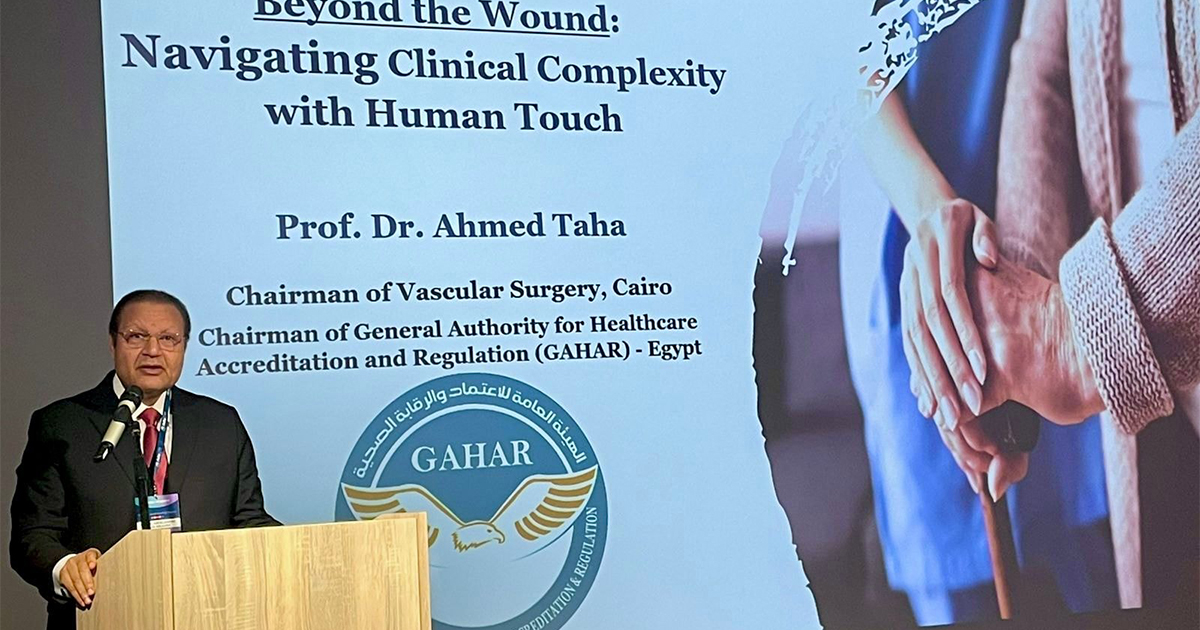
Ahmed Taha Rais Jahar speaks about Egyptian health quality standards at a conference “Fidia Academy”
There is no doubt that the General Authority for Health Accreditation and SupervisionJahar – and other Egyptian health institutions – has become more sustainable in recent years, and its efforts within health reform in Egypt have focused on developing accurate and internationally accredited quality standards, aiming to raise the efficiency of medical services and enhance health sustainability.
Because Gahar – the General Authority for Health Accreditation and Control – is a pioneering Egyptian model, it is always invited to international conferences, which work to sustain the health sectors and their efforts. Therefore, Dr. Ahmed Taha, “President of the General Authority for Health Accreditation and Control,” participated in the “Fidia Academy” international scientific conference in Italy.
Concerning this,Earth Guardsin this article sheds light on the Egyptian participation through the speech of the head of Gahar – Dr. Ahmed Taha – while measuring its repercussions on Egyptian health efforts regionally and globally. So keep reading.
Balance between technology and people
During the conference held in the Italian city of Abano Terme between September 12 and 13, Dr. Ahmed Taha, Chairman of Gahar, presented an integrated presentation of the Egyptian experience in managing woundsand chronic and acute ulcers, stressing that these cases represent a complex health challenge because of the complications they cause, such as infection and delayed healing. Tissues.
The head of the General Authority for Health Accreditation and Control also explained that the authority’s vision in dealing with these challenges is based on integrating the clinical, psychological and preventive aspects, within a framework that balances technical quality and the human dimension.
Power and international quality standards
Then Dr. Ahmed Taha pointed out that the quality standards set by Jahar – which are standards internationally accredited by the International Society for Healthcare QualityISQua – aim to raise the level of health services and reduce clinical risks within hospitals. These standards include:
- Commitment to infection control.
- Ensuring the safety of surgical procedures.
- Achieving sterilization quality.
- Accurate tracking of the patient’s path before, during and after medical interventions.

In the same context, the head of the authority explained that obtaining Jahar accreditation for health institutions has become a certificate of trust that reflects their commitment to international standards, and contributes to raising their competitive reputation, developing the work environment, and consolidating a culture of quality and safety within the Egyptian health system.
Jahar and Patient-Centered Care
There, Dr. Ahmed Taha confirmed that Jahar’s philosophy is not limited to the technical aspect only, but extends to the involvement of patients and their families in treatment plans, as they are essential partners in the medical decision fromdiagnosis until the recovery stage.
The head of the General Authority for Health Accreditation and Control also explained that this patient-centered approach has become a major pillar of Egyptian health reform. He drew attention to the fact that Jahar has established clear mechanisms; In order to ensure effective communication with patients and their families, by explaining treatment options, risks, and prevention methods, and providing psychological and social support to patients, especially patients with chronic wounds, such asbed sores, and diabetic foot.
The head of the General Authority for Health Accreditation and Supervision also stressed that systematic training for families on how to care for a wound, change bandages, and handle sterilization tools; All of these procedures contribute significantly to increasing recovery rates, and can also reduce the possibility of relapse.
The conference is a platform for integrating experiences
This active participation came from the Chairman of Jahar – Dr. Ahmed Taha – within a scientific session entitled “Beyond Wounds: Dealing with Clinical Complexities with a Human Touch,” and in the presence of an elite group of leading wound treatment experts from various countries of the world, including Professor Caraco and Professor Romanelli from Italy, Dr. Taskov from Romania, Dr. May Al-Samahi from Egypt, and Dr. Erbenova from Slovakia, And Professor Denny is from the Czech Republic.
This prominent presence constituted scientific diversity and an important platform for exchanging experiences between different medical schools. It is also considered a review of the latest researchand clinical trials in this precise specialty.
Jahar and the Horizon of Health Sustainability
Jahar’s vision – according to what Dr. Ahmed Taha emphasized – places health sustainability at the heart of its priorities, as the goal is no longer providing a traditional therapeutic service, but rather building a flexible health system capable of facing future challenges and achieving a better quality of life for patients.

The concept of health quality
Jahar’s presence in international forums – such as the Fidia Academy conference – expresses a qualitative shift in the philosophy of managing the Egyptian health system. While many systems still view quality standards as rigid procedural protocols, Jahar’s experience came to provide a more humane and comprehensive dimension, a dimension that links clinical competence, patient awareness, and the role of the family, and this is within the framework of a sustainable development vision.
This is what makes the General Authority for Health Accreditation and Control an exportable model, and a model that can redefine the concept of “quality” and transform it from being a formal commitment to being an established culture within the health care structure.
From a broader angle, this path opens the door for Egypt to strengthen its position – regionally and internationally – in the field ofClinical and preventive medicine, which reflects its ability to formulate standards that respond to the needs of the health reality and are compatible with future global trends.
Therefore,The Earth Guards Foundationin Jahar – with the advanced quality standards it has adopted and effective international partnerships – finds a way to build a sustainable health economy, a health economy that places the patient at the heart of the reform process, and links bodily safety and human dignity. Implementing health equity locally and achieving Sustainable Development Goals (SDGs) globally.


