

Poverty in times of war… How do conflicts lead to the suffering of billions and threaten development?
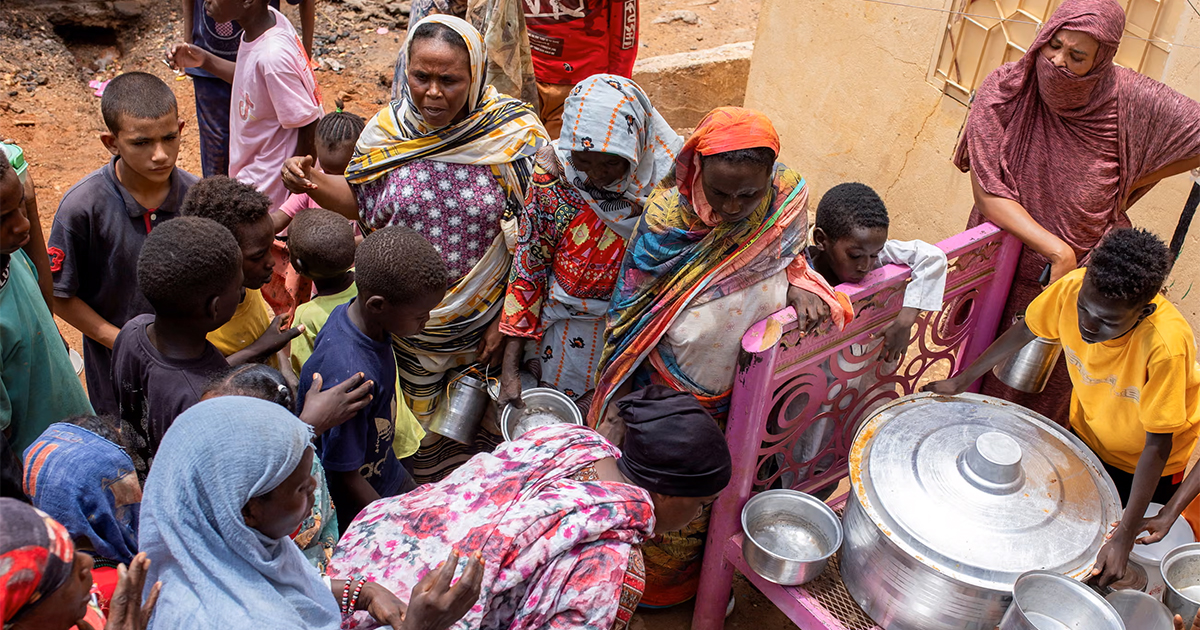
Poverty in times of war.. How do conflicts lead to the suffering of billions and threaten development?
Before talking about poverty in times of war, we must realize thatThe 2030 Sustainable Development Agendais based on a comprehensive vision, a vision that aims to eliminate poverty and hunger, achieve social justice, spread peace, and make it a necessary gateway to all comprehensive development efforts.
On the other hand, there is a hidden convergence between the goals of sustainable development and some global issues. The most prominent of these issues are: conflicts, violence, and wars that undermine efforts to improve the quality of education and health, and eliminate all opportunities for decent work. Hope for a sustainable future declines.
Earth Defenders Foundation believes that addressing poverty in times of war requires a global vision that balances stopping conflicts and promoting development paths, as they are two inseparable pillars on the way to achieving sustainability goals; Therefore,The Foundation will address the dimensions of this challenge with an in-depth, fact-based reading, while clarifying how to address conflicts within the framework of sustainable development and its goals. So keep reading.
Shocking numbers reveal the depth of suffering
To understand the depth of the crisis, the latest global statistics indicate that about 1.1 billion people today live in a state of poverty during times of war. This poverty is multidimensional, goes beyond income deprivation, and includes the absence of basic services such as food, education, and health. Likewise, about 455 million of these poor people reside – according to a joint study between the United Nations and the Oxford Center on Poverty and Development– in countries witnessing armed conflicts and prolonged wars.

This close connection between conflicts and poverty is no longer a passing phenomenon. Two-thirds of the world’s poor population are at the same time – according to the statement of the former Secretary-General of the United Nations Development Program “Achim Steiner” – victims of wars; Which requires urgent support to break the cycle of crisis. International reports also confirm that extreme poverty is accelerating in 39 countries mired in conflict, which threatens the lives of more than a billion people with poverty and hunger.
How many poor people are in the world?
The tragedy of this reality is evident in World Bank data, which indicates that421 million people live on less than $3 a dayin economies suffering from conflict, which is more than the number of poor people in the rest of the world’s countries combined. The World Bank expects the number to rise to 435 million by 2030. That is, approximately 60% of the world’s total poor.
Despite some achievements made in the field of Sustainable Development Goals (SDGs) in recent decades, the intensification of global conflicts puts the Sustainable Development Goals (SDGs) – especially the eradication of poverty and the elimination of zero hunger – out of reach.
In detail, more than half of these poor people are children under the age of eighteen, which reflects the fragility of the future of development. In conflict-stricken countries, only a quarter of the poor have access to electricity, compared to 95% in stable countries.

In the areas of health, education, and nutrition – and other goals of the 2030 Development Plan – the gaps are horrific: children are dying at higher rates, families are losing food and educational opportunities, and communities are living on the margins of life.
Poverty and its social effects
From the above it is clear that the most vulnerable segments – children, women and the elderly – are the ones who pay the highest price due to armed conflicts. HereThe war in Afghanistan – for example – causes an additional 5.3 million people to enter poverty rates between 2015 and 2023 until two-thirds of the population is below the poverty line.

The most prominent features of deterioration in conflict countries
Wars have weakened state institutions and global labor markets. The per capita national income in conflict countries has been declining at a rate of 1.8% annually since 2020, when other countries achieved growth of approximately 2.9%. This disparity explains the depth of the gap in living standards: the average annual per capita income in conflict countries does not exceed $1,500 since 2010,compared to about $6,900 in other developing economiesthat do not have armed conflicts.
So, the features and effects of these conflicts crystallize as follows:
- Extreme poverty rates rise to approximately 40% of the population of conflict areas.
- Continuous decline in per capita national income and no significant economic growth.
- Despair seeps into the souls of young people; Which prompts some of them to join armed groups.
These conditions clearly show that the success of the 2030 Agenda for Sustainable Development depends on the ability of the international community to stop conflicts. Otherwise, development standards will erode in the face of the suffering of millions of people in many parts of the world.
Wars and Sustainable Development
Although the 2030 Agenda affirms that eradicating poverty and combating hunger will not be achieved in isolation from just and comprehensive peace; Conflicts make efforts to reduce poverty and hunger rates – globally – extremely slow. In conflict areas, one in three are poor, compared to one in nine in areas witnessing peace and stability.
Then the destructive impact of these wars extends to other goals; Including:
- Goal (3) Good health and well-being – millions are denied medical care.
- Goal (4) Quality education – millions of children out of school.
- Goal (6) Clean water and hygiene – deprivation of drinking water.
- Goal (7) Clean and affordable energy – absence of electricity and renewable energy.
Therefore, the World Bank stresses that the international goals have become “out of reach,” especially in light of the continuation of wars and conflicts in many countries of the world.

Paths of Hope and International Initiatives
Yes, the scene is kind of dark! However, there are solutions that can address the current situation if there is international will and broad international solidarity. This is why development institutions call for strengthening partnerships and directing development investments towards affected areas, especially in the areas of education, health and infrastructure. Local strategies designed according to the specificity of each conflict may contribute to alleviating the burden of poverty.
Among the solutions proposed:
- Investing in sustainable agriculture projects; To enhance food security.
- Supporting the workforce with training and employment; To reduce the chances of engaging in conflicts.
- Building social safety nets; To ensure the protection of the most vulnerable groups.
- Enhancing transparency; To combat corruption in local governments.

Therefore, sustainable development experts and officials of leadership centers in this field confirm that relying on accurate data – such as data on the Multidimensional Poverty Index – helps provide assistance to the most affected groups, namely children, women, and the elderly.
Development goals against violence
Poverty in times of war is not an economic issue that looks at numbers and investments only, but rather it is a comprehensive humanitarian crisis that threatens the survival and stability of all societies. Because conflicts destroy cities and resources, uproot the roots of sustainable development, and plant in their place vicious cycles of violence and despair.
Experience has proven that investment in education, health, and decent work cannot bear fruit unless it is built on safe, stable ground. Therefore, the paths of hope lie in building a new global social contract that balances stopping violence with achieving development goals, and reformulates priorities so that social justice and the protection of vulnerable groups are given priority over any narrow interests.
From the above you can seeThe Earth Guards Foundationthat addressing poverty in times of war requires a joint effort between governments, civil society and international institutions, an effort that recognizes that development and peace are inseparable twins. Either they move together towards a sustainable future, or one of them stumbles and falls. the other; Therefore, the Foundation spreads awareness of the importance of achieving the Sustainable Development Goals (SDGs), especially Goal No. (16) Peace, Justice and Strong Institutions.


