


Sustainable poultry farms.. How do mobile barns reshape poultry farming methods?

Sustainable poultry farms.. How do mobile barns reshape poultry farming methods?
TheSustainable Poultry Farms sector has seen increasing interest in recent years, with debate mounting around the impact of intensive farming systems on soil, water and animal health. The mobile barn model, or what is known as the Rolling Coop, has emerged as a practical solution that combines animal production and land management in a way that mimics nature.
The idea seems simple, but it carries broader environmental and economic dimensions that rethink the concept of traditional poultry farms, which prompts a review of the mechanism of operation of this system, its impact on soil fertility, its economic repercussions, and its role in improving the quality of the product, leading to an assessment of the opportunities for its spread within sustainable agriculture paths.
Transformation from traditional poultry farms
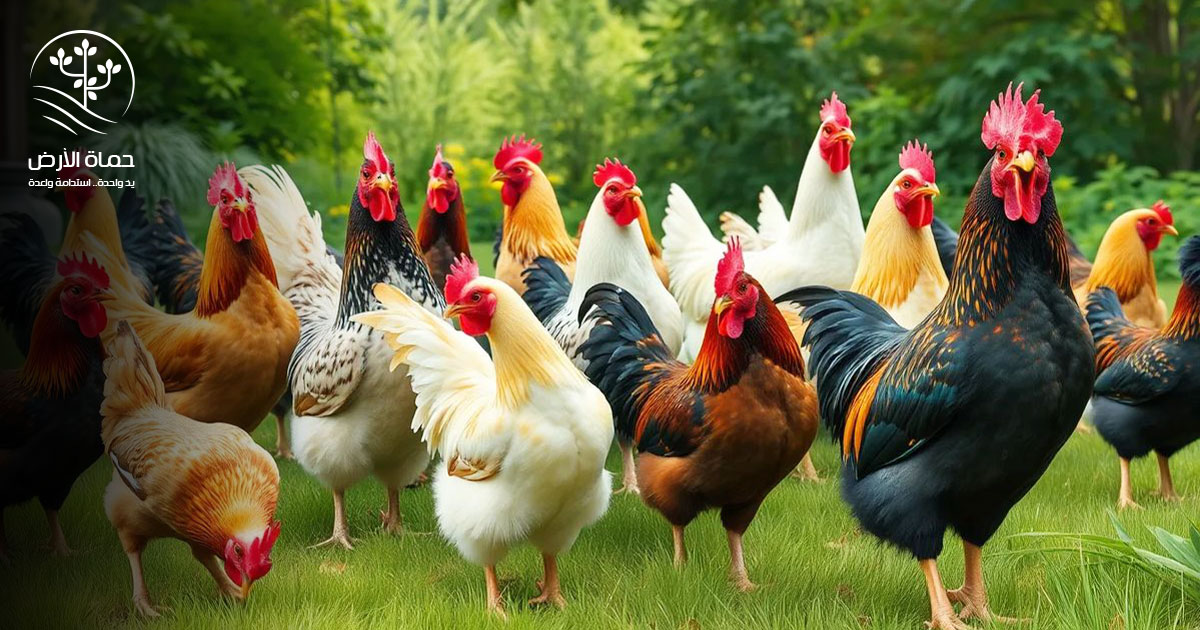
In traditional systems, poultry remain inside fixed pens, which leads to the accumulation of waste in a limited space, and an increased need for constant cleaning and the use of disinfectants, in addition to higher disease rates. As for the mobile barn model, the barn moves daily or every few days over a new area of land, allowing the poultry to graze naturally and eat insects and herbs.
This periodic movement gives birds a more diverse environment, reduces environmental pressure on one point, and contributes to the health of poultry. Its impact also extends directly to the soil itself, where bird droppings turn into an active ingredient in the process of natural fertilization and reviving the fertility of the land.

Natural fertilization and improving soil fertility
One of the most important advantages of this model is that it turns poultry farm waste into a direct resource for soil nutrition. When the barn is moved regularly, the organic waste is distributed evenly over the agricultural areas, which enhances the nitrogen content and improves the soil structure.
This method is consistent with the principles of regenerative agriculture, which focuses on restoring the land’s fertility rather than depleting it, and reduces dependence on chemical fertilizers. As the cycle repeats, vulnerable agricultural areas are transformed into more productive lands, which opens the door to integration betweenpoultry raisingand crop production.
This integration between improving soil fertility and increasing its productivity extends its impact to the economic equation of the farm, as inputs decrease and efficiency improves, which enhances the reduction of costs and enhances financial viability.
Economic efficiency and cost reduction
From an economic standpoint, this system reduces some of the feed costs, as poultry depends on natural grazing for part of their nutrition. Reducing crowding also reduces the possibility of the spread of diseases, which is reflected in lower treatment costs and losses.
Besides, the design of mobile sheds is often based on light materials that are easy to move, such as metal frames or PVC pipes with safety netting, which makes the initial investment less complicated than large industrial poultry farms. Here it becomes clear that sustainability may represent a more efficient model in the medium and long term.
A model that redefines the relationship between production and the environment
The success of the mobile poultry farm model does not involve the idea of movement per se, but rather includes rearranging the relationship between agricultural production and nature’s cycles. Instead of treating the land as a space that permanently bears the productive burden, it is viewed as a partner in the process, with the ability to give and renew if it is managed in an appropriate rhythm. Here the mobile barn becomes a tool for regulating this rhythm, so that the animal density is distributed over different areas, and the soil is given a chance to recover between each cycle.
In this context, poultry litter is treated not as a burden that requires costly management, but as an organic resource that replenishes the soil with nitrogen and nutrients. As the barn is moved periodically, these elements are distributed evenly, so the soil structure improves and its ability to retain water increases, which is directly reflected in the quality of the vegetation in the next cycle.
This interconnection between animals, soil, and plants also contributes to building a production system closer to natural ecosystems, where each link plays a complementary role to the other. Poultry feed on insects and herbs, and reduce some pests, while renewable soil provides a better environment for the growth of crops or pastures, creating an integrated production cycle in which losses are reduced and the efficiency of resource use increases.

In this sense, this model includes tools to improve egg or meat production, and also goes beyond redefining poultry farms as part of a productive ecosystem, capable of achieving a balance between economic return and the health of the land in the long term, which embodies the essence of agricultural sustainability in a simple and scalable practical application.
In conclusion, the mobile barn experience reveals that agricultural innovation is not necessarily linked to complex solutions as much as it is linked to reorganizing the relationship between animals and land. The success of this model requires conscious management of periodic grazing, controlling bird numbers in proportion to the land area, and giving the soil rest periods that allow it to regenerate. Its integration into programs to support small and medium farmers can enhance the flexibility of local production and increase the efficiency of resource use in rural environments.
The Earth Guards Foundationconfirms that such models represent a practical application of the philosophy of responsible production, where production activity is transformed from a source of pressure on resources into a supportive element for their recovery. Building balanced production systems that combine economic viability and soil health establishes a more stable production path capable of meeting the needs of the present without compromising the rights of future generations.


