

Here are the most searched topics for the Grand Egyptian Museum in 2026
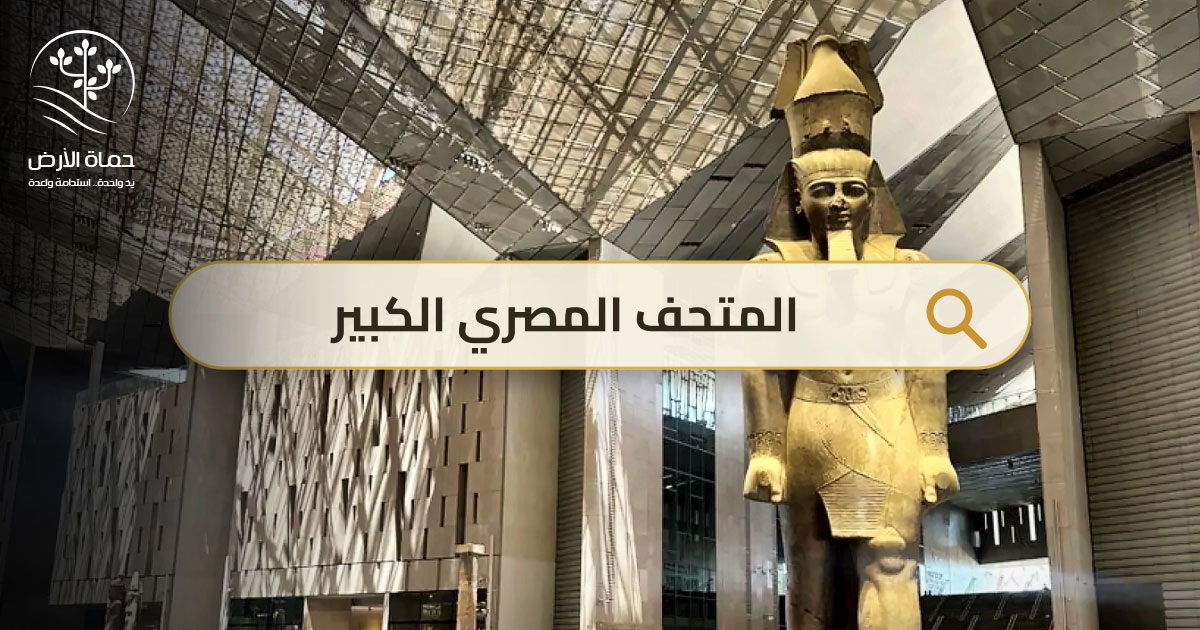

Here are the most searched topics for the Grand Egyptian Museum in 2026
The Grand Egyptian Museum is a global tourist destination, and a project that serves at least four Sustainable Development Goals: clean energy (Goal 7), economic growth (Goal 8), innovative infrastructure (Goal 9), sustainable cities and communities and heritage protection (Goal 11).
This is also revealed by browsers’ questions on search engines in 2026; Egyptians are asking about the transfer of the statue of Ramses II, the economic value of the museum, and the best times to visit. Others ask about: Khufu’s boat, Cleopatra, and the length of the tour it takes to visit the museum.
So read with you The Earth Guards Foundation This analytical article contains a number of the most frequently searched questions about the Grand Egyptian Museum, as a gateway to achieving sustainable development goals, and then answers them with information that opens horizons of knowledge; So keep reading.
Where is the Grand Egyptian Museum located?
First, we must show you the location of the Grand Egyptian Museum, which is located in Giza, directly near the Pyramids Plateau. Therefore, it links the ancient Egyptian civilization and its place of origin in one journey. This part is close – in one way or another – to the essence of development itself. It is one destination that entertains visitors and revitalizes the Egyptian economy.

Three questions and three objectives
As for the most researched questions Search engines for the Grand Egyptian Museum, as we mentioned previously, include the transfer of the statue of Ramses II, the economic value of the museum, and the best times to visit. Behind each question there is a clear development goal, which we will explain to you in the following lines.
Engineering in the Service of Heritage
The statue of Ramses II is one of the museum’s most famous pieces. It is approximately 11 meters high and weighs about 83 tons. It was transferred in stages; From Ramses Square in Cairo to the museum site, then to the main lobby of the museum; In order to be at the forefront of receiving visitors from different countries of the world.
Why do people ask about his transfer? Because transporting a huge granite statue – thousands of years old – without damage requires careful engineering and monitoring of the vibrations that may occur during its transport, and this is the essence of the eleventh goal: sustainable cities and local communities. Its objectives are based on enhancing efforts to protect cultural and natural heritage.
The economic value of the museum
Many people also ask: Is the museum worth all this investment? The answer is stated by the fact that Egyptian and foreign visitors generate income and revenue through booking tickets for the Grand Egyptian Museum, in addition to what they spend on hotel services, transportation, food, and craft industries.
From this angle, the economic income and financial return from visiting the Grand Egyptian Museum are part of the efforts to achieve Goal 8 (Decent work and economic growth), which is based on providing sustainable tourism that provides job opportunities and promotes Egyptian culture and products.
Duration of the guided tour
There is also much research on the average duration of the tour during which a visitor can enjoy the collections of the Grand Egyptian Museum, but there is no single fixed time; Because it depends on the path the visitor chooses and the number of halls.
We can suggest allocating three to four hours for a careful visit, and a longer time if the visitor wants to see the complete halls, such as the hall of King Tutankhamun, or the hall of Khufu’s boat, and other valuable collectibles located in large areas.
Therefore, we emphasize that planning time protects artifacts from crowds of visitors, and also protects visitors from fatigue, and it is a form of responsible tourism, which is supported by the twelfth goal of the Sustainable Development Goals: responsible consumption and production.

Is Is the Grand Egyptian Museum environmentally friendly?
To answer the question: Is the Grand Egyptian Museum environmentally friendly? Practical evidence confirms this. In 2026, the Ministry of Tourism and Antiquities inaugurated a solar energy station in the museum, with support from the United Nations Development Program and the Japan International Cooperation Agency (JICA).
In the end, the Grand Egyptian Museum reveals a truth that goes beyond the limits of being an archaeological monument or a tourist destination. Because the true value of heritage is revealed when it is transformed into a cognitive, economic and cultural resource whose impact extends to future generations.
This is what prompts The Earth Guards Foundation to say: The greatest challenge facing the Grand Egyptian Museum is to establish a model that makes knowledge of heritage a gateway to sustainable development, and makes Innovation is a means to protect it, and sustainability is a criterion for measuring its impact.


