

The Minister of Health witnesses the celebration of World Rare Disease Day to promote good health
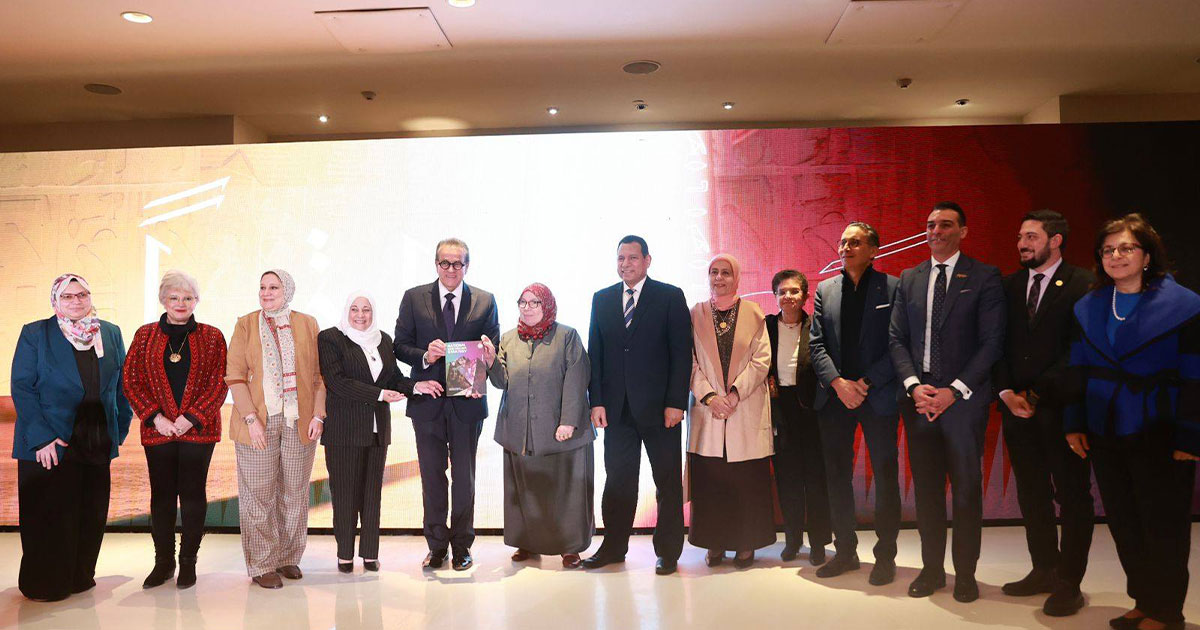

The Minister of Health witnesses the celebration of World Rare Disease Day to promote good health
The concept of supporting good health extends to dealing withrare diseasesalong with the most common diseases, as one of the standards of the strength of health systems and their ability to reach the smallest and most needy groups. These diseases, with their diagnostic complexities and high treatment costs, represent a true test of the comprehensiveness and fairness of health policies at the national and international levels, and efforts also reflect the growing interest in achieving the third goal of the Sustainable Development Goals (SDGs) of good health and well-being by providing comprehensive and equitable health care.
In this context, the Egyptian role in supporting good health reflects an integrated approach that includes rare diseases among its health priorities, by adopting institutional approaches that combine early diagnosis, sustainable financing, database building, and international cooperation, in a way that consolidates the patient’s right to obtain fair health care, regardless of the nature or rarity of his condition.
World Rare Disease Day
In order to enhance Egypt’s regional and international role in supporting good health, Dr. Khaled Abdel Ghaffar, Minister of Health and Population, witnessed the World Rare Disease Day celebration, under the slogan “Advance, Innovate, Activate,” in the presence of representatives of prominent international organizations. He stressed during his speech that rare diseases, which affect about 300 million people around the world, have transformed from a symbol of silence and isolation into a focus of science and global solidarity, stressing the necessity of building integrated health systems that go beyond simply raising awareness, and highlighting International cooperation and global organizations The importance of partnerships to achieve global health goals (Goal 17).
The Minister also reviewed Egypt’s efforts spanning decades, starting with the national program for early detection of newborns, which gradually expanded, leading to screening for 19 hereditary diseases within the first 72 hours, as well as launching the presidential initiative for early detection of rare diseases.

Rare Disease Fund and National Strategy
In a step to enhance sustainable financing to support good health, the Minister revealed the establishment of the Rare Disease Fund to be a sustainable financing mechanism that guarantees the provision of life-saving treatments based on medical need, with the formation of a supreme scientific committee that identified 12 rare diseases of national priority based on the burden and severity of the disease and the sustainability of support.
The Minister revealed the details of the Egyptian national strategy for rare diseases for the next five years, which integrates diagnosis, financing, care pathways, data systems, and the national registry into an integrated, measurable framework.
The first historic decision of the World Health Assembly
At the international level, Egypt is working to strengthen its pioneering role in leading the adoption of the first historic World Health Assembly resolution on rare diseases, which paves the way for the development of a ten-year global action plan, confirming Egypt’s readiness to contribute effectively as a partner in knowledge production, capacity building, and genomic research.
Dr. Khaled Abdel Ghaffar concluded by emphasizing that the right to health is a universal right that does not accept exception, and that Egypt’s agenda is based on institutional and scientific foundations, with a continued commitment to international cooperation to ensure that no patient is left behind due to the rarity of his condition, and this approach is consistent with the comprehensive Sustainable Development Goals (SDGs) in their social dimension by achieving goal (10) reducing inequalities.
National strategy and institutional transformation
The state continues its efforts in the file of rare diseases by implementing the National Strategy 2024-2030, issuing legislation regulating governance and financing, in addition to establishing the national registry, and expanding the early detection program to include 19 hereditary diseases. It is estimated that between 3.5% and 6% of the world’s population suffers from rare diseases, about 80% of which are of genetic origin, as part of a trend aimed at providing equitable and sustainable health services to patients and their families.
The launch of the National Strategy for Rare Diseases represents a sustainable institutional transformation within the health system, supported by political will and progress in scientific research and strategic planning, which contributes to improving access to accurate diagnosis and appropriate treatments, and dealing with the complex challenges associated with rare diseases.

In conclusion, in the face of rare diseases, it shows how the concept of good health can be expanded to include all citizens, including the smallest and most needy groups; Through integrated strategies that include early diagnosis, sustainable financing, institutional transformation, and building a national database, ensuring access to health care for everyone who needs it, and affirming its commitment to justice and reducing inequalities. Reflecting the national trend towards providing comprehensive and equitable health care, which is consistent with Goal 3 Good Health and Well-Being and Goal 10 to reduce inequalities within the Sustainable Development Goals (SDGs).
The Earth Guards Foundation appreciates the Egyptian pioneering role in leading the adoption of the first historic World Health Assembly resolution on rare diseases, and effective participation in scientific research and genomic research, which strengthens multilateral partnerships and cooperation in the field of health.
It believes that this trend confirms Egypt’s ability to integrate innovation and strong institutions into the health care system, and reflects commitment to Goal 9 Innovation and Infrastructure and Goal 17 to establish partnerships to achieve the goals, ensuring a sustainable impact that enhances health and well-being at the national and international levels.


