

Following in the footsteps of Thomas Edison, an Egyptian doctor wins the John Scott Award for his innovations in treating depression
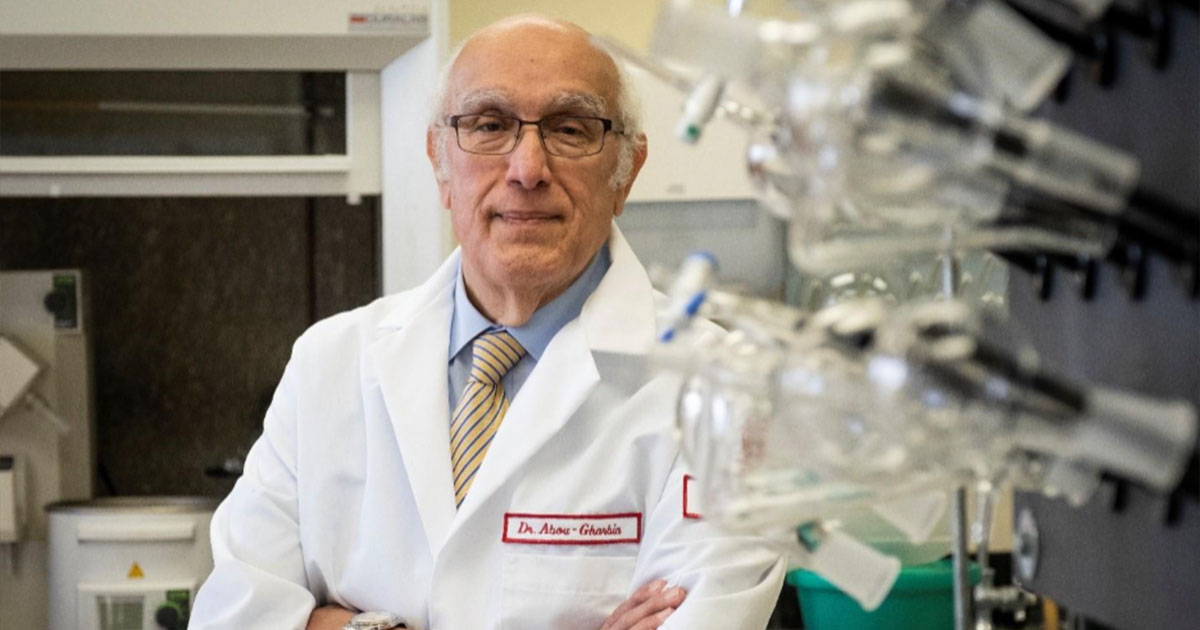

In the footsteps of Thomas Edison, an Egyptian doctor wins the John Scott Award for his innovations in treating depression
Before presenting his innovations in treating depression, the Egyptian scientist Dr. Majed Abu Gharbia contributed more than 145 patents and about 12 medicines to the global pharmaceutical markets. Which makes him eligible to receive a prestigious award such as the 2026 John Scott Science Prize.
This is what we highlight via the website The Earth Guards Foundation electronic; Exploring how an Egyptian doctor led the world towards developing a type of treatment for depression, which is truly considered a disease of our time. All of this is within the framework of the Sustainable Development Goals, especially the third goal: the goal of good health and well-being. So keep reading.
An award more than two centuries old
The story began with the will of an Edinburgh pharmacist named John Scott, who at the beginning of the nineteenth century established a fund in which he called on the Philadelphia Foundation – the institution charged with managing the estate of Benjamin Franklin – to reward innovators who provide useful inventions.
This is how the John Scott Prize began in 1816; In honor of inventors and scientists whose achievements serve humanity, it has expanded over the years to include many fields: industry – agriculture – science – medicine.
Honor roll including Edison
The list of those who won this scientific award includes brilliant names. Among those who have won it throughout history:
- Marie Curie
- Thomas Edison
- The Wright Brothers
Cairo University before America’s laboratories
Returning to the winner of the John Scott Prize for the year 2026, we find that Dr. Majed Abu Ghraibah began his scientific journey – before presenting his innovations in treating depression and mental health – by studying pharmacy at Cairo University, then he continued his career in the United States of America, where he obtained a doctorate in chemistry from the University of Pennsylvania.

Over the course of more than 55 years of painstaking research work, Dr. Majid Abu Ghraibah worked at Wyeth Pharmaceuticals, which later became part of Pfizer, in addition to the fact that he led a research team that included more than 500 scientists and researchers; One of the achievements of this team was the design of the first antibody conjugate (antibody conjugates are vital treatments for cancer cells), which is the drug “Mylotarg”.
Because of these practical efforts and these scientific endeavors, his career resulted in :
- More than 145 patents turned into medicines on the market.
- About 12 new drugs to treat depression, treat cancer, and treat infectious diseases.
Among the drugs he co-created:
- Antidepressant (Effexor).
- Pain reliever (Dezocine).
- Treatment of kidney cancer (Toricil).
Innovation measured by its human impact
Dr. Al-Masry/Majed Abu Ghraibah won the John Scott Award for all his pharmaceutical innovations, especially his contributions in the field of treating depression, crowning his scientific career with a historical precedent that places one of Egypt’s righteous sons in the ranks of global minds.
Hence, this honorable scientific journey can be summarized for us with that real impact, which called him to invest his knowledge in the health of current and future generations, achieving the third goal of the sustainable development goals: good health. Because Dr. Majed Abu Ghraibah has worked in two fields that have a heavy health burden: depression and kidney cancer.

By the same developmental logic, patents that have reached… 145 patents How scientific research turns into intellectual property, then into effective medicines on the market; Then it can be said that it has achieved two sustainable development goals – in addition to the goal of good health – namely: the twelfth goal (responsible consumption and production), and the seventeenth goal (concluding partnerships to achieve the goals).
What you want to say The Earth Guards Foundation In the end: The significance of Dr. Majid Abu Gharbiyeh winning the John Scott Prize lies in the sustainable meaning that this historical outcome reveals about the relationship between science and man. His career has taken a complete journey from the stands of the Faculty of Pharmacy at Cairo University to the laboratories and universities of America. It clearly appears to us that scientific research that serves people and their lives is the most important axis of sustainable development, so that mental health is an integral part of public health.
All of this raises the need to work to fund scientific research sustainably, and to establish curricula that are open to data science, computational chemistry, as well as artificial intelligence, which has begun to accelerate the sorting of compounds and predict their effectiveness.


