

Living Consciences and the Conscience of a Viper
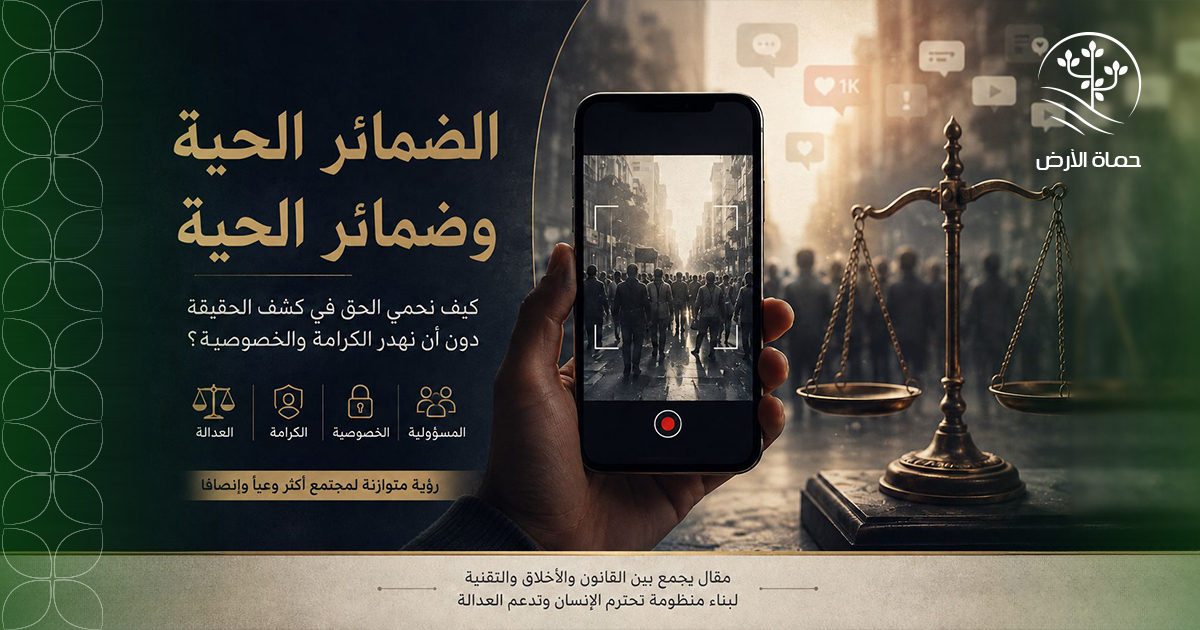

Live pronouns and live pronouns
In every corner of our daily life, whether it is a crowded street, a house with closed doors, a public place, or even an intimate corner of private life, the mobile phone has become an ever-present presence and a never-sleeping eye. It has transformed from a tool for communication into an accurate observer of everything going on around it, and a digital memory that captures the scene and publishes it minutes later onsocial media for millions to see. A phenomenon that in recent years has become a feature of Egyptian society, which has found in the camera a voice expressing its anger when other voices disappear, and a means by which it seeks help when times are difficult.
This camera has often turned into a hand extended to victims who have long been suffocated by silent walls, and has become a tool for revealing what was being committed in the shadows far away.From the eyes of censorship, how many assailants were arrested within a few hours of the spread of a clip exposing him, and how many injustices were taking place in silence under the eyes and eyes of society, until the lens came to remove his mask of invisibility and place him before public opinion and official agencies, so the video content became approved evidence and an entry point for legal procedures that often ended with the perpetrator of the incident being prosecuted and the punishment he deserved.
However, this rosy picture, despite its splendor, hides behind it a dark face that is revealed on multiple levels, the first of which is that social media sites are thus turning into a popular trial arena in which the public sits as a judge, prosecutor, and executioner at the same time. Thus, the principles on which justice was built over the centuries collapse, and the principle that the accused is innocent until proven guilty is dropped in the face of the wave of collective emotion. How many clips spread across the horizons and their perpetrator was popularly sentenced before the investigations were completed, and then it was later revealed that The context wasdifferent, or that the incident was originally fabricated and something was fabricated from it, so the camera, which is supposed to be a tool for revealing the truth, turns in the hands of some people into a means of falsifying it.
And from this gloomy face emerges another face that is no less dangerous, as we find that many people have become preoccupied with filming rather than intervening and saving. If a crime occurs in front of their eyes, they raise their phones in excitement before raising their voices for help, as if the lens stole their humanity before the perpetrator stole it from his victims, so the crime scene turned into a theater for photography, and chivalry declined in souls in the face of the lust for fame.
The harm does not stop at the direct victim alone. The average browser who opens his phone in the morning finds himself faced with an endless stream of scenes of violence, screams, blood, and scandals. He closes the screen with a heavy heart and a sad mood, not knowing that the negative energy he ingests in minutes will have an impact that will last for hours.And days in his dealings with his family, colleagues, and those around him. Psychological studies have proven that continuous exposure to scenes of aggression and tragedy generates chronic anxiety and silent depression, and afflicts a person with what is known as “compassion fatigue” when his feelings are dulled by the abundance of what he sees, and he loses his ability to empathize with real pain when he encounters it in reality. Thus, the entire society suffers from a collective psychological exhaustion that spreads the infection of stress, and an entire people becomes a prisoner of a dark mood created for them by algorithms that feed on everything that is shocking and dark.
And if the matter has reached this level on the internal level, its consequences go beyond our borders and affect the image of the homeland in the eyes of the world. Egypt, which history knows for its ancient civilization, friendly people, and proverbial sense of humor, is reduced in the eyes of the foreign observer to separate clips collected by the algorithms of social media, so those who do not know it think that it is a country of violence, harassment, and attacks, and thatIts streets are areas for daily crimes. Its tourist image, which the state has built with years of effort, declines in moments. The foreign investor hesitates before setting foot on its land, and the tourist who dreamed of visiting the pyramids becomes skeptical when he sees dark, misleading images of daily life there. It is unfortunate that a single passage may erase from the mind of a distant viewer what has been written in volumes by the pens of historians. The eye believes what it sees more than what it reads, and visual memory is stronger than all official propaganda to which the state expends effort and money to paint its true image in the minds of tourists and investors abroad.
And in the heart of these expanding circles of harm, the deepest painful circle remains the one that extends beyond the limits of the law, where tragic stories emerge from behind the screens that remind us that behind every video there is a human being of flesh and blood. How many girls ended their lives under the weight of a slander campaign whose cruelty they could not bear, and how many young men collapsed.Psychologically, people isolated themselves after being haunted by a clip that time will not erase from the Internet’s memory. How many families have disintegrated under the pressure of a digital scandal that could have been contained quietly. These are lives that were lost, or nearly lost, under the weight of a camera that transformed from a witness to the incident into its maker, and from a documentation tool into a hammer that crushes lives before bodies.
The strange thing about the whole matter is that when you look at this scene from the perspective of the law, you find a blatant contradiction that boggles the mind. While the law criminalizes anyone who violates the sanctity of private life by photographing without permission, what was photographed is taken into account and taken into account and is considered the basis for a stream of official procedures that lead to the trial of the perpetrator of the incident. Two contradictory characteristics combine in one act, a crime on the one hand, and considered evidence on the other.
The discussion about the photography system and its responsibilities is not complete without turning to an angle that many have long overlooked, by which I mean the responsibility of the owners ofSurveillance cameras are spread everywhere around us. These cameras now fill the streets, storefronts, building corridors, and institutional corridors, monitoring every passer-by and recording every movement, to the point that whoever enters any public or private place has become under eyes that he does not see and was not authorized to monitor him in the first place. These cameras are supposed to perform a specific, narrow function, which is to protect places from theft and infringement, detect crimes when they occur, and deliver the content to official authorities when they need it, and they have a legitimate right to do so that no one can dispute. However, what happens in reality is something completely different, as some owners of these cameras exceed the limits of their original function, and publish their clips on digital platforms seeking laughter, fame, attracting customers, or to punish those they hate, without asking permission from those who appear in those clips, and without To think for a moment about the dignity they are wasting by doing so.
This is getting more dangerousBehavior: If we realize that whoever appears on surveillance cameras may be in one of his weakest human moments, such as the woman who falls in the street and some of her clothing is exposed, the child who commits an innocent foolishness, the old man whose feet betray him in front of a shop doorstep, or the passer-by whose features appear in a situation in which no one would like to see him, then these human moments that are usually preserved by concealment turn into material for ridicule and content for entertainment that millions of spectators laugh at, and their victim remains in confusion, not knowing how to defend himself in front of him. A storm he neither created nor sought.
In the face of this complex scene with all its good and evil, we must look for a third way that goes beyond the dichotomy of absolute permissibility and complete prohibition. Unrestricted permissibility turns society into a digital jungle in which fame eats up reputation, and complete prohibition gives harassers, aggressors, and the corrupt people golden immunity, and returns crimes to their ancient darkness. So the solutionIt lies in a smart organization that separates legitimate ethical documentation from criminal defamatory publishing, and distinguishes between those who carry their phone to bring justice to an oppressed person and those who carry it to create a trend in the blood of the victims.
The features of this organization begin with the establishment of official digital reporting channels through which the citizen can submit what he has photographed directly to the competent authorities, while ensuring the confidentiality of his identity, and the commitment of the agencies to respond within a short period that preserves the rights of the victim and reassures the whistleblower, provided that this is accompanied by strict internal control over the competent authorities, obligating them to issue transparent periodic reports that reveal the numbers of reports received, the measures taken in their regard, and the results that resulted, in a way that ensures the seriousness of implementation and closes the door. In the face of procrastination and neglect; One of the reasons people resort to public publication is their loss of confidence in official channels, and if this confidence is restored, respect for the proper legal path will be restored with it. This proposal would be a refineryA minute determines the intentions before it determines the actions. Whoever’s true goal is to do justice to the victim and fix the reality, he will find what he seeks in these channels, where his voice will reach the one who has the decision-making power in silence and dignity. And whoever’s goal is to trend, gain views, and accumulate followers without caring about people’s pain, his matter will be revealed on his own when he bypasses the official channels and rushes to publish publicly. Then society will clearly realize that his phone was not raised for reform, but rather was raised to capitalize on the scandal and market it. The tragedy.
Because reality does not always go according to what we hope for, if this first path cannot be fully implemented, or cases arise in which the owners insist on public publication, it is wise to establish secondary controls that reduce the harm as much as possible, such as requiring the publisher to blur the faces of passers-by, children, and unconcerned parties, and not reveal the victim’s identity without their explicit consent, and avoid shocking bloody scenes that hurt the feelings ofViewers, especially young ones, should wait for an official investigation to determine the full context before making judgments on people that may be difficult to retract later. This alternative framework is backed by graduated penalties that reward responsibility and punish recklessness. Whoever films, delivers, or publishes while adhering to the controls will find appreciation and protection, and whoever fabricates a false incident or publishes content without permission from its owner will find a punishment appropriate to the extent of the crime he committed. However, if this publication causes other harms, such as if it led to a person committing suicide or being affected by what was published, then a severe punishment must deter others from taking the same path.
In return to the responsibility of the owners of surveillance cameras that we mentioned previously, logic requires that legal responsibility be extended to them explicitly and clearly, so whoever publishes a clip of the content of his cameras without the explicit permission of every person appearing in it is considered to have committed a full-fledged crime, and the same prescribed penalties apply to him.For violating the sanctity of private life, with increased punishment if it concerns a person in a situation that affects his dignity. It follows that the process of installing these cameras must be organized with clear controls, including registering their data with the official authorities, placing warning signs informing of their presence, restricting access to their content to specific persons who are committed to strict confidentiality, and categorically prohibiting the circulation of their clips outside the official framework, whatever the justifications. When the owner of the camera realizes that the images he collects are trustworthy on his neck before they belong to his lens, only then do these cameras transform from optical traps that stalk people while they are unaware, to trustworthy eyes guarding the place without betraying the trust of whoever enters it.
This organization is not complete without two other pillars that support it and maintain its balance. The first is continuous community awareness that explains to citizens when to photograph, when to deliver, and when to publish, and to place the subject of digital ethics in school curricula, so that a generation arises that understands thatThe camera in his hand is a trust before it is an authority, and the speed of the finger in pressing the recording button must be accompanied by the speed of thinking about the consequences of what he does. The second, which is the cornerstone of this entire system, is the independence of the judiciary from the noise ofsocial media. The judge relies on the files and evidence in his hands, and listens to the facts of the investigation and not to the clamor of comments and the whims of commentators. If we realize that the emotional popular trial produces an injustice that sometimes exceeds the injustice it was set up to confront, we learn that true justice requires patience and deliberation, and a distance between the event and the ruling, and Consciences that contemplate before they condemn.
The bottom line is that freedom of documentation is a blessing that should not be neglected, and the chaos of publishing is a scourge that cannot be tolerated. The camera in the hands of the Egyptian citizen is a real tool for reform if used well, and a real tool for destruction if misdirected, just like any force.In this world. Therefore, the state, society, media, judiciary, and legislative authority must come together to formulate a new digital social contract that makes the citizen a partner in justice, not a judge of it or against it, and makes social media a source of support for the law, not an alternative to it.
At the conclusion of the article, it becomes clear to us that there are two types of people in their dealings with their phones. There are those who carry their phone with a humanitarian flame in their heart that never goes out. They raise it when they see injustice in order to document the truth honestly. Then they cover the matter in secrecy and dignity and hand it over to the one who has the right to do justice to the oppressed. They move with a living conscience that beats with the pulse of reform, and an alert spirit that refuses to let falsehood go unnoticed. These are Living consciences that illuminate the darkness of reality with the light of their sincerity. On the other side, there is someone who carries his phone, and the seed of chivalry has died inside it. He picks it up when the victim calls for help, but he does not respond. He films the crime as it happens before his eyes, but he does nothing to prevent it.He enjoys transferring the tragedy to millions of screens, as if he were marketing a commodity in an exhibition, trading in people’s tears and building his fame on the ruins of their dignity. These are the consciences of the snake that hides under the skin of a person a soul that stings without insight, and a soul that devours the flesh of innocents to feed the obsession with fame. Between these two types, an entire society stands at a crossroads. It either sides with the consciences that live by it and elevates it, or it is led by the consciences that sting and is poisoned by them. The choice, before it is legal or legislative, is a moral choice that is born in the heart before it reaches the finger that presses the record button.
Only then can we say that we have tamed a ferocious monster that we created with our own hands, and that the camera that we once raised to document injustice has become a tool for establishing justice, without crushing the dignity of a human being, or crushing an entire society in its path.


