

The Foreign Minister meets with the President of the Arab Bank for Economic Development in Africa to enhance joint cooperation
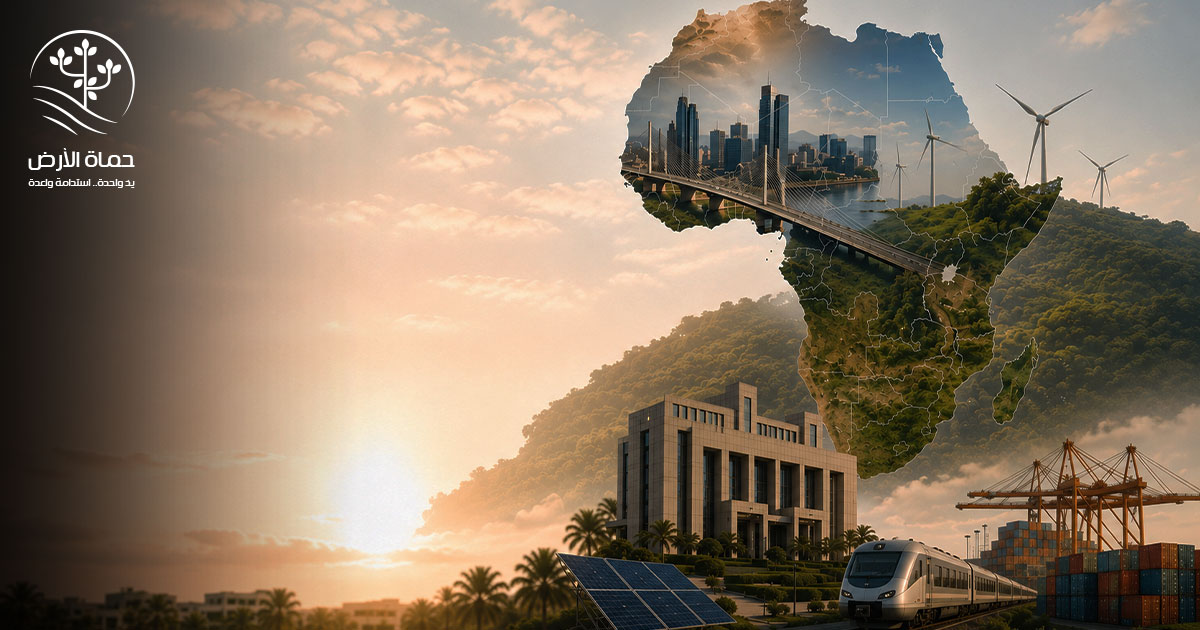

The Foreign Minister meets with the President of the Arab Bank for Economic Development in Africa to enhance joint cooperation
The African continent faces complex development challenges that require strengthening financing mechanisms, expanding the scope of joint cooperation, and concluding regional and international partnerships capable of supporting infrastructure projects and stimulating investment and trade.
With the widening of the financing gap necessary to achieve the Sustainable Development Goals (SDGs), the importance of development financial institutions is emerging as a key partner in supporting economic growth efforts, improving living standards, and enhancing economic integration among the countries of the continent.
In this context, the importance of Arab-African cooperation is increasing as it is one of the effective paths to support economic development on the continent, by employing expertise and available resources to enhance investment, transfer knowledge, and build capabilities.
Egypt is at the forefront of countries supporting this trend, based on its pivotal role in Africa and its keenness to expand the scope of joint cooperation with various regional and international institutions, in a way that contributes to advancing sustainable development efforts and enhancing African economic integration.
Supporting sustainable development efforts in Africa
In this context, Dr. Badr Abdel Ati, Minister of Foreign Affairs, International Cooperation and Egyptians Abroad, received Mr. Abdullah Al-Musaybih, President ofThe Arab Bank for Economic Development in Africa, to discuss ways to enhance joint cooperation and support economic development efforts on the African continent.
During the meeting, the Minister of Foreign Affairs expressed his aspiration to enhance joint cooperation with the bank during the next stage, in a way that supports sustainable development efforts in African countries and strengthens economic ties between Arab countries and the African continent, stressing the keenness to support the role of Arab financial institutions in stimulating trade and investment, to stimulate the intra-trade movement between Egypt and African countries, in coordination with Egyptian banking institutions and with the participation of the private sector.

A review of accumulated Egyptian experiences in Africa
The Minister also praised the vital role played by the Bank in financing development projects on the continent, reviewing the accumulated Egyptian expertise in Africa, especially in the fields of energy, water resource management, port development, and medicine manufacturing, through the Egyptian Agency for Partnership for Development and Egyptian private sector companies operating in African countries.
The Minister of Foreign Affairs also stressed the importance of exploring opportunities for joint cooperation between Egypt, the Bank and African countries, benefiting from Egyptian expertise in implementing development projects, and enhancing the Bank’s contribution to the initiatives launched by Egypt to support development in Africa, through financing or technical support and capacity building alike, as well as supporting intra-African trade within the framework of implementing the African Continental Free Trade Agreement.
Through this aforementioned joint cooperation, comprehensive Sustainable Development Goals (SDGs) are achieved in the countries of the African continent, especially Goal (16) Peace, Justice and Strong Institutions, Goal (17) Establishing Partnerships to Achieve Goals, Goal (8) Decent Work and Economic Growth, Goal (9) Industry, Innovation and Infrastructure.

Strengthening Egyptian-African relations
At the conclusion of the meeting, the Minister of Foreign Affairs, International Cooperation and Egyptians Abroad stressed the importance that Egypt attaches to strengthening its relations and supporting joint cooperation with African countries, reviewing in this context the development efforts it is making to support the countries of the Southern Nile Basin.
He mentioned that among these efforts is the launch of a financing mechanism to study and implement priority development and infrastructure projects, with the aim of encouraging Egyptian companies to expand their investments and activities in African markets.
For his part, the President of the Bank praised the pivotal role that Egypt plays in supporting Arab-African cooperation, and the effective contributions it makes in consolidating economic and investment ties between African countries, which contributes to achieving development and prosperity for the peoples of the continent, expressing his aspiration to enhance cooperation with the Egyptian government and the Egyptian private sector to support the implementation of development projects in various African countries.

In conclusion, discussions with the Arab Bank for Economic Development in Africa confirm that confronting the development challenges taking place on the African continent requires strengthening cooperation between governments, financial and development institutions, and the private sector, to ensure the mobilization of resources, the exchange of experiences, and the expansion of the scope of investments that support economic growth.
In this context, regional and international partnerships represent one of the main drivers for accelerating the pace of development and transforming development ambitions into concrete projects that contribute to improving the quality of life and enhancing the well-being of African people.
HenceThe Earth Guards Foundation, that expanding the horizons of cooperation between Egypt and the Arab Bank for Economic Development in Africa represents a supportive step towards the path of African economic integration, and contributes to building a more sustainable development model capable of responding to the needs of the countries of the continent during the next stage.


