

The World Bank launches the “Water Forward” program to confront the global water crisis
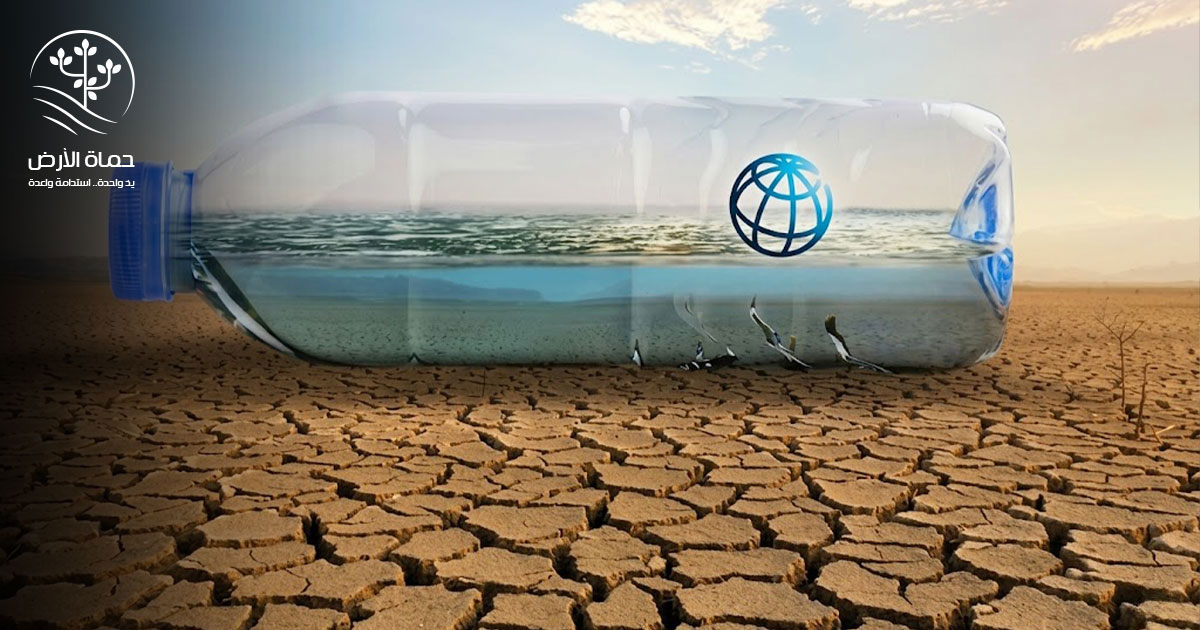

The World Bank launches the “Water Forward” program to confront the global water crisis
The global water crisis is witnessing a noticeable escalation in light of climate change, population pressures, and urban expansion, which places many countries facing increasing challenges in securing this vital resource. With the rise in demand for water and the decline in the efficiency of its management in some areas, the water issue has begun to transcend its environmental dimension to turn into an economic and development issue directly linked to growth and stability.
In this context, these developments intersect with the Sustainable Development Goals (SDGs), especially with regard to clean water and hygiene (Goal 6), in addition to climate action (Goal 13), and international partnerships (Goal 17). From this standpoint, this article reviews the dimensions of the global water crisis, its importance as an economic asset, in addition to the international efforts made to confront it, most notably the “Water Forward” program.
Water is an economic asset in light of the water crisis
Water is no longer just a natural resource, but has become a vital economic asset directly linked to the performance and stability of economies, especially in light of the escalation of the global water crisis, and the lack of water resources leads to expanding impacts on productive sectors, from agriculture to industry, as well as its impact on living standards and social stability. Estimates indicate that global demand for fresh water may exceed supply by about 40% by the end of the current decade, which reflects the magnitude of the challenges facing countries in managing this vital resource.

Pressures on water resources are also increasing as a result of climate change, which exacerbates droughts and floods, in addition to urban expansion and rapid population growth, especially in major cities. These factors have become an additional burden on the water infrastructure, and impose increasing economic challenges, as water-related shocks affect growth rates in a number of countries, which has prompted some institutions to launch programs to limit this global crisis.
Global water crisis prompts launch of Water Forward
In this context, the World Bank, in cooperation with a number of development finance institutions, announced the launch of the “Water Forward” program, in a step aimed at improving safe access to water for more than one billion people over the next four years. This program reflects a growing trend towards dealing with water as a strategic resource that requires extensive investments and more efficient management.
The program focuses on enhancing the financing of water projects by integrating public resources with private investments and charitable financing, which contributes to expanding the scope of projects and improving the efficiency of their management. It also aims to support countries in developing more sustainable water policies, ensuring a balance between meeting growing needs and preserving resources in the long term.
Multi-source financing to address water challenges
The “Water Forward” initiative reflects a shift in financing mechanisms for the water sector, as reliance is no longer limited to government funding, but also includes investments from the private sector and international institutions. This approach aims to fill the financing gap necessary to develop infrastructure and improve water services, especially in countries suffering from high water pressure.
Diversifying funding sources also contributes to increasing the efficiency of resource use and stimulating innovation in water management, thus enhancing the sustainability of projects in the long term. This reflects a growing awareness of the importance of engaging various parties in confronting the global water crisis.

Projects to improve water use efficiency
The “Water Forward” program focuses on supporting a group of projects that aim to improve the efficiency of water use, such as reducing leakage in urban networks, modernizing irrigation systems in the agricultural sector, in addition to promoting the reuse of wastewater. These procedures represent effective tools to reduce waste and improve resource management.
The program also relies on the use of data and modern technologies in planning and managing water resources, which contributes to improving decision-making and increasing the efficiency of projects. This reflects the importance of innovation in confronting water-related challenges. In parallel, the importance of international partnerships emerges as a complementary element to enhancing the efficiency of water resources management and achieving water security on a broader scale.
International partnerships and their role in enhancing water security
International partnerships constitute an essential element in confronting the global water crisis, as a number of development finance institutions, such as the European Investment Bank and the Asian Development Bank, participate in the “Water Forward” program, in addition to other institutions. This cooperation contributes to unifying efforts and exchanging experiences, thus enhancing the effectiveness of responding to challenges. This trend also reflects the importance of collective action in confronting global issues, especially those that require significant resources and continuous coordination between countries.
In summary, the global water crisis reflects a shift in the nature of the challenges facing the global economy, as water is no longer just an environmental resource, but has become an essential element in achieving sustainable development. The launch of the “Water Forward” program stands out as an important step towards enhancing water security, by supporting investments and improving resource management.
In this context,The Earth Guards Foundation highlights dealing with water as an economic asset that requires adopting integrated policies based on sustainability and innovation, which contributes to achieving a balance between meeting current needs and preserving resources for future generations.


