

The fifth highest death rate in the world.. The air pollution crisis in Sarajevo and its impact on health

The fifth highest death rate in the world.. The air pollution crisis in Sarajevo and its impact on health
At a time when air pollution crises are escalating in many capitals of the world, environmental warnings have gone beyond being a passing event linked to weather fluctuations, as they have become an indicator of deeper urban imbalance. Because major cities in Asia, Europe, and Latin America record high levels offine particles, which are fine air pollutants that are directly linked to high rates of respiratory diseases and premature deaths.
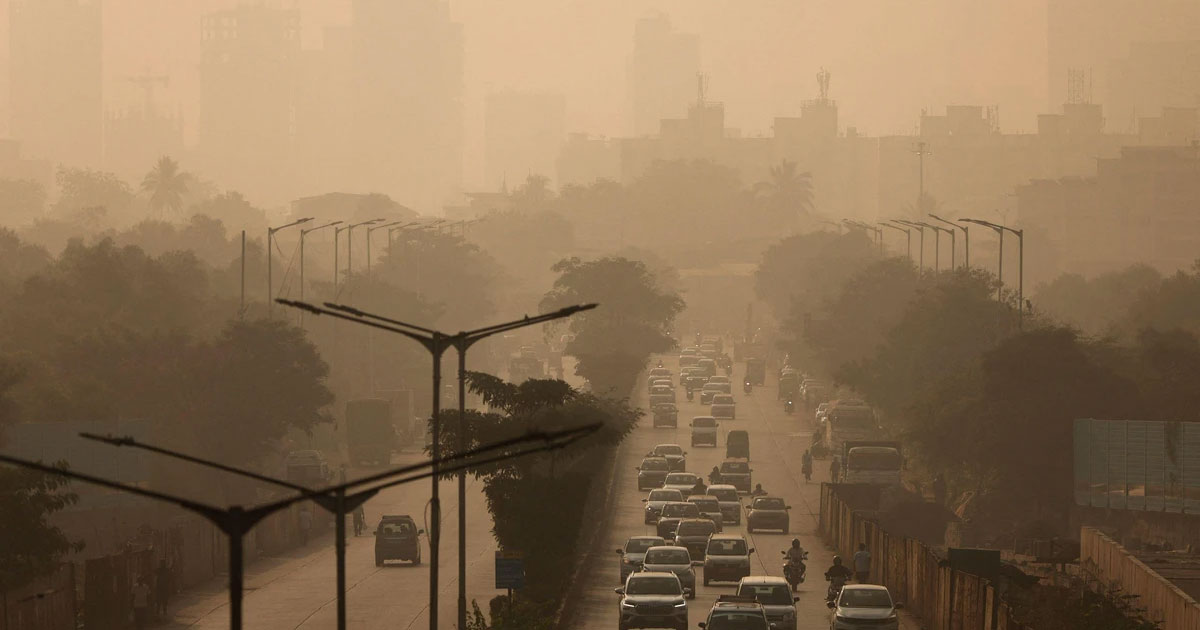
In this context, the case of Sarajevo came to highlight the dimensions of the crisis when it topped a global classification as the most polluted for two consecutive nights. This prompted the local authorities to take exceptional measures in the Bosnian capital, which reflected an awareness of the magnitude of the dangers associated with deteriorating air quality, especially after the levels of fine particles reached a level described as dangerous.
With a city of about 350,000 people, air pollution has become an environmental issue and a multi-dimensional urban challenge, in which geography, energy, and transportation intersect with each other. This opens a wide door to a broader analysis that goes beyond the boundaries of the current event.
Geographic specificity of Sarajevo
Sarajevo is an example of cities located in relatively closed geographical basins, surrounded by mountains and hills on most sides. This location makes it vulnerable to the “thermal inversion” phenomenon, where layers of cold air remain laden with pollutants near the Earth’s surface, especially in the winter. As the smog extends over several consecutive days, emissions from transportation and heating accumulate, which exacerbates the severity of air pollution and makes it difficult to dissipate quickly.
In this context, geography alone does not explain the complete picture; As they are interspersed with energy choices and other accumulated urban choices, the population density in limited areas, and the heavy adoption of individual means of transportation; They double the pressure on the urban environment.

With the permissible limits for fine particles continuing to be exceeded for more than 100 days annually – according to local experts – the situation becomes closer to a recurring pattern rather than an exceptional case. However, understanding the crisis is not complete without stopping at the direct sources of pollution, most notably home heating and urban transportation patterns.
Sources of pollution and the energy transition crisis
The World Bank estimates indicate that about 50% of fine particle emissions in Bosnia are due to burningsolid fuel for home heating purposes, while the transportation sector contributes about 20% of it. In Sarajevo alone, approximately 40,000 homes depend on firewood and charcoal in the winter, when the number of registered vehicles reaches about 180,000 vehicles, which is a large number compared to the population.
These data reveal that air pollution is closely related to the pattern of energy consumption inside homes, in addition to urban transportation. Although about 500 families – no more – have obtained gas stoves with international support, the pace of switching to cleaner alternatives is still limited. That is, there is a gap between the actual need and the available capabilities.
Then, the rise in energy prices in Europe in recent years coincided with the increasing difficulty of the rapid transition to less emission solutions, which consolidates the persistence of environmental pressures, and increases the health impacts as well as the economic impacts.
Health and Economic Cost
The effects of air pollution go beyond temporary inconvenience to direct health consequences. Bosnia ranks fifth in the world – according to World Health Organization data – in terms of the death rate linked to air pollution. The World Bank also estimates that fine particles cause about 3,300 premature deaths annually, in addition to a loss of more than 8% of gross domestic product.
Such numbers confirm that pollution is a health burden and a tangible economic drain. High rates of respiratory diseases, increased health spending, and declining productivity; All of them are factors that put pressure on public finances and household income. Therefore, specialist doctors warn that long-term exposure to fine particles increases the risk of lung cancer, and poses a particular threat to children, pregnant women, the elderly, and those with chronic diseases.
Emergency response and sustainable solutions
Faced with this reality, local authorities imposed a ban on trucks with a load exceeding 3.5 tons, and prevented vehicles that do not comply with European Union standards from driving within the city. They also stopped outdoor construction work and banned open gatherings.
However, the effectiveness of these procedures remains linked to the extent of their continuity and their ability to treat the roots. Because banning traffic or construction on specific days may temporarily alleviate air pollution, but it does not address the widespread reliance onsolid fuels or the need to develop a more efficient public transportation network. This requires longer-term policies that include supporting the transition to clean household energy, improving vehicle standards, and expanding investment in clean infrastructure.

In conclusion, the case of Sarajevo reveals that the air pollution crisis in major cities is the result of an interaction between geography, consumption patterns, and public policies. With pollution linked to clear human and economic losses, improving air quality becomes part of the development equation and not a separate environmental item.
From this perspective,The Earth Guards Foundationemphasizes that addressing this crisis requires an integrated approach that balances public health, economic stability, and gradual energy transformation. Reducing emissions in the household sector and urban transport contributes to promoting sustainable economic growth and supports building cities that are more capable of adapting, in line with Sustainable Development Goals (SDGs), most notably good health and climate action.


