

A receding river and crops pile up… The El Niño phenomenon confuses the palm oil industry in Indonesia
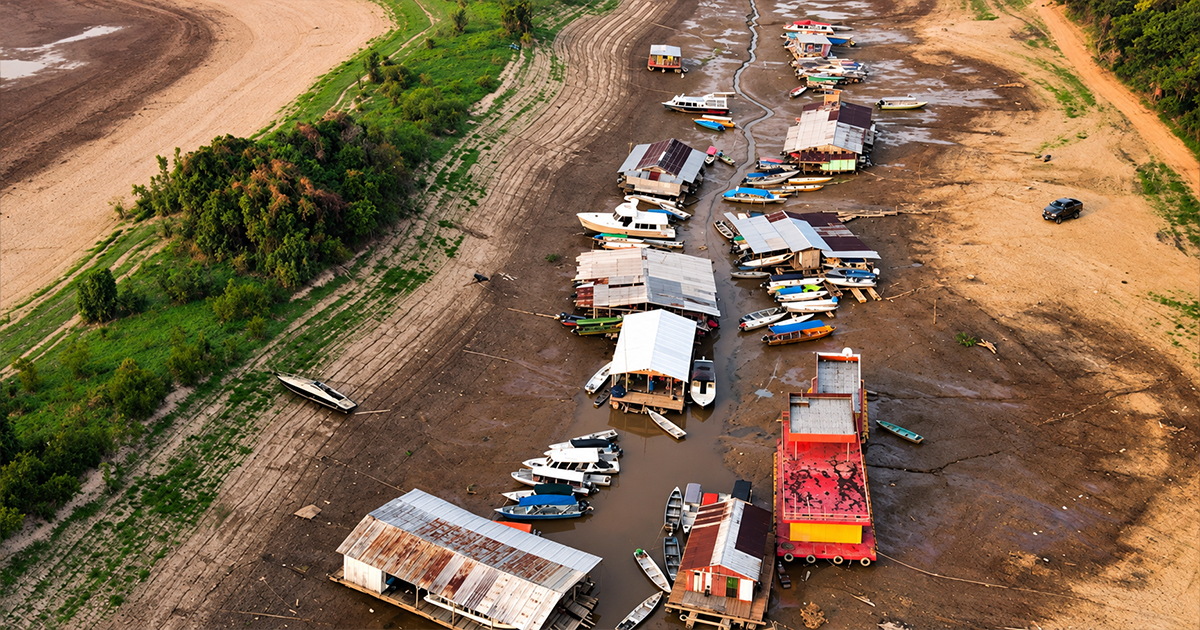

A receding river and crops pile up… The El Niño phenomenon confuses the palm oil industry in Indonesia
Indonesian farmer Supendi spent four days in front of a palm oil factory in the city of Sangau, trying to deliver seven tons of fresh fruits that he collected from his farm and neighboring farms. But the wait ended when the factory refused to receive the crop after its tanks were full, so the 33-year-old farmer found himself facing a crisis that began in his field, when a river whose waters receded due to drought linked to the effects of… El Niño phenomenon.
In West Kalimantan province, the crisis revealed how a falling river can disrupt an entire economic chain; Ships that used to transport palm oil stopped or foundered, factory tanks filled up, and their purchases of crops declined, while thousands of farmers faced the risk of their fruits being spoiled before they could be sold.
And in this distance between the fields and the markets, it is revealed El Niño phenomenon Another side of drought in Indonesia; A crop that matures on time can become a burden on its owner, when the routes he used to take to buyers are disrupted.
Four days of waiting
Subindi hoped that his trip to the Multi Prima Intakai factory in Sanjao City would end with the fruit being sold before its quality declined. However, the factory was facing a crisis of a different kind. The oil produced was piled up in its tanks, and the expected shipments could not find their way out of the region.

As the wait continued, the fate of the crop brought by the farmer became tied to stock that the factory could not dispose of. After refusing to receive the fruits, Subende's predicament was revealed in a question that was painful in its simplicity: What is the value of a completed harvest, if there is no one to buy it?
His suffering was not an isolated case; Thousands of small farmers in West Kalimantan found themselves faced with rapidly perishable crops and buyers who reduced the quantities they could receive. But how did the river water crisis reach a crop that had already been harvested?
A river whose waters recede
extends Kapuas River For a distance of 1,143 kilometers, it is the longest river in Indonesia and one of the main arteries for goods movement in West Kalimantan.
For years, its waters carried river barges transporting palm oil from factories to their commercial destinations. But as the drought continued, the waters receded and sandbanks appeared that impeded navigation, until some barges and river tugs ran aground.

These conditions are associated with influences El Niño phenomenon, which arises with the rising temperature of the waters of parts of the tropical Pacific Ocean, and affects wind and rain patterns in different regions of the world, including Southeast Asia.
In Indonesia, the drought was accompanied by the intensification of forest fires in Borneo and Sumatra, while the smoke spread to regions outside the country, including Malaysia and Singapore.
According to the Indonesian Meteorological Authority, the start of the rainy season was expected to be delayed to November instead of October, which means continued pressure on the river and activities dependent on it.
To understand the climatic background of these developments, I discussed: The Earth Guards Foundation In a previous article: Will the El Niño phenomenon push the world towards a new wave of drought and fires?These effects vary in severity from one region to another.
Factories are choking with inventory
The peculiarity of the West Kalimantan crisis lies in the dependence of the palm oil industry on river transport; About 40% of the province's production passes through the Kapuas River, according to data from the Indonesian Palm Oil Association.
As the drought wave resulting from the El Nino phenomenon continued, shipping traffic was disrupted, and oil accumulated inside factory tanks, making it no longer possible to continue purchasing new fruits at the usual rates.
According to Aris Supratman, head of the West Kalimantan branch of the Indonesian Palm Oil Association, 13 out of 50 factories in the province were damaged due to the disruption of river transport.

This damage is of particular importance because the affected factories together account for about half of the production capacity allocated to processing palm fruits in the province.
At the Multi Prima Intakai plant that Subendi visited, the stock of crude palm oil reached about 8,200 tons in early October, approaching the maximum capacity of the tanks of 8,500 tons. The factory's purchases of fresh fruits also declined to 10,000 tons in September, after it processed about 30,000 tons in July.
Thus, while the farmers’ fruits remained waiting for someone to buy them, the oil remained locked in the factories’ tanks. Between the crop and the stock, the receding river was hampering everyone's movement.
Farmers pay the price
The crisis extended to farmers who tried to look for buyers further afield, even if they had to travel longer distances and accept lower prices.
Among them is Rahmat Weno, 63, who has faced difficulties selling his crop for two months. After traveling three hours to reach the factory where he used to sell his produce for 3,400 Indonesian rupiah per kilogram, he sometimes had to drive six hours in search of another buyer, only to find himself facing a lower price of 2,650 rupiah per kilogram.
The loss of the sale was not the end of the troubles for the agricultural families; The price of the crop that the farmer is waiting for today is the same money he needs tomorrow to buy fertilizers, take care of the trees, and prepare for a new harvest.
Indra Rustandi, a representative of small farmers in West Kalimantan, says that the decline in revenues has prompted some of them to reduce the use of fertilizers by up to 70% to save expenses.
Other families were forced to search for additional sources of income, including preparing and selling cakes and baked goods. All these details reveal to us that drought may have a lasting economic impact even after the rains return. Because faltering crop sales weakens farmers' ability to finance their subsequent production.
The alternative route is more expensive
Some factories turned to trucks as an alternative to river transport, but the overland route was unable to fully replace river barges.
Trucks transport smaller quantities, their available numbers are limited, and their cost is higher. According to MultiPrima Intakai plant director, Dian Kurniawan, the facility could transport about 2,000 tons within four days using the usual route, while truck transportation may not exceed 100 tons per day.

He also pointed out that the cost of road freight is about three times that of river transport.
This is where the value of resilient infrastructure emerges, which is one of the issues it addresses Target 9.1 of SDG 9, on industry, innovation and infrastructureIt calls for the development of reliable, sustainable and resilient infrastructure.
And so the effect spread El Niño phenomenon From the river to the income of agricultural households; Failure to sell crops reduces the funds available for tree care, and may have impacts that extend beyond the dry season itself.
A crisis that goes beyond the province
West Kalimantan produces about 11% of Indonesia's palm oil, in a country that is the largest producer of this oil in the world.
As the effects continue El Niño phenomenonAnalysts expected palm oil production in Indonesian Borneo to decline during the last quarter of 2026 by a rate ranging between 12% and 15%.
The Indonesian Palm Oil Association also lowered its forecast for national production during the year by 2.9%, in light of the impact of dry conditions on the ripening of fruits and activities related to their production.
These estimates indicate that the crisis that began with the disruption of shipping on the Kapuas River may extend to palm oil production on a larger scale, revealing the fragility of supply chains when they depend on transportation routes that are strongly affected by climate fluctuations.
When adaptation becomes necessary
If El Niño can disrupt crops' access to markets, how can farming communities prepare for dry seasons before they find their livelihoods hostage to weather fluctuations?
This question opens a field for consideration Target 13.1 of Sustainable Development Goal 13, on climate action, which aims to enhance resilience to climate-related hazards and natural disasters.
In West Kalimantan, the crisis highlights the importance of improving preparedness for rain fluctuations, developing alternative transportation plans, and taking into account the situation of small farmers who find it difficult to tolerate long periods of purchasing interruption.
This crisis highlights the importance of the outlook it adopts The Earth Guards Foundation Sustainability, as a path that combines environmental protection and livelihood preservation. Adapting to climate risks requires managing natural resources, in addition to enhancing the ability of farmers to deliver their crops to markets, and ensuring the continuity of production through an infrastructure more capable of facing periods of drought.
And it remains El Niño phenomenon A natural climate disturbance whose effects vary from year to year. Therefore, preparing for it requires understanding local risks, without assuming that every drought crisis has the same causes or consequences.
As for Subende, who spent four days in front of the factory before returning without selling his crop, he found himself at the end of the crisis facing a simpler question than production and shipping accounts: Where to sell fruits that he succeeded in growing and harvesting?
When the river recedes, ships may stop moving, but the real loss begins when the farmer's ability to earn a living stops.


