

Supporting food security during Ramadan… following up on plans to develop the sugar industry and enhance commodity stocks

Supporting food security during Ramadan.. Following up on plans to develop the sugar industry and enhancing commodity stocks
Food security represents one of the basic axes for the stability of societies, especially with the increasing challenges associated with supply chains and the fluctuations of global markets. As the month of Ramadan approaches, the importance of advance planning increases to ensure the availability of basic commodities and the stability of their prices, in a way that meets the needs of citizens and maintains market balance.
In this context, the strategic development offood industries, most notably the sugar industry, is highlighted, in addition to enhancing the stock of basic commodities, in a pivotal step to support food security and achieve sustainability in the provision of commodities. This trend reflects the state’s keenness to manage resources efficiently, enhance local production capacity, and ensure market readiness during periods of peak consumption.
Securing citizens’ needs for basic goods
In order to achieve food security, especially with the advent of the holy month of Ramadan, the government continues to follow up on vital issues related to securing the needs of citizens and ensuring the stability of markets, in light of the high rates of demand for basic commodities during this period. Enhancing the strategic stock is one of the main axes to support the state’s ability to respond to consumer needs and maintain market balance.
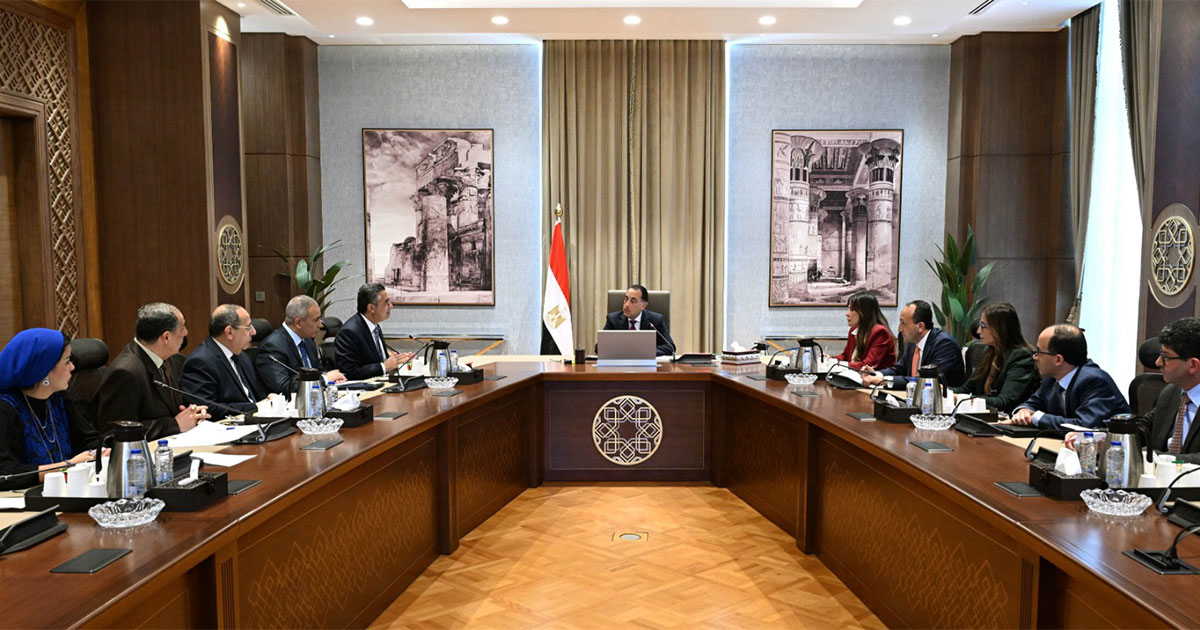
In addition to the above, Dr. Mostafa Madbouly, Prime Minister, met with Dr. Sherif Farouk, Minister of Supply and Internal Trade, to follow up on efforts to enhance the strategic stock of basic commodities and support national industries related to food security, in a way that contributes to ensuring the availability of goods and market stability during the month of Ramadan and the following periods.
Follow up and develop the sugar industry
The Prime Minister also stressed the importance of continuing to implement plans to develop productive sectors, especially the sugar industry, as it is one of the strategic industries that affect food security, stressing the need to remove any difficulties facing this vital sector, in a way that works to increase the production rate, achieve market balance, and maintain industry stability.
During the meeting, the Minister reviewed the efforts made in developing the sugar industry, noting that a series of meetings were held with sugar companies affiliated with the Ministry, in addition to private companies operating in the sector. To follow up on development plans and listen to their proposals, monitor the challenges facing the industry and work to overcome them, in a way that supports the sustainability of production and enhances the capabilities of this important sector.

Inspection tours to control markets and reduce poultry prices
The meeting also reviewed the status of the availability of basic commodities and the regularity of their pumping into the markets, with confirmation of the continuation of field follow-up to ensure full readiness to receive the month of Ramadan, in addition to the inspection tours conducted by the Ministry in the governorates of Dakahlia and Alexandria, to determine the actual situation on the ground and follow up on the regularity of work at the “Welcome Ramadan” exhibitions, where the Ministry’s preparations for the opening of the two main exhibitions in the governorates were noted. Cairo and Giza, which contributes to increasing the supply of goods and relieving the burdens on citizens.
In addition, the meeting discussed developments in the current situation of poultry availability. The Minister explained that he directed the Holding Company for Food Industries to reduce the prices of frozen poultry offered in affiliated outlets, as well as in all “Welcome Ramadan” exhibitions and all consumer complexes and the company’s outlets nationwide, as part of the efforts of the Ministry of Supply and Internal Trade to secure a strategic stock of basic commodities and offer them to citizens at reasonable prices.
From this standpoint, a tripartite agreement was concluded between the Ministries of Supply and Agriculture and the “Egypt’s Future” Agency for Sustainable Development stipulating that quantities of poultry be imported and placed at the outlets of the three regions across the Republic, in order to achieve an abundance of supply and meet the needs of the Egyptian family during the month of Ramadan and beyond, provided that these quantities are released before the beginning of the holy month.

At the conclusion of the meeting, the Prime Minister stressed the need to continue coordination between the various concerned parties, strengthen control over markets, and expand outlets and exhibitions to ensure the availability of goods with appropriate quality and fair prices, in a way that achieves stability in the markets and reduces the burdens on citizens.
Based on the above, the plan to manage the food security file during the month of Ramadan is based on an integrated approach that combines advance planning, strengthening strategic stocks, and supporting food industries of a strategic nature. The focus on developing the sugar industry, controlling markets, and expanding exhibitions and outlets reflects an awareness of the nature of seasonal periods that witness a rise in demand, which requires production and distribution readiness to ensure stable supplies and market balance, taking into account the social dimension associated with alleviating the burdens on citizens.
In this sense,The Earth Guards Foundation appreciates the efforts made to achieve the Sustainable Development Goals (SDGs), especially the second goal related to eliminating hunger and enhancing food security, and the ninth goal related to supporting national industry, in addition to the twelfth goal related to responsible production and consumption patterns.


