

Egyptian-German cooperation to enhance partnership in strategic sectors in order to support the economy
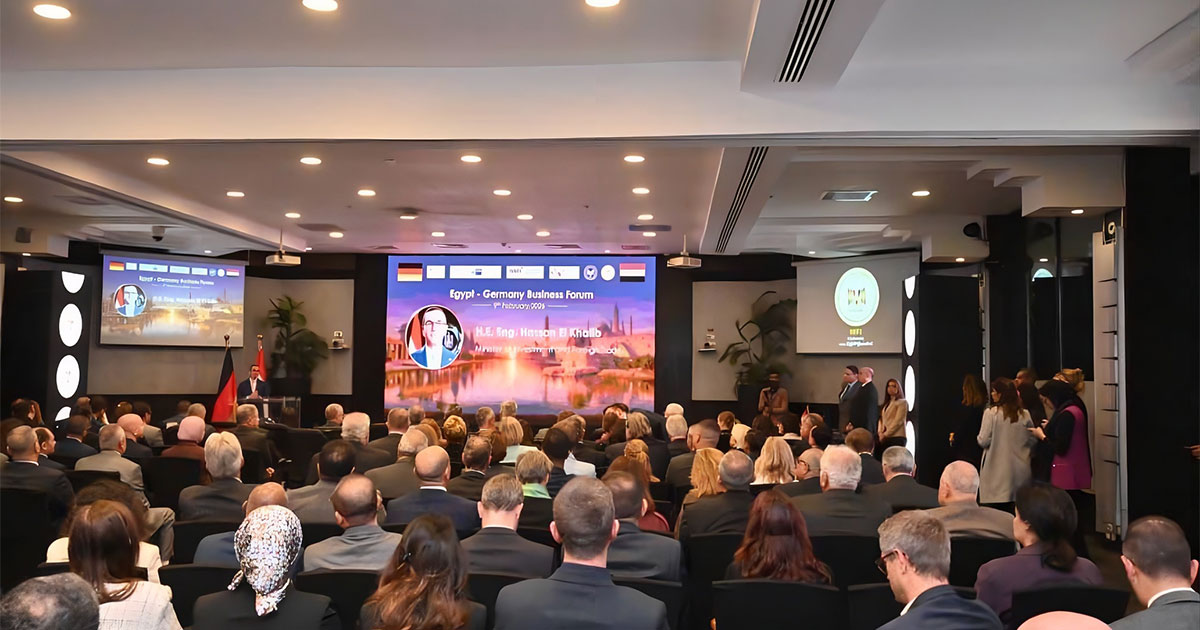

Egyptian-German cooperation to enhance partnership in strategic sectors in order to support the economy
The map of the global economy is witnessing a clear restructuring of investment and manufacturing paths, with the increasing importance of industrial integration, the localization ofsupply chains, and technology transfer as essential elements for enhancing competitiveness and achieving sustainable growth. Strategic economic partnerships have become a major tool aimed at supporting the economy and opening new markets for cross-border investments.
In this context, the economic relations between Egypt and Germany represent an advanced model of cooperation based on common interests, based on a strong base of investment and trade exchange, and a convergent vision towards supporting advanced manufacturing and sustainable development. The Egyptian state is keen to strengthen this cooperation and open new horizons for investment partnerships in strategic sectors.
Egyptian-German Business Forum
In this context, and in order to support the Egyptian economy, enhance the investment sector and establish economic partnerships to achieve the goals, the activities of the Egyptian-German Business Forum were launched, which were opened by Eng. Hassan Al-Khatib, Minister of Investment and Foreign Trade, in the presence of Mr. Stefan Roenhoff, Parliamentary State Minister at the Ministry of Economic Affairs and Energy of the Federal Republic of Germany, and Mr. Jürgen Schulz, German Ambassador to the Arab Republic of Egypt.
The forum comes at a time witnessing major global transformations, in light of an increasing trend towards enhancing the concepts of economic flexibility, geographical proximity, and building reliable partnerships, which reflects the growing importance of strategic industrial partnerships at the regional and international levels.
Economic relations and mutual investments
The economic relations between Egypt and Germany are historical relations based on trust and actual investment, as more than 1,500 German companies operate in the Egyptian market, with total investments estimated at about 4.9 billion dollars.
The volume of bilateral trade between the two countries during the year 2025 reached about 5.1 billion dollars, within the framework of the partnership agreement between Egypt and the European Union, which provides preferential access to trade exchange between the two sides.

Infrastructure and reforms aimed at supporting the economy
Egypt enjoys a unique strategic location supported by modern infrastructure and a high ability to connect Europe, Africa and the Middle East, enabling foreign companies to integrate into global supply chains and serve several markets from a single production base.
The country witnessed huge investments amounting to about $550 billion in infrastructure projects over the past decade, which included the development of road networks, ports, and logistics corridors, in addition to industrial zones and new cities.
Fundamental economic reforms were also implemented that focused on targeting inflation instead of controlling the exchange rate, as inflation decreased from levels close to 40% to about 12%, foreign reserves exceeded $50 billion, and remittances from Egyptians abroad increased from about $18 billion to nearly $37 billion, which enhances the stability and long-term forecasting of industrial investment, in addition to efforts to improve the business environment, simplify procedures, and enhance legislative certainty.
Trade Facilitation and Digital Transformation
Within the framework of facilitating trade and reducing costs, the Egyptian state worked to achieve a significant reduction in trade and logistics costs by about 65%, which contributed to recording the lowest trade deficit since 2010 at $34.2 billion, with the total trade volume reaching a record level of $132 billion.
Egypt is currently working on launching a unified digital platform that includes more than 460 permits, fees and services, in addition to preparing to launch the Egyptian Trade Platform to enhance transparency and efficiency and reduce time and costs.
German Vision and Future Partnership
For his part, Mr. Stefan Roenhof, Parliamentary State Minister at the Ministry of Economic Affairs and Energy of the Federal Republic of Germany, confirmed that the major expansion of railway projects and transportation networks within Egypt represents a pivotal step towards building a modern and sustainable infrastructure that supports the movement of people and goods at the state level, noting that these networks contribute to connecting various regions and enhance the efficiency of internal transportation in a way that serves about 90% of society, which opens broad horizons for business opportunities and contributes to Raising efficiency, supporting the economy, and improving the quality of life.
Adding that German companies are showing increasing interest in expanding their investments in the Egyptian market, especially in light of the country’s extensive development of infrastructure and the improvement of the business environment, noting that the models of German companies in Egypt, especially in transportation and energy projects, reflect the success of the industrial partnership and the transfer of advanced technology to Egypt.
A new phase of the Egyptian-German partnership
In a related context, Roenhof explained that the relations between the two countries are based on a long history of economic, educational and cultural cooperation, which provides a strong basis for moving towards a new phase of the partnership, pointing to the strategic importance of Egypt’s location as a major gateway to the markets of Asia and Africa, which enhances its manufacturing and export attractiveness regionally and globally.
Roenhof pointed out that the most prominent areas of cooperation and joint investment include traditional and renewable energy, infrastructure, transportation, industry, and technology, which supports the economic interests of both sides and enhances future growth opportunities.
In conclusion, Egyptian-German cooperation through strategic partnerships and industrial and commercial investments plays a pivotal role in promoting national economic growth, building a sustainable base for production and services, increasing the efficiency of supply chains, and expanding qualified employment opportunities. Economic reforms and digital transformation also reflect the state’s commitment to simplifying procedures and supporting transparency, which creates a stable and attractive business environment for investors.
The Earth Guards Foundation appreciates this cooperation; It is directly consistent with the Sustainable Development Goals (SDGs), including promoting comprehensive and sustainable economic growth, improving infrastructure, encouraging innovation, ensuring clean and renewable energy, and developing effective international partnerships to support economic and social stability. It also believes that this cooperation enhances Egypt’s competitiveness and places it at the heart of a regional and global economic network that advances sustainable development in an integrated and comprehensive manner.


