

The “Egy Health” exhibition showcases innovation and technology to create the future of health care
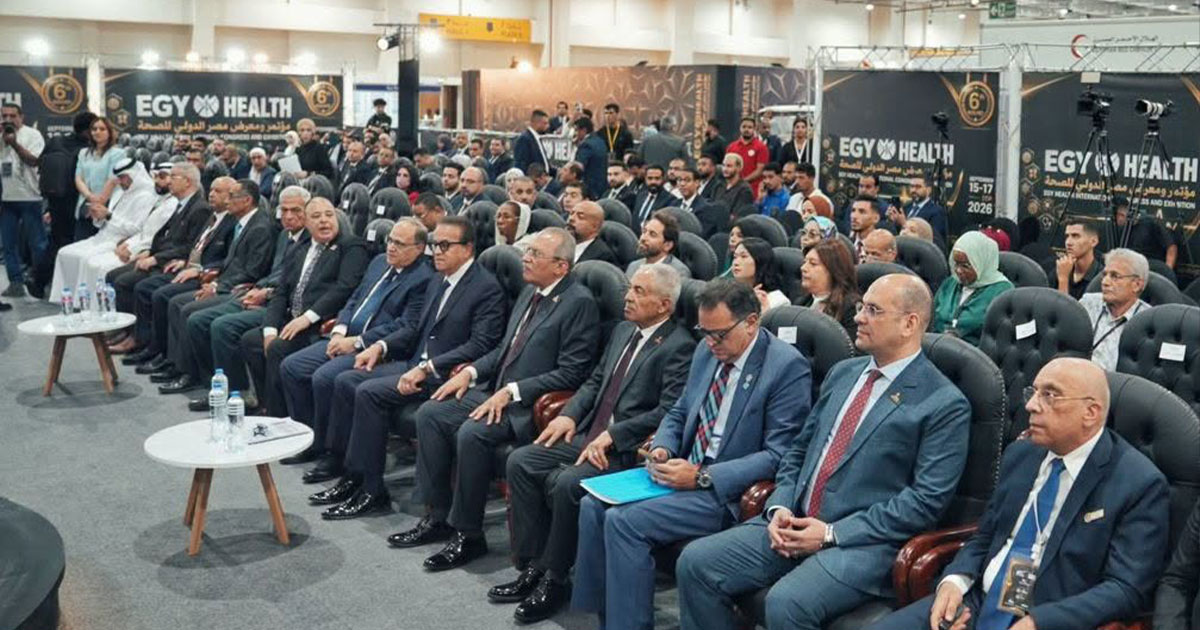

“Egy Health” exhibition showcases innovation and technology to create the future of health care
Health care is one of the basic components of building a society capable of protecting its members and enhancing their quality of life. It is also directly linked to the state’s ability to achieve development and improve the level of services provided to citizens. As the needs of societies expanded and the nature of health challenges evolved, the development of the health system became based on improving the efficiency and quality of services, and enhancing its ability to respond to changing needs.
In this context, innovation and technology stand out as essential tools for advancing the health care sector, as they offer broad potential to develop diagnosis and treatment, improve resource management, and expand access to services, in addition to supporting prevention and detection.Early. The use of data, digitization and artificial intelligence also opens new horizons for the development of health services, making investment in technology and human resources an essential part of building a more efficient and sustainable health system.
Technology and the future of the health sector
In light of this, Dr. Khaled Abdel Ghaffar, Minister of Health and Population, confirmed that the EG Health International Health Conference and Exhibition in its sixth edition represents an important platform for exchanging experiences and enhancing communication between the various sectors of the health system, in light of broad participation from the country’s sectors and representatives from countries around the world.
The Minister explained that the participation of various sectors of the state, along with international representatives, adds great value to the conference, especially in the academic and technical aspects and the accompanying exhibitions, noting that innovation and technology have become the controlling element in the future.The health sector in the fields of manufacturing medicine, medical devices and reagents, and that the future of health care is linked to benefiting from technological development and innovation.
He noted that the concept of sustainable health goes beyond building hospitals and increasing the number of beds and extends to building an integrated system, based on quality services, efficient use of resources, and attention to prevention, early detection and timely intervention.
This is consistent with the third goal of promoting good health and well-being, by promoting prevention, improving the quality of health services, and providing the necessary interventions in a timely manner.

Digital transformation supports the development of healthcare
The Minister expressed his admiration for the idea of Dr. Adham Rashad, who is responsible for managing the work of the Health Organization.Global in the Eastern Mediterranean region, regarding the importance of the organization’s monitoring and evaluation of the workload in health sectors in countries, allowing for the provision of an international vision with a positive resonance, stressing that investing in human resources represents the true wealth of Egypt, and benefiting from the national strategy for digital transformation and employing big data to reach those suffering from diseases such as malaria, trachoma, non-communicable diseases, malnutrition, and cancerous tumors, and to achieve tangible health results.
This is related to the fourth goal related to quality education, which highlights the importance of capacity building and skills development as a basis for possessing cadres capable of keeping pace with scientific and technological developments.

Innovation and digitalization are at the forefront of health development
This conference discusses the latest solutions inArtificial intelligence, digitization and financial inclusion, which contribute to making health services available to various segments of society, in addition to reviewing developments in the Egyptian Genome Project and the achievements of the “100 Million Health” initiatives. The exhibition includes about 300 international companies showcasing the latest innovations and technologies supporting medical staff.
The participants stress the importance of strengthening the partnership between the various parties of the health system, and supporting investment and expansion in technological and digital solutions to develop services and raise their efficiency in accordance with quality standards, in a way that enhances the health sector’s ability to keep pace with the needs of the future.
Integration between the health and banking sectors also stands out as one of the paths to support the growth of medical facilities, by providing financing and creating job opportunities, especially with the expansion of digital transformation opportunities that require cooperation between various sectors.
This comes in a frameThe ninth goal calls for supporting industry, innovation, and infrastructure, which is linked to employing innovation, technology, and infrastructure development in a way that enhances the efficiency of vital sectors, especially health care.
Egyptian achievements in the health care sector
Dr. Adham Rashad pointed out that Egypt has become the first country in the world to obtain the organization’s accreditation for being free of Hepatitis C after more than 60 million people were examined and more than 4 million Egyptians received treatment, in addition to the Egyptian Medicines Authority obtaining the third regulatory level of the organization for medicines and vaccines, making it the first regulatory body in Africa to obtain both classifications, stressing that these achievements reflect Egypt’s ability to achieve influential health results and reinforce the importance of investing in local production, technology transfer, and human resources.

In conclusion, the health care experience reviewed by EG Health reveals that the development of the system has become linked to its ability to employ knowledge, technology, and human resources in the right place and time. Innovation in the pharmaceutical and medical device industry, artificial intelligence and big data, and the shift from dealing with the disease after its appearance to prevention and early detection, are all paths that converge on one goal. It is to build a health service that is more accurate, efficient, and capable of reaching the needs of citizens before health risks turn into greater burdens on the individual and the system. Hence, investment in human resources becomes the other side of technological investment, because the value of modern tools remains linked to the knowledge and skills that are capable of employing them and transforming their potential into tangible health results.
In this context, The Earth Guards Foundation confirms Sustainable health care has become a concept that goes beyond facilities and equipment to building an integrated institutional capacity that maintains the quality of service and the efficiency of resources, and links scientific progress with the needs of society, so that technology turns from mere modern tools into a real force for improving human health and enhancing the health sector’s ability to face the challenges of the future.


