

China reduces the charging time for electric car batteries by a few minutes while supporting safety standards
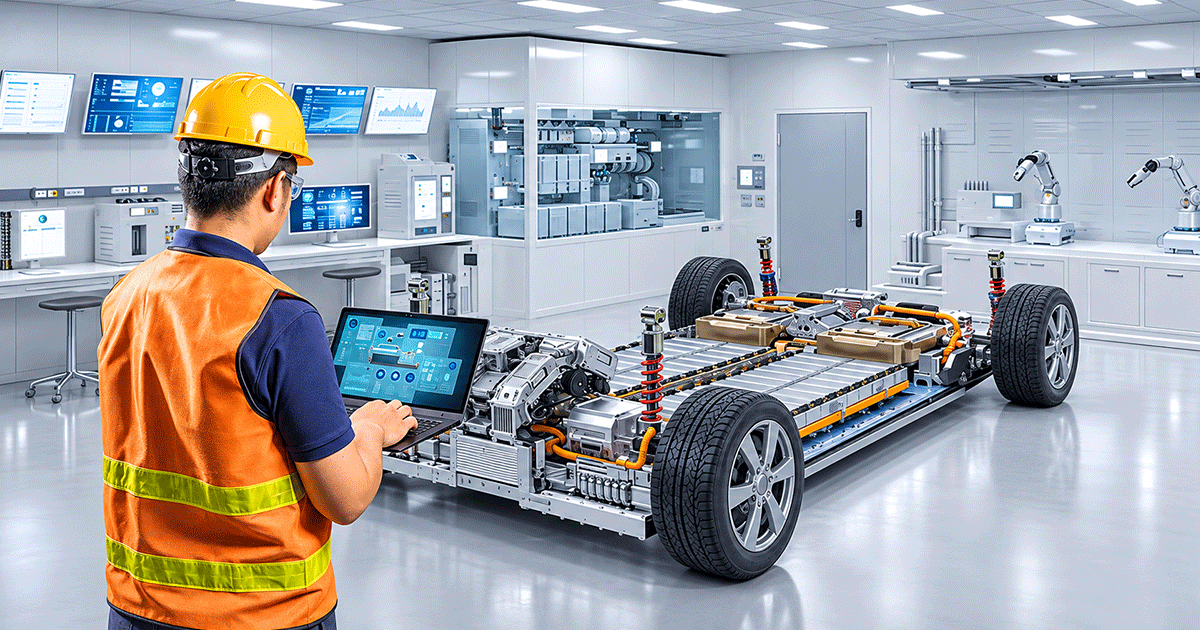

China reduces the charging time for electric car batteries by a few minutes while supporting safety standards
Four and a half minutes is enough to charge an electric car battery from 10% to 70%, according to the latest system revealed by the Chinese company Geely. This period brings the electric car charging experience closer to the time the driver is accustomed to spending in front of the gas pump, and pushes competition in the world's largest automobile market to a new stage.
Chinese companies such as Geely, BYD, and Li Auto are racing to shorten charging times to minutes, in an attempt to alleviate consumers’ anxiety about driving range and waiting time, in conjunction with the slowdown in demand growth within the Chinese market.
However, raising the charging speed to levels measured in megawatts exposes the batteries to extreme heat, and increases the need for solutions that protect them from damage and fires, while another challenge appears outside the car itself: Can electricity networks handle thousands of charging points that require huge capacities within short periods?
Charge the battery in minutes
Geely unveiled a supercharging system with a maximum capacity of 2.25 megawatts via a single charging port, powered by a battery specially designed to handle these speeds.
According to the company, the charging level can be raised from 10% to 70% within 4.5 minutes, then reaching 97% in 8 minutes and 40 seconds at normal temperatures.
BYD is moving in the same direction with its megawatt-level charging systems and Blade batteries, which the company says can go from 10% to 97% in about 9 minutes.

Li Auto's flagship vehicles use CATL's 5C Kirin batteries, which can provide enough power to cover a distance of up to 500 kilometers within 12 minutes of charging. Sunwoda also joined the race this month with a system that promises to go from 10% to 97% in about 9 minutes.
These numbers put Chinese companies ahead of their Western competitors in the shipping race. It usually takes 15 to 25 minutes to charge a Tesla from 10% to 80% via Superchargers, while Mercedes-Benz claims a time of about 22 minutes to reach the same rate.
To learn more about the site BYD In the electric vehicle race, read on: How do BYD cars shape the future of sustainable transportation?
Heat chases speed
Shortening the charging time in this way poses a challenge within the battery. Passing large amounts of electricity over a period of minutes raises the temperature quickly, and may affect the life and safety of the battery. This is why Chinese companies are turning to engineering and software solutions that work in parallel with increasing the charging speed.
Geely has developed a liquid cooling network that passes through the charging station's storage units, cables and vehicle ports, with the aim of maintaining a stable temperature and preventing hot spots within the system.
Other companies are working on modifying the design of the battery cells themselves, using shorter cells or designs that reduce friction and heat during fast charging.
These solutions attempt to maintain performance Electric cars With increased power that reaches the battery in a shorter time, an equation that combines speed, safety and battery life simultaneously.
Artificial intelligence monitors the battery
Software, in turn, has entered the shipping race. Geely uses a system based on artificial intelligence and deep learning algorithms operating inside the car, and can predict the temperature will rise about 30 seconds before it occurs.
This period gives the car's systems an opportunity to intervene and regulate the charging process before the temperature reaches unsafe levels.

Automotive and battery companies also use specialized coatings and methods based on high-frequency electrical pulses to deal with the problem of batteries deteriorating with repeated rapid charging.
These developments reveal that competition is in Electric cars It now includes software, cooling and heat management systems, in addition to the battery and motor, turning the charging process itself into an independent field of innovation.
The pressure reaches the power grid
The shorter the charging time, the higher the amount of electricity required in a few minutes. As charging capacities move to the megawatt level, the proliferation of thousands of stations becomes a direct challenge to electricity grids.
Operating a large number of superchargers at the same time may lead to large loads on the grid, prompting companies to integrate charging stations with battery storage and solar energy systems that help provide part of the electricity locally and relieve pressure at peak times.
Here, Goal 9 of the Sustainable Development Goals, on industry, innovation and infrastructure, extends from the car to the network that feeds it. The development within the battery requires an infrastructure capable of accommodating the new charging speeds and transferring energy efficiently and safely.
The feasibility of ultra-fast charging becomes linked to the electricity sector's ability to develop networks, storage, and charging stations at the same speed as vehicles.
90 thousand stations by 2028
Statements from a Geely official indicate that increasing charging speed has become more difficult as companies approach the maximum allowed by current battery technologies, which may push competition in the next stage towards increasing the number and spread of charging stations.
BYD plans to install 90,000 high-speed charging stations by 2028, in addition to installing 300 stations in the United Kingdom over the next year.
NIO takes a different path that relies on replacing the entire battery, as it has more than 4,000 stations that can replace the car battery in about three minutes.

Thus, the question for the consumer shifts from the speed of the charger alone to how easy it is to find, its spread on the roads, and the network’s ability to operate it stably.
Within the Sustainable Development Goals Goal 11, related to sustainable cities and communities, we find that charging infrastructure is part of the ability of cities to accommodate electric transportation and provide a practical alternative to traditional vehicles.
The next stage for electric cars
Reaching a charging time of a few minutes addresses one of the most important concerns that have accompanied the spread Electric cars During the past years, it raises the ceiling of requirements for the entire energy system.
The fastest car to charge requires a battery that can withstand heat, software that anticipates risks, a station capable of providing enormous electrical capacity, and a network that can handle demand from thousands of vehicles at the same time.
Based on these transformations, The Earth Guards Foundation Integration of infrastructure with technical innovation is one of the basic conditions for the sustainability of electric transport. Shortening the charging time gains its true value when it is accompanied by a safe expansion of networks, storage, and renewable energy, allowing the spread of electric cars while maintaining the stability of the energy system.
The Chinese experience pushes the discussion a step further than the speed of the battery itself; The next stage seems more like a race to build a complete charging system that can keep up with vehicles that are developing faster than the stations they rely on.


