

The Red Sea opens paths for sustainable development in the Arab region
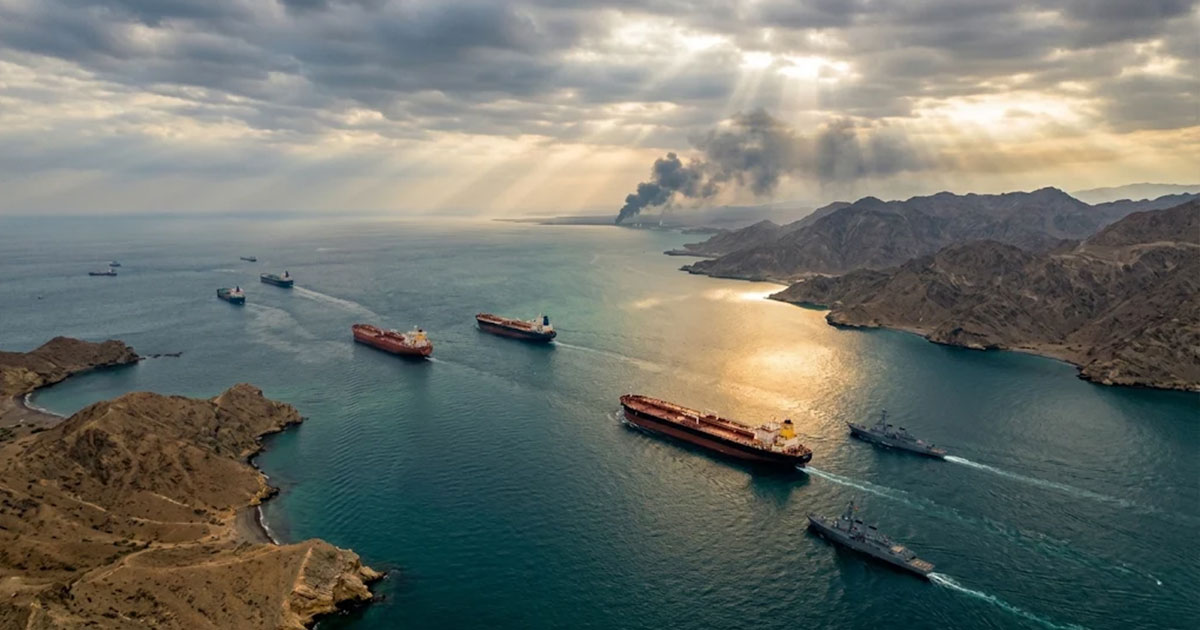

The Red Sea opens paths for sustainable development in the Arab region
connects Red Sea Between the continents of Asia, Africa, and Europe, the Mediterranean Sea is connected to the Indian Ocean via the Suez Canal in the north and the Bab al-Mandab Strait in the south. It extends for about 2,250 kilometers, and is overlooked by Egypt, Sudan, Eritrea, Djibouti, Somalia, Saudi Arabia, Yemen, and Jordan across the Gulf of Aqaba.
The value of the Red Sea is that, in addition to being a place for ships to navigate, it simultaneously brings together natural resources, ports, tourism and logistical projects, along with security risks and regional and international competition. Hence, the question posed today becomes: How can this potential be transformed into sustainable development that serves the peoples of the Arab region and protects their environment for future generations?
From this angle, we will explore with you The Earth Guards Foundation Its various development dimensions in the Arab region and the entire world, and this is in accordance with the 2030 Sustainable Development Plan, which calls for preserving human resources and enhancing their well-being everywhere. So keep reading.
The artery of global trade
The Red Sea passes through a large share of energy and commodity trade between East and West. That is, there is an intersection between the interests of major powers such as the United States, China, Russia, the European Union, and other influential regional powers, and this competition is evident in port investments and infrastructure on the African and Asian coasts.

Because of this great importance, any disturbance in it quickly affects shipping and insurance prices, and the regularity of supply chains. This confirms beyond any doubt that if there are no clear rules that respect sovereignty and the balance of interests, its stability will be spoiled and its waters will be disturbed. Because sustainable development in all its social, economic and environmental dimensions does not flourish in a polarized environment. Especially the eighth goal, which calls for achieving decent work and economic growth.
The effects of these global regional problems go beyond the security aspect, as they raise the cost of transportation and insurance, drive away investors, and keep coastal communities in a cycle of fragility and poverty, an environment in which these same threats feed.
The blue economy is a development opportunity
Since the Red Sea region possesses the elements that qualify it to be a global logistics center, including major ports, free zones, and huge tourism and investment projects; This opens promising horizons for developmental integration instead of being an arena for conflict.
From a sustainability perspective, this growth must be based on the blue economy. That is, benefiting from marine resources without depleting them. This requires:
- Coral reef protection
- Regulating fishing and marine activities
- Reducing pollution
- Adopting environmental standards in tourism projects
Two possible paths for the future
From the above, it shows us how the Red Sea’s future does not move in one definite direction. Because it is the result of the interaction of several factors, including competition between major powers, escalating security threats, and the link between stability and the economic interests of countries in the region. This may have a negative impact on achieving the sixteenth goal of the Sustainable Development Goals: peace, justice, and strong institutions.
By reading these factors together, it is possible to envision two basic paths, each of which has different implications for navigation security, sustainable development opportunities, protection of the marine environment, and the livelihood of coastal communities.
Escalation and chaos
Conflicts are worsening, external interventions are intensifying, and coordination is absent between the countries of the Red Sea coast. The security of navigation in this global water crossing is disturbed, and then the opportunities for sustainable development decline, in one way or another, the most important of which are human stability and well-being.
Sustainable cooperation and stability
An inclusive regional system will also be formed that coordinates security, regulates maritime activities, and advances economic integration. This promising development path is the most rational in the long term, but it requires political will that prioritizes common interests over the legacy of conflicts.
What has passed means that the Red Sea stands at a crossroads in light of the current regional and global crises. Either it remains a contested corridor, or it becomes a space for shared sustainable development and lasting prosperity. The second option will only be achieved with a careful balance between cooperation and competition, with effective regional mechanisms, confidence-building measures, and international participation that provides stability over absolute influence that is not supported by international law.
In conclusion, it appears to us The Earth Guards Foundation The lesson that the Red Sea offers us is that security and sustainable development are inseparable in this region of the world. Security without development is fragile, and development without security is temporary, because the investor does not tie his capital to a corridor in which the security of maritime navigation is disturbed.


