

Quality healthcare is Egypt’s gateway to preventing heart disease and building a sustainable health system

Quality of health care is Egypt’s gateway to preventing heart disease and building a sustainable health system
In recent decades, noncommunicable diseases – primarily cardiovascular diseases – have become one of the biggest challenges facing health care in various countries of the world, after their impact went beyond the borders of the health sector to the economy, quality of life, and human development.
Therefore, the success of countries in these health issues must be measured by their ability to build health systems that prevent disease before it occurs, detect it early, and ensure that every citizen has access to safe, fair, and high-quality health care.
Hence, institutional quality and health accreditation have become two basic pillars of achieving the Sustainable Development Goals (SDGs).Seventeen, in particular Goal 3 on ensuring good health and well-being for all, and other related goals.
Heart disease is a difficult health challenge
In this context, Dr. Ahmed Taha, “President of the General Authority for Health Accreditation and Control,” confirmed that the success achieved by the National Heart Institute over six decades is a model that expresses the truest expression of health institutions, which have succeeded in combining accumulated medical experience and institutional management based on quality and efficiency.

The head of the General Authority for Health Accreditation and Control (Jahar) stressed that the sustainability of excellence in health care has become closely linked to the application of approved quality standards that guarantee patient safety, raise performance efficiency, and establish a culture of continuous improvement.Within health institutions.
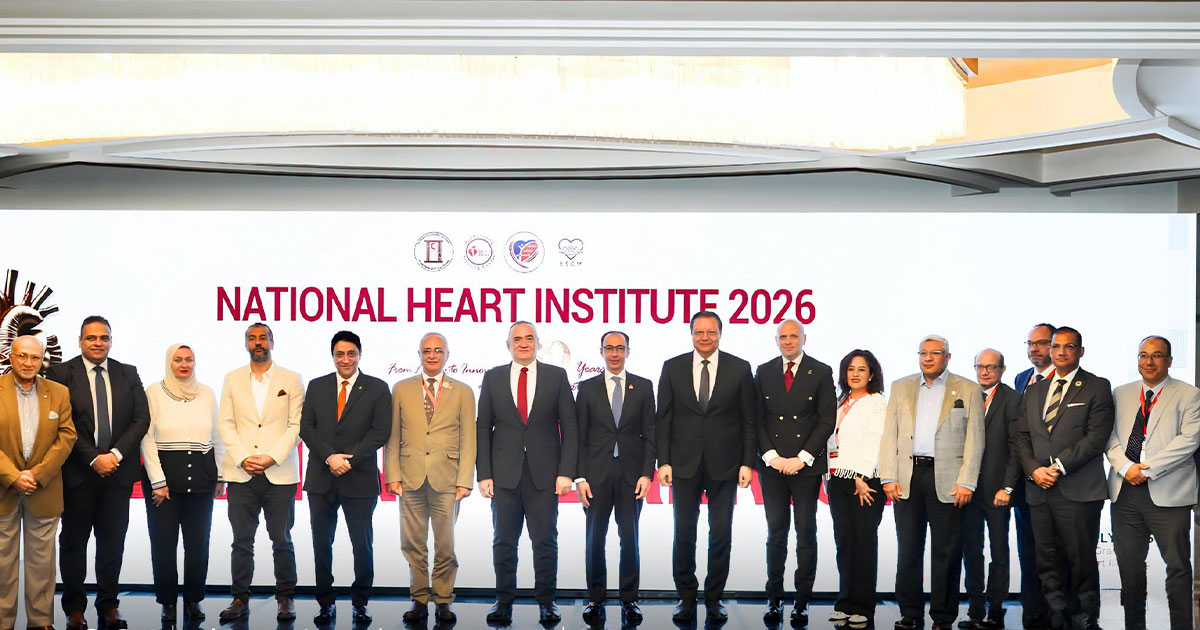
This came during his participation in the activities of the National Heart Institute’s Annual Conference 2026, which was held under the slogan “ From legacy to innovation… 60 years of leadership in heart care “, sponsored by Dr. Khaled Abdel Ghaffar. “Minister of Health and Population, and Deputy Prime Minister for Human Development”, in the presence of an elite group of health and parliamentary leaders, senior cardiology professors, experts and specialists.
Why is quality health care necessary to save lives?
At the activities of the National Heart Institute’s 2026 annual conference, the head of the authority explained that cardiovascular diseases are still the first cause of death in the world. It causes approximately 20 million deathsAnnually, which makes investing in the quality of health care a strategic necessity and not an administrative option. Because improving the quality of health services is directly reflected in reducing mortality rates, improving treatment outcomes, and enhancing the efficiency of use of health resources.
Dr. Ahmed Taha stressed that the real transformation sought by modern health systems is to reduce the need for surgical and therapeutic interventions in the first place, and this is through spreading the culture of prevention, expanding screening and early detection programs, and timely medical intervention. In order to preserve the health of citizens and reduce complications that exhaust individuals and health systems.

GAHAR standards in improving the treatment of heart patients
On the other hand, the head of the General Authority for Health Accreditation and Control indicated that achieving this transformation requires integration between all elements of the health system. Starting from citizen awareness, through medical personnel and health facilities, to health information and data systems, which help in making evidence-based decisions.
In this context, he explained that the standards of the General Authority for Health Accreditation and Regulatory (GAHAR) provide an integrated institutional framework that ensures the provision of safe and effective health services, which are services centered around the needs of the patient, while supporting the optimal use of available capabilities and resources.
He also added that the role of the Authority – the General Authority for Health Accreditation and Control – goes beyond granting accreditation certificates, to include establishing a culture of quality as a daily practice within health facilities, which contributes to raising the efficiency of clinical performance,Enhancing patient safety, and supporting prevention and early detection programs, especially with regard to chronic and noncommunicable diseases, which represent the greatest burden on health systems.
Presidential initiatives support health sustainability
Given the importance of the quality of health care, Dr. Ahmed Taha praised the presidential initiatives in the health sector, stressing that they have brought about a qualitative shift in the philosophy of providing health care, by focusing on prevention, early detection, and reducing risk factors. This contributes to reducing the need for complex therapeutic interventions, enhances the sustainability of the health system, and reduces the social and economic burdens resulting from chronic diseases.
Based on what was confirmed by the President of the General Authority for Health Accreditation and Control, the importance of the Egyptian experience inEstablishing a culture of accreditation and quality, as one of the pillars of health sector development. Because when quality becomes an institutional culture, and prevention becomes a national priority, the health system becomes more capable of protecting lives and improving quality of life.
Thus, the message carried by the National Heart Institute’s Annual Conference 2026 confirms that the future of health care is created by modern technologies, and is established by quality systems that move the health sector from treating disease after it occurs to the health industry before it worsens, ensuring a healthier and more productive society.
From this standpoint, you find The Earth Guards Foundation that establishing a culture of accreditation and quality, and applying institutional standards that guarantee continuous improvement; They represent a long-term investment in human capital and enhance the country’s ability to achieve development goalsSustainable.


