

Data centers attract $35 billion to Malaysia amid growing concern over resource drain

Data centers attract $35 billion to Malaysia amid growing concern over resource drain
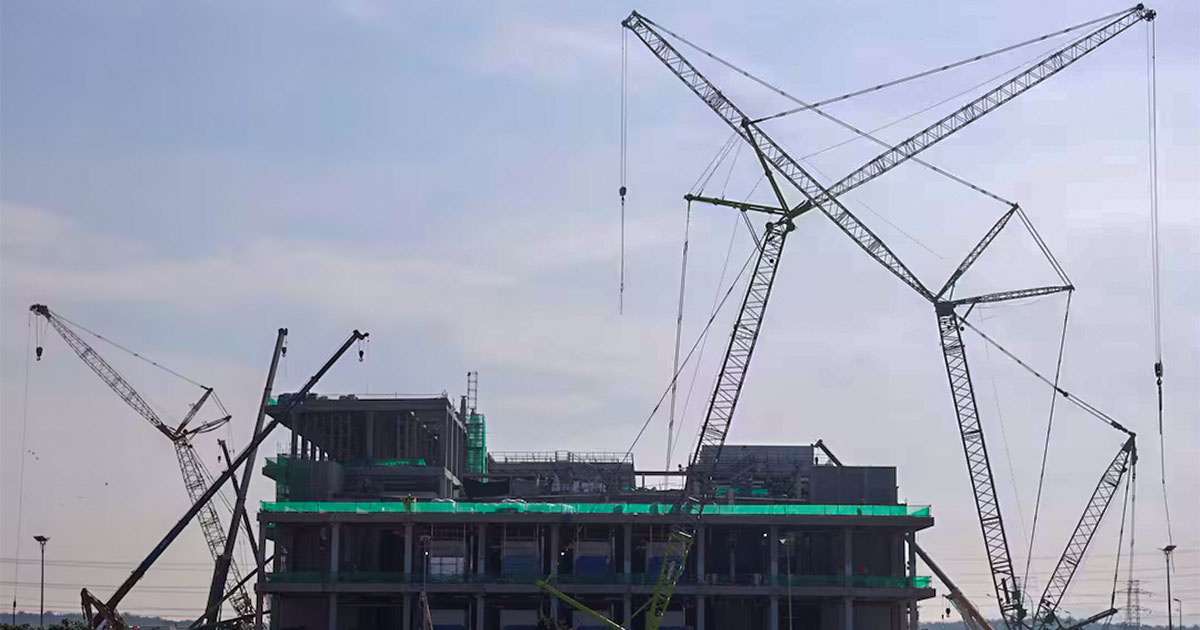
Malaysia has become the fastest growing data center market market in Southeast Asia, driven by growing demand for cloud computing services and infrastructure needed for artificial intelligence (AI) applications. The state of Johor captured the bulk of this boom, benefiting from its proximity to Singapore, low land and energy costs, and government support provided to investors.
As construction accelerated, the discussion moved from the size of the new capacity to its impact on surrounding resources and communities. Sources of electricity, amounts of water used for cooling, local economic return, and protection of green spaces have become key elements in evaluating projectsNew.
This expansion puts Malaysia in front of an equation that combines support for the digital economy and protection of natural resources, in connection with the Sustainable Development Goals (SDGs) of clean water, sustainable energy, infrastructure and innovation, and resilient cities. It also tests the country’s ability to attract technological investments while ensuring its growth in a responsible and balanced manner.
Johor leads data center boom
The state of Johor has become the center of gravity in the Malaysian data center market, after attracting huge investments from international companies looking for locations close to Singapore and enjoying lower operating costs. Singapore’s previous restrictions on building new facilities contributed to accelerating the transfer of investments to the neighboring Malaysian state.

Investments exceeding $35 billion
Johor attracted more than $35 billion in data center investments, after benefiting from Singapore’s suspension of approvals for new facilities between 2019 and 2022, as a result of the pressures imposed by the sector’s expansion on land, water and electricity.
Investments have flowed into Johor from major American and Chinese companies, including Amazon, Microsoft, Tencent and Alibaba, as well as international developers and operators working to create facilities capable of meeting the growing demand for computing and artificial intelligence.
This influx reflects the importance of the state’s geographical location, along with the stability of infrastructure, the availability of land, and government support, which are factors that have made it a major destination for companies looking to expand in Asia.
Planned capacity rises by eightFold
Real estate consultancy JLL estimates that projects under construction and planning could raise the capacity of data centers in Johor to about 7,000 megawatts, an increase equivalent to eight times current levels.
This number reveals the scale of the expected transformation in the state’s digital infrastructure, but it also shows the scale of future demand on electricity networks, water and cooling systems. Increasing computing power means running more servers around the clock, with the need for continuous systems to prevent equipment overheating.
Water and electricity at the heart of concerns
Data centers require large amounts of electricity to operate servers and communications equipment, and some facilities also use water for cooling operations. With a large number of projects concentrated in one area,Fears of competition between homes and farms for available resources.
One center consumes the resources of thousands of homes
According to data from the Central Bank of Malaysia, a data center with a capacity of 50 megawatts may consume an amount of water equivalent to the needs of about 2,200 homes per day, while its electricity consumption may be equivalent to the needs of about 22,000 homes.
This comparison approximates the potential pressure on resources, especially with Johor planning to operate multiple facilities with large capacities. It also explains why project evaluation has moved from the availability of land and financing to energy and water efficiency and the ability of networks to accommodate new demand.
This is linked to the sixth goal of the Sustainable Development Goals (SDGs), which is concerned with clean water and sanitation services, rationalization of water consumption and its sustainable management, and the seventh goal on energy.Clean and affordable. Balancing digital growth with population needs requires improving cooling efficiency, expanding the use of treated water, and increasing reliance on renewable energy sources.
Ban on high-water consumption facilities
The state of Johor announced a ban on two categories of data centers that consume heavy water, the needs of each facility may reach 50 million liters per day, an amount equivalent to the capacity of about 20 Olympic swimming pools.
New projects must also clarify the electricity sources they will rely on, with renewable energy becoming an increasingly important element in obtaining approvals.
These measures reflect the transition of authorities from encouraging rapid capacity building to setting more stringent standards, aimed at protecting resources and ensuring continued community support for projects.
Residents’ objections test societal acceptance
The expansion of data centers has shown that government approvals and funding alone do not guarantee the success of projects. Residents’ attitudes and the impact of construction on daily life and the surrounding environment have become factors capable of delaying implementation and raising the cost.
The first protests of their kind in Johor
The Iskandar Puteri area in southern Johor witnessed protests by residents who objected to the construction of a complex belonging to the “Z Data” company, in the first such move against the sector’s facilities inside Malaysia.
Concerns focused on the possibility of increased pressure on water supplies, after some residents complained of low water pressure even before the facility, which has a capacity of 300 megawatts, entered into operation. The company confirmed that the complex was not the source of these problems.
The objections extended to the impact of construction work in the area, including dust and the removal of hills and green spaces. The dust prompted the land developer to establish two free car wash sites for residents, while the loss of surrounding nature remains a concern that is difficult to compensate for with temporary measures.
Objections delay projects globally
JLL estimated that resident objections, along with problems with electricity delivery and availability of infrastructure equipment, contributed to delaying 57% of data center projects globally by at least three months last year.
The concept of “community acceptance” emerges here, which has become an essential element in the continuation of projects. Companies need to convince residents that the facilities will not raise energy prices, drain water, or harm the quality of life and urban landscape.
This aspect is related to the eleventh goal of the Sustainable Development Goals (SDGs), which relates to building sustainable cities and local communities, as the expansion of the technological infrastructure requires the involvement of residents in decisions and the clarification of the environmental and economic impacts of projects.
Government and companies search for a more sustainable model
Growing concerns have prompted governments and companies to develop solutions that reduce resource use and increase the contribution of renewable energy, while setting new standards for approving projects.
Treated water and closed cooling systems
Zed Data said that its center relies entirely on treated wastewater, and that it is working to complete a renewable energy agreement with the government electricity company, Tenaga Nacional, with the aim of relieving pressure on the network.
The Japanese company NTT announced the use of a closed cooling system that reduces the need to withdraw new amounts of water, while Bridge Data Centers said that solar energy provides more than half of the electricity used in its operations in Johor.
These models show that the sustainability of data centers is linked to the development of cooling technologies and water reuse, in addition to diversifying electricity sources. It also relates to the ninth goal on industry, innovation and infrastructure, and the twelfth goal on sustainable consumption and production patterns.
Selangor requires local content
The state of Selangor, Malaysia’s richest and most populous state, adopts a different approach based on reviewing projects according to international standards for energy and water efficiency, with a requirement of 30% local content in areas such as designIntegrated circuits and cooling systems.
The condition aims to increase the local economy’s benefit from investments, especially since data centers are capital-intensive projects, while their contribution to jobs and local supply chains may remain limited compared to the amount of money invested.
The economic return raises political debate
Benefits to local communities have become a major focus of the debate over data centres, with increasing demands to link approvals to job volume, local contracting and technology transfer.
In April, the Malaysian Socialist Party criticized a mega project in Selangor worth 1.75 billion ringgit, or about $428 million, saying it prioritized corporate interests at the expense of local communities.
reflects thisThe position expands the debate from resource consumption to the distribution of economic returns. Communities that bear the effects of construction and pressure on facilities expect job opportunities and local investments commensurate with the size of the projects.
Tightening approval conditions in Malaysia may lead to part of the investments moving to other Asian markets, such as Thailand, which is witnessing the construction of large complexes in the south. However, Johor still retains its appeal thanks to the stability of its infrastructure, government support, availability of resources and proximity to Singapore.
In conclusion, artificial intelligence and cloud computing applications will continue to drive demand for data centers, but the continuation of the Malaysian boom will depend on the ability of the government and companies to manage water and energy and protect the interests of the population.
This path requires increasing cooling efficiency, expanding the use of treated water,Increasing reliance on renewable energy, developing electricity networks, protecting green spaces, and enhancing local content in supply chains.
The Earth Guards Foundation confirms that sustainable digital transformation requires infrastructure that achieves efficient use of water and energy, and ensures that local communities benefit from technological investments. It also requires linking innovation with the protection of natural resources, allowing data centers to support the digital economy without increasing environmental and social pressures on surrounding areas.


