

Earth Guards Concludes Participation in Cairo International Book Fair 2026 with Significant Knowledge and Humanitarian Impact Led by Muhammad Zeyada
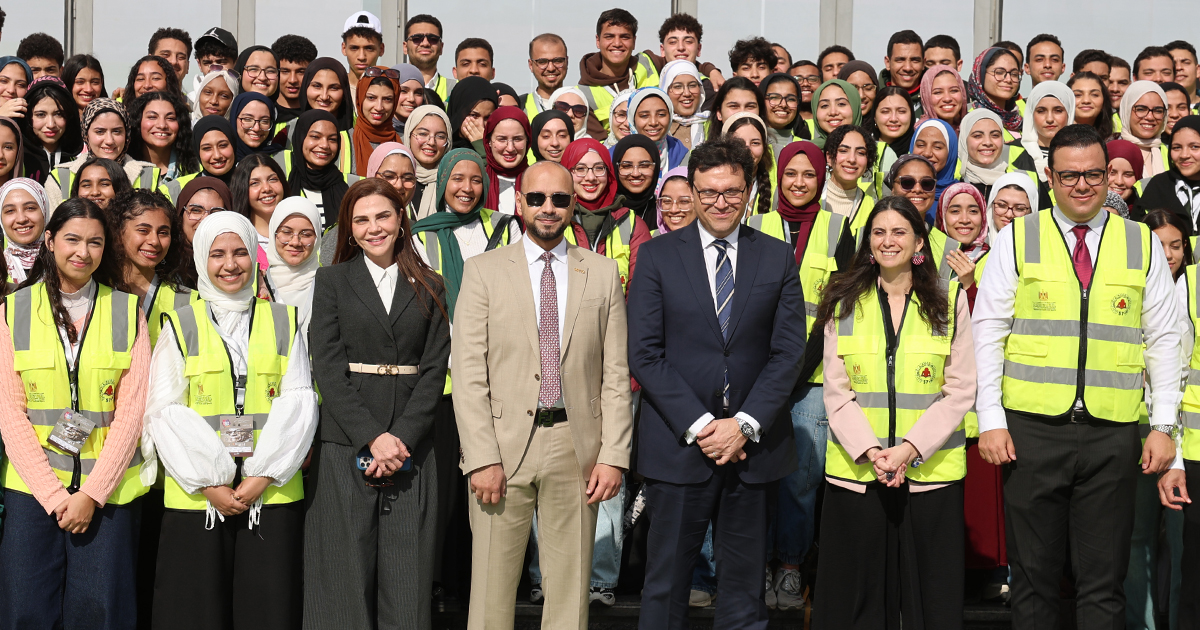

Hamat Al-Earth concludes its participation in the Cairo International Book Fair 2026 with a knowledge and humanitarian harvest
TheThe Earth Guards Foundationsince its founding, it has been working to consolidate the concepts ofsustainable developmentwithin society with a vision based on spreading awareness of its social, economic and environmental issues, and transforming them from theoretical concepts into life practices that all segments of society can understand and participate in. The Foundation does this according to an integrated communication strategy, targeting each societal segment with means and messages that suit their interests and age and cultural characteristics, whether through cognitive and media content, interactive initiatives, or activities directed to children, youth, and adults.
In this context, an exhibition was presentedCairo International Book 2026 has a wide application space for this rational vision and balanced strategy, as the institution was allowed to communicate directly with a diverse audience, and to provide multi-level programs and interactive activities that embodied its mission of spreading the culture of sustainability and enhancing community participation to achieve its goals.
From this standpoint, we review in this article a brief overview of the most prominent efforts of theThe Earth Guards Foundationand its activities that came within the framework of its participation in the Cairo International Book Fair, whose activities concluded yesterday, Tuesday, and which constituted an important milestone for embodying the Foundation’s vision of spreading awareness of sustainable development. So continue reading, and learn about the most prominent features of this participation and its results.
Don’t stop reading
I have concluded theFoundationEarth Guards Participation in the fifty-seventh session of the Cairo International Book Fair 2026, after a cultural and awareness-raising presence that extended for successive days in which the Foundation’s vision was demonstrated in employing knowledge as the basic gateway to achieving Sustainable Development Goals (SDGs), and consolidating community awareness in all its dimensions, in line with the axes of the national agenda “Egypt Vision 2030” and the Sustainable Development Goals (SDGs) agenda. Global.
The Foundation’s participation this year came within the framework of the exhibition’s slogan, “He who stops reading for an hour is left behind for centuries,” to confirm to us that culture and knowledge are the essence of building a human being capable of contributing to the development of his society and shaping his future in a balanced and sustainable manner.
This is because reading contributes to building human capital capable of innovation and creating solutions to various social, economic, social and environmental challenges.The wider the circles of knowledge and awareness, the greater the ability of individuals to participate effectively in the labor market, and the greater their awareness of issues of sustainability and resource conservation, thus supporting the comprehensive development process.
Interactive pavilion with a sustainable perspective
Based on this sustainable vision, the PavilionThe Earth Guards Foundation succeeded during the exhibition days in presenting a practical model of cultural sustainability, as it was transformed into a lively space that combined education and entertainment, and attracted thousands of visitors from different age groups with awareness activities and interactive competitions that focused on simplifying the concepts of sustainable development and linking them to life. Daily.
So the pavilion witnessed an intense presence of children, youth and families, who participated in multiple activities aimed at enhancing awareness of social responsibility and instilling values.Volunteer work, spreading the culture of participation in environmental protection, and building a more cohesive society.
NoahPromotes awareness between generations
The character of Noah – a friend of children and an inspiration to adults – had a prominent presence within the Foundation’s pavilion, where he succeeded in attracting children and presenting awareness messages about sustainability in a simple and enjoyable manner, based on interaction and artistic and educational activities.
This was embodied through the “Draw and Color with Noah” event, which allowed children to express their vision for a more sustainable future, in addition to competitions that promoted positive behaviors and the spirit of cooperation among children, and contributed to consolidating the values of giving and social responsibility from a young age.
In the same context, there was the “Love Box” competition, which received wide interaction among the children and youth visitors to the exhibition.And for adults, it is a competition that succeeded in transforming the concept of charitable work into a humanitarian and societal experience in which hundreds of children and their families participated by preparing boxes containing food for the needy and the poor, before spreading the idea among their relatives and friends. Then the competition concluded with honoring the winners and handing over prizes, most notably an “electric scooter,” in addition to providing incentive gifts that included twenty centers; In appreciation of the amount of participation and creativity provided by the children, which reflects the success of the initiative in enhancing the spirit of volunteerism and community work.
The character of Noah was distinguished in this year’s exhibition by visitors flocking to his statue in the institution’s pavilion. In order to take memorial photos with him, and learn more and more about the Earth Guards’ initiatives and community programs, and their effectiveness, in a cultural climate that expresses the importance of sustainable development and the importance of its seventeen goals.

Honoring sustainability pioneers
Also,The Earth Guards Foundationwas keen to highlight influential models in the areas of sustainable development, by displaying the Foundation’s shields that aim to honor various sectors, in addition to hosting a number of sustainability pioneers, including prominent academic and cultural figures, who shared their experiences before the exhibition audience.
The Foundation’s pavilion at the Cairo International Book Fair also witnessed high-level official visits from Arab and foreign delegations, along with a number of ministers, officials, and senior leaders from the police and army, who praised the Foundation’s role in community work, spreading awareness of its importance, and promoting development culture.
Partnerships that enhance the dimensionDevelopmental
The participation ofThe Earth Guards Foundationreflected a clear international dimension, with its official sponsorship of the “I am a Volunteer” program inside the exhibition, in cooperation with UNICEF, as the program focused on supporting the culture of volunteerism among young people, and enhancing their participation in community issues and sustainable development.
The Foundation also allocated space to produce awareness media content (podcast), during which it hosted leading local and international figures and experts in the fields of childhood, education and development, in a step aimed at enhancing the exchange of experiences, and linking the local audience to the global dialogue on development issues.
Earth Guards Magazine, a platform for disseminating sustainable knowledge
The Foundation’s pavilion witnessed a large turnout for the Earth Guards magazine, which is one of its most important platforms.Cognitive, as the magazine provided scientific and analytical content that addresses sustainable development issues from an applied perspective, and links scientific thought with real-world experiences, thus contributing to spreading sustainable culture within society.
With the curtain coming down on the activities of the Cairo International Book Fair 2026 in its fifty-seventh session,The Earth Guards Foundation confirms that its participation was a cultural presence, and a step within an extended path aimed at achieving the goals of sustainable development and spreading awareness of its issues.
The Foundation will continue to achieve this; Contributing to building a more just and sustainable future for future generations, those generations that we must all work to optimally prepare, and make them ready and able to face the challenges of the future and create development opportunities in various parts of the world.


