

The National Advertising Regulatory Authority enhances traffic safety and supports renewable energy

The National Advertising Regulatory Authority enhances traffic safety and supports renewable energy
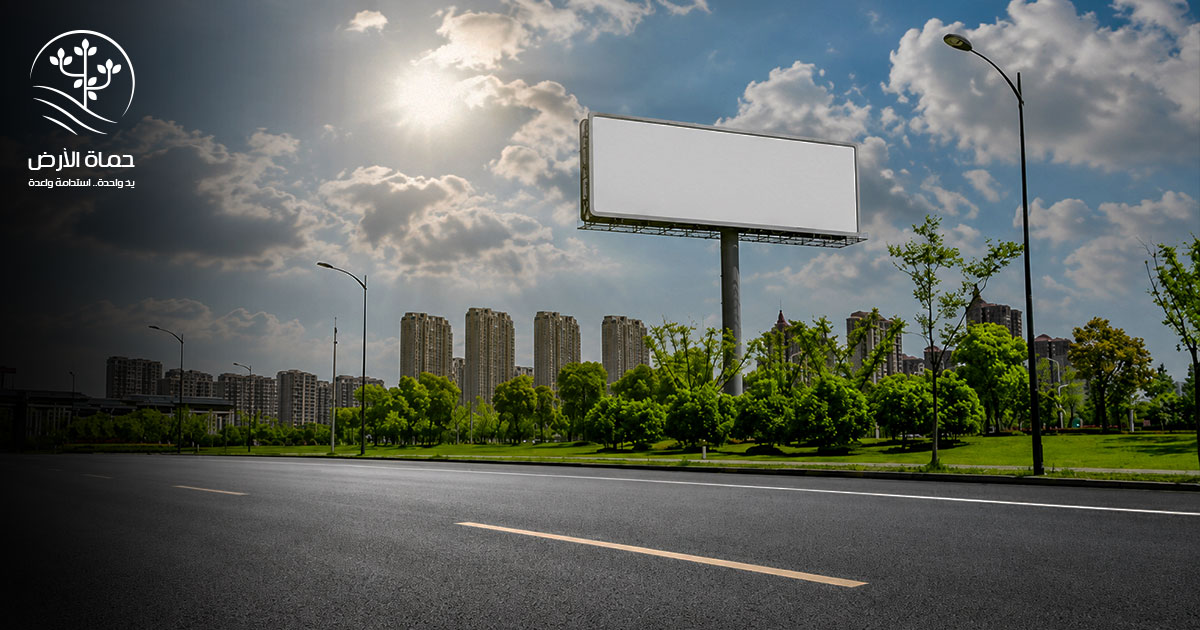
Renewable energy opens up a new horizon for Egyptian cities to reconsider details that seem fleeting, but they shape the features of daily life and reveal the amount of care given to the public sphere. Among these details are the commercial advertisements that extend on public roads, to be visual evidence that accompanies the movement of people, affects the image of the place, and consumes resources that require rational management.
Based on this urban importance that commercial advertisements enjoy, their random spread must be limited. This unplanned spread, which can have impacts beyond the aesthetic aspect to traffic and visual quality of the environment; Which hindersEfforts to achieve Sustainable Development Goal 11: Sustainable cities and communities.
The regulation of the advertising sector goes beyond controlling the locations and sizes of billboards, to become part of a broader question about a city that preserves its identity, protects its road users, invests its resources efficiently, and makes clean energy a place within its growing urban structure.
From here comes the guideline for commercial advertisements, prepared by the National Authority for Regulating Public Road Advertisements in light of Law No. (208) and its executive regulations; To establish a technical framework that contributes to unifying the standards regulating this sector, and gives the advertising sector clearer rules related to planning, design, safety, and visual identity.
Advertisement in the heart of the urban landscape
These new controlsUnder the umbrella of sustainable development and its goals, it tends to deal with commercial advertising as part of the urban system, with its location, size, and shape subject to factors related to the nature of the road, its speed, viewing distances, and the flow of traffic.
This vision carries an important significance in the path of urban development. Every element added to the public realm should be viewed within an interconnected network of relationships between humans, place, and the environment. Thus contributing to achieving comprehensive sustainability.
Commercials and Renewable Energy
One of the most prominent aspects that the guideline issued by the National Authority for Regulating Public Road Advertising draws attention to is encouraging sustainable practices in the advertising sector, through expanding the use of energy-saving lighting systems and benefiting fromRenewable energy sources, primarily solar energy; Whenever possible.
This point is of special importance. Because thousands of billboards spread across cities and roads require lighting and operating systems, which makes improving energy efficiency in this sector part of broader efforts to rationalize consumption.
The value of renewable energy here is derived from its ability to reduce electricity consumption in general, and change the way of thinking about advertising facilities in particular. Because the panel, which is designed from the beginning according to considerations of efficiency and the use of solar energy – for example – becomes more closely linked to the concept of a sustainable building and facility, and is transformed from an energy-consuming element into a space that can benefit from the resources available in its surroundings.
This trend is consistent with the country’s path towards achieving Sustainable Development Goals (SDGs) and implementing targets“Egypt Vision 2030”, which places the rational use of resources and the transition to more sustainable patterns at the heart of the development process.

Road safety is part of sustainability
The Guide for Advertisements on Public Roads makes the process of regulating advertisements another important dimension, which is the dimension of traffic safety. It – that is, the guide – takes into account the classification of roads according to operating speeds, and determines the appropriate sizes and locations of advertisements, in addition to the spacing and viewing angles. This helps the advertising message reach without affecting the concentration of drivers or the movement of vehicles.
These standards appear at first glance to be engineering in nature, but in essence they are part of a broader concept of sustainability. A sustainable city is one that puts human safety at the coreplanning, and treats the public domain as a shared resource that must be organized efficiently.
Periodic maintenance of commercial advertisements – whether structurally or electrically – is an essential link in this system. The safe declaration is based on continuous follow-up through follow-up, examination, and ensuring the safety of its components, in a way that protects citizens and property and reduces the dangers resulting from negligence.

Visual identity faces chaos
The vision expands to include heritage areas, places of worship, and buildings with a distinct architectural style, by setting guiding standards that preserve their cultural value and prevent commercial advertisements from overshadowing their architectural characteristics.
This is because visual identity is a reflection of memoryThe place and its privacy, and when historical buildings are adjacent to huge billboards or advertisements that do not take into account the nature of the area, the place loses part of its character, even if its buildings remain standing.
Therefore, regulating commercial advertisements can play a role in protecting urban heritage, especially with the expansion of cities, the increase in commercial activities, and the diversity of forms of commercial advertising. The regulatory rules then become a tool for maintaining the balance between the right to economic activity and the right to a city with a harmonious urban landscape.

From administrative control to integrated planning
As part of the new direction, the National Authority for Regulating Public Road Advertisements circulated the guide to the administrative authorities concerned with the advertising sector at the republic level. Until you areThere are unified standards, and even integration can be achieved between different parties.
This review gains importance in light of the urban expansion that Egypt is witnessing. Because new cities provide an opportunity to apply sustainable planning concepts from the early stages, instead of treating distortions after they appear. The earlier energy, safety and visual identity standards enter the planning stage, the more efficient and less expensive the public realm management process becomes in the long term.
From this angle, the guideline for regulating commercial advertisements on public roads becomes a tool for coordinating the relationship between advertising and the city. It opens the door wide for a vision that is more consistent with the desired urban landscape, a landscape in which human, economic, environmental and aesthetic considerations are integrated.
From the above you can see FoundationEarth Guards The transformation towards sustainable cities is made by the details that are repeated before the eyes of citizens every day. From street lighting to building efficiency, from waste management to advertising regulation, they have become an established part of the public sphere.
Hence the importance of integrating renewable energy into the commercial advertising sector, as it is the foundation upon which efforts to develop daily life are based, especially when this is coupled with efficient operation, rational maintenance, and integrated urban planning within a comprehensive framework that brings together all Sustainable Development Goals (SDGs).


