

President Sisi directs to strengthen strategic reserves and control markets during the holy month of Ramadan
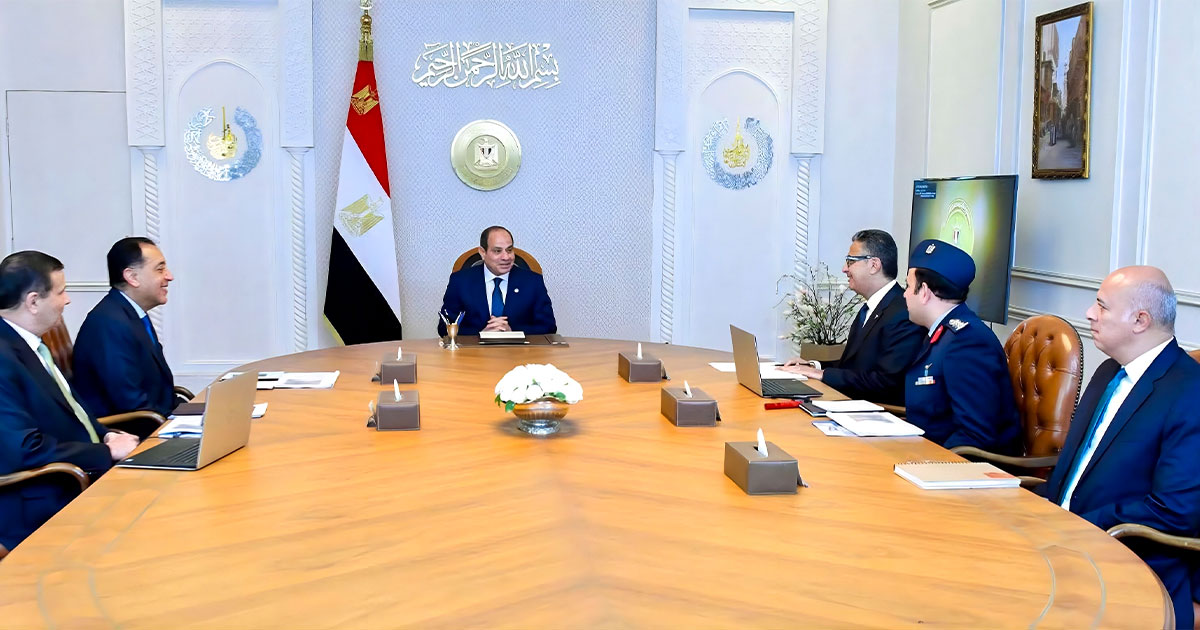

President Sisi directs to strengthen strategic stocks and control markets during the holy month of Ramadan
With the advent of the holy month of Ramadan, attention is turning to the state’s efforts to secure the needs of citizens and ensure market stability during a season that witnesses an increase in consumption rates. The file highlights the availability ofbasic commodities and price control as a top priority, in the context of keenness to reduce the burden on Egyptian families.
In this context, the recent presidential movements and meetings reflect a proactive approach based on close follow-up and full coordination between concerned parties, ensuring the sustainability of food security, enhancing social protection, and achieving a balance between the interests of the producer and the consumer throughout the holy month.
President Sisi’s meeting with a number of leaders
With this in mind, Mr. President Abdel Fattah El-Sisi met with a number of relevant ministers and officials, namely: Dr. Mostafa Madbouly, Prime Minister, Dr. Sherif Farouk, Minister of Supply and Internal Trade, Mr. Alaa El-Din Farouk, Minister of Agriculture and Land Reclamation, Colonel Dr. Bahaa El-Ghanem, Executive Director of Egypt’s Future Agency for Sustainable Development.
This is due to Mr. President’s keenness to be informed of the ongoing preparations to welcome the Holy Month, with a focus on the availability of goods of high quality and appropriate prices.

Exhibitions “Welcome Ramadan”
During the meeting, Mr. President reviewed the efforts to hold “Welcome Ramadan” exhibitions with discounts ranging between 15% and 25%, in addition to preparing and distributing 2.5 million Ramadan cartons and bags to support the most needy families, stressing the importance of daily field follow-up and confronting any monopolistic practices or overpricing.
It is the exhibition that was held on a total area of about 3,500 square meters distributed over two floors, and lasted ten days from February 10 to today, February 19; It gave citizens the opportunity to obtain basic goods of high quality and special discounts.
About 120 exhibitors from major companies and producers participated in the exhibition, in addition to a large pavilion dedicated to the Holding Company for Food Industries and its subsidiaries, which presented a wide range of basic and strategic commodities, meat and poultry products, and Ramadan commodities. Which contributed to increasing supply and achieving balance in the markets.
Control the market and avoid speculation
The President also directed that all state mechanisms be used to control the market and avoid speculation, especially in the white meat sector, to ease the burdens on citizens. His Excellency also agreed in a strategic step to launch the “Carry On” project to be a national project to unify the brand of food complexes and outlets to ensure efficient delivery of support to those who deserve it and regular work throughout the republic.
The “Carry On” project includes developing the external appearance of the outlets, and strengthening the digital system through cooperation with major telecommunications and technology companies, allowing electronic payment services and digital transformation, to provide an easier and more efficient purchasing experience, as well as supporting the state’s efforts to achieve financial inclusion and keep pace with the latest systems used in major retail chains.
Carry On outlets provide all types of food and consumer goods, in addition to meat, poultry, fish, vegetables, fruits, and detergents, a large portion of which are produced through 22 companies affiliated with the Holding Company for Food Industries, ensuring the availability of high-quality goods at competitive prices, while preserving the social role of the outlets affiliated with the Ministry.
The project represents an advanced model of modern catering outlets, and aims to enhance citizens’ confidence in the developed outlets, and achieve a qualitative shift in the method of displaying goods and providing services, in a way that keeps pace with market requirements and meets the needs of citizens.

Food Security System and Strategic Stocks
The meeting also discussed developments in the food security system in light of the current regional challenges, where the importance of preserving and enhancing strategic stocks through advance planning was emphasized, ensuring the continued availability of basic commodities.
In addition to the emphasis on continuing efforts to achieve self-sufficiency in agricultural commodities, livestock and poultry, while modernizing agricultural breeds in cooperation with the “Egypt Future” Agency, in addition to expanding the integration of modern technologies and digital transformation to raise the efficiency of system management and enhance its ability to respond to changes.
In the same context, Mr. President stressed the necessity of accelerating the activation of the commodity exchange in a way that achieves fair prices that protect the producer and consumer alike, and supports market stability, as well as supporting the state’s direction to transform Egypt into a regional logistical center for trade in strategic goods, in a way that enhances its economic position.
Mr. President concluded the meeting by directing full coordination between the Ministries of Supply and Agriculture and the “Egypt’s Future” Agency to ensure the sustainability of the national food security system.
In general, these presidential directives reflect a comprehensive vision for managing the food security file during the holy month of Ramadan, which is based on proactive planning, controlling markets, and enhancing the efficiency of supply chains, ensuring stable availability of basic commodities during the holy month, and maintaining a balance between market requirements and social protection considerations.
The Earth Guards FoundationThe state’s recent moves confirm that it is taking parallel steps that combine direct support for citizens, institutional development of the supply system, and strengthening Egypt’s regional position for trade in strategic goods, in a way that enhances national food security, keeps pace with current economic challenges, and supports the achievement of Sustainable Development Goals (SDGs). Overall.


