


Used food oil...a biofuel that drives your car forward
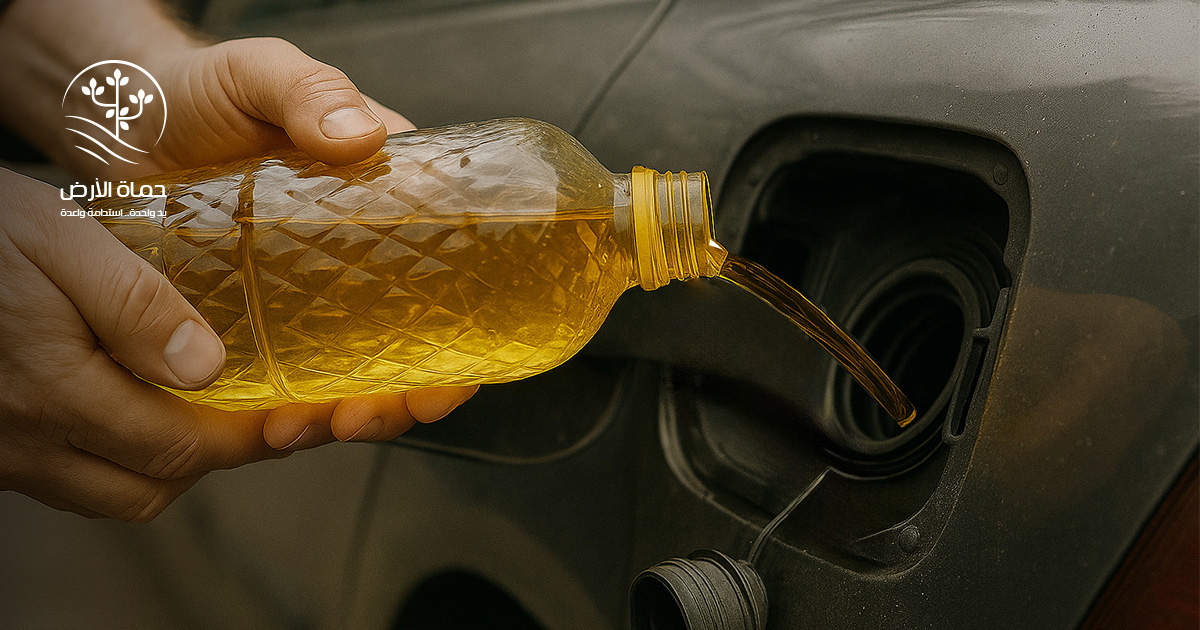

Used cooking oil...a biofuel that propels your car forward
In the context of the global search for sustainable alternatives to fossil fuels, solutions that seem simple at first glance have begun to emerge, such as using used cooking oil to power vehicles. Although the idea is simple, its feasibility has been proven in reality. In France, for example, it became an officially approved option by the French government, after the 2023 budget amendment stipulated the inclusion of used edible oil within the system of low-emission biofuels.
In this article,Protectors of the Earth highlights the amazing transformation journey of used food oil from waste thrown aside into a promising source of renewable energy, and how this humble household resource can be transformed into a real tool for achieving a number of Sustainable Development Goals (SDGs), including Goal (7) on clean energy and Goal (13) on climate action, within the framework of a vision Towards a more comprehensive low-emissions future.
Used cooking oil fuel
The story began in France’s restaurants and kitchens, where huge quantities of used oils accumulate daily. Instead of throwing them in drains or disposing of them as hazardous waste, a way was found to convert them into clean fuel, as spent food oils, which include edible, frying and cooking oils, have become collected from wide sectors including food industries, restaurants, and culinary professions, and recently from homes as well, where citizens have become since the beginning of 2024. They are required to transport their used oils to collection centers near them. Figures indicate that France produces about 90,000 tons of used cooking oil annually, a huge amount capable of fueling a fleet of clean vehicles if invested properly.
And here the question arises: How does this viscous liquid turn into fuel capable of moving cars and all vehicles? The answer lies in two advanced technologies. The first depends on producing a type of biodiesel through a process called “transesterification”, where the oils are filtered and industrially treated to turn into fatty methyl esters (FAME), and this material is used in the production of types of biofuels such as B30 and B100.

The letter (B) indicates “Biodiesel” (biofuel), while the number indicates the blending ratio with conventional diesel; For example, B30 consists of 30% biodiesel and 70% fossil diesel, and is a suitable option for trucks and heavy vehicles looking to reduce emissions without changing the engine. B100 is a 100% pure fuel from a biological source, and provides a significant reduction in carbon dioxide emissions and harmful particulates, but it sometimes requires modification in fuel systems or use in specially designed engines.
Although B100 is considered more sustainable, operating conditions, low temperatures, and compatibility problems with some rubber materials may affect its performance in some cases. This makes B30 a more flexible option for widespread commercial use, especially in countries seeking to gradually achieve emissions reduction targets.
The second technology is the production of HVO100 fuel, which is a high-quality fuel that is manufactured through hydrogenation technology, where the oils are purified from oxygen and sulfur, and then their molecules are reshaped to become completely similar to fossil diesel. This type of fuel can be used in any diesel vehicle without the need to modify anything in the engine, which is known as “Drop-in” technology.
Can used cooking oil be used as fuel?
The usability of biofuel depends on the type of engine and the European category (Euro) to which it belongs. These categories are indicators of permissible emission levels. They have been applied in Europe since 1992 with the aim of gradually reducing pollutants issued by vehicles. Euro 1 was the first regulatory step towards reducing emissions, but it was limited in terms of controlling fine particulate matter and nitrogen oxides.
The European emission standards have gradually evolved since the launch of the Euro 1 category, followed by the Euro 2, Euro 3 and Euro 4 categories, introducing successive technical improvements such as electronic injection systems, particulate filters, and EGR technologies. This contributed to increasing combustion efficiency and reducing harmful emissions. In 2009, the Euro 5 category became mandatory, and it represented a qualitative shift in environmental control systems. Which made their engines more compatible with biofuels.
Then came the Euro 6 category as the newest and most advanced stage; Its engines rely on high-precision technologies such as the SCR (selective catalytic reduction) system and advanced sensors to monitor emissions. This has increased their environmental efficiency, but it has made them more sensitive to the quality of fuel used, and thus less flexible than previous categories in using biofuels without technical adaptation.
Moving to practical use, B100 fuel (pure biodiesel) can operate directly in vehicles from Euro 1 to Euro 5 categories, without the need for major modification, while it requires technical or software adaptation in the case of Euro 6 engines; To ensure efficiency and protect sensitive components.
HVO100 fuel (hydrogenated biodiesel) is the easiest and most compatible option for all categories; It can be used even in pure form without any mechanical modification, due to its chemical properties being almost identical to fossil diesel, which makes it an ideal choice for the transition towards sustainable fuels without affecting vehicle performance or engine efficiency.
Environmental and economic benefits
The benefits do not stop at the operating limits only, but rather extend to deeper environmental and economic dimensions. In terms of performance, this fuel gives power similar to conventional diesel, maintains the same range, and shows high resistance to low temperatures. Making it a reliable choice even in harsh winter conditions. In terms of environmental impact, the widespread use of this fuel contributes to reducing carbon dioxide emissions by up to 60% with B100, and 90% with HVO100, and reduces fine air polluting particles by up to 30%.
However, the shift towards using used edible oil as fuel cannot occur randomly; Before any company or institution takes this step, it is necessary to conduct an accurate inventory of the vehicles in them, and ensure that the engines are suitable for using this type of fuel. It is also necessary to coordinate with the approved renewable energy provider to develop a detailed plan for the transformation, which includes cleaning the fuel tanks and filters, and verifying the readiness of the infrastructure for this type of energy.
On the other hand, challenges still exist, the most prominent of which is that the collection centers are still insufficient to cover the demand, in addition to the urgent need to educate citizens not to dispose of their used oils through household sinks, and to provide financial incentives to encourage them to hand over this precious material, which is an energy resource. Also, companies need legislative and financial support to be able to modify their vehicles, without incurring exorbitant additional costs.
Converting used cooking oil into biofuel highlights the fact that major environmental transformations sometimes stem from simple solutions; The path towards sustainable development passes - as youEarth Guards see - through rediscovering the value inherent in what we consider to be waste, and transforming it into a strategic resource that contributes to reducing emissions, supporting renewable energy, and promoting circular economy practices, which reshapes the relationship between humans and the environment on more conscious and responsible foundations.


