

Anak Krakatau volcano eruption disrupts aviation in Indonesia, with five volcanoes declaring a state of alert
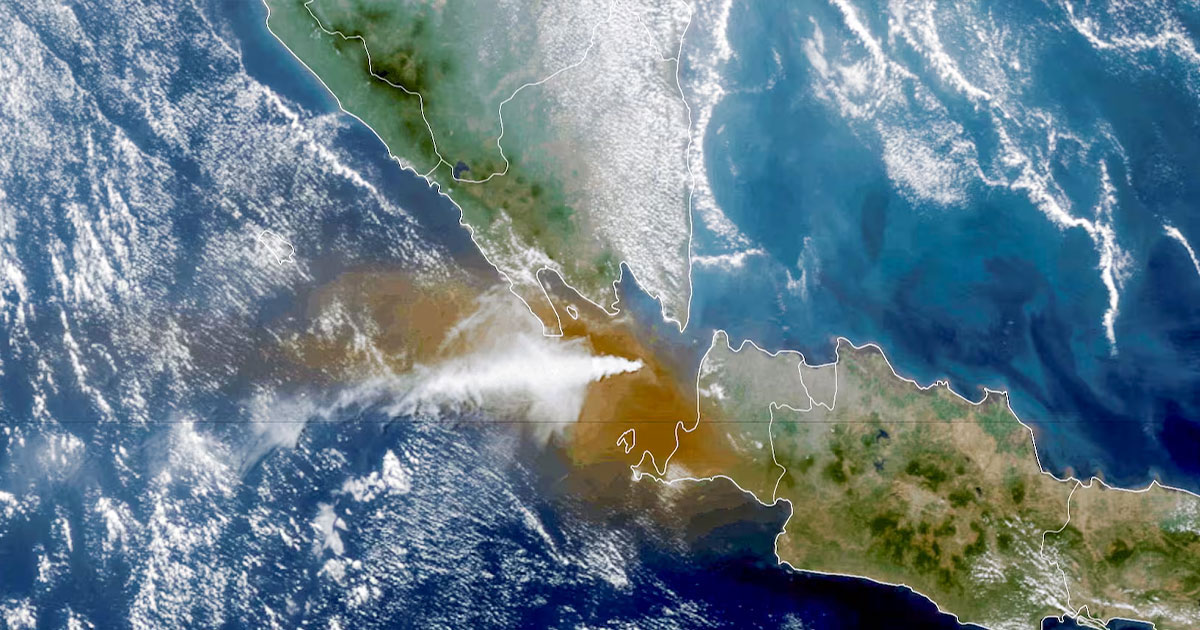

Anak Krakatau volcano eruption disrupts aviation in Indonesia, with five volcanoes declaring a state of alert
Volcanic eruption Anak Krakatau in Indonesia caused widespread disruption that extended from air traffic to schools and fishing, after clouds of volcanic ash spread over large areas and reached paths used by aircraft.
The volcano, located approximately halfway between the islands of Java and Sumatra, began erupting late on Friday, before the ash reached major airports on Sunday morning. As activity continued, eight airports suspended their air operations, while thousands of travelers found themselves facing canceled or postponed flights.
The magnitude of the impact reveals that the repercussions of volcanic eruptions may quickly extend to sectorsFar from the crater location, especially when winds carry ash to cities, flight paths, and populated areas.
Ash paralyzes air traffic
Volcanic ash is one of the most prominent dangers of a volcanic eruption, as it consists of fine particles of rocks, metals, and volcanic glass that are ejected into the atmosphere during the eruption, and the winds can carry them over long distances, which may lead to disruption of air traffic.
Flights at Soekarno-Hatta International Airport in Jakarta resulted in air operations being halted until 11:59 pm on Sunday, after volcanic ash was detected in the airspace of the region.
The Indonesian Ministry of Transport announced that the suspension of operations affected 964 flights within Jakarta’s main airport alone, while the total number of affected flights across the eight airports exceeded 1,500 flights, including about 170,000.traveler.
Other companies including Singapore Airlines, Malaysia Airlines, AirAsia and Lion Air Group also canceled flights to and from Jakarta for the rest of the day.
As the impact of the Anak Krakatau volcano eruption expanded, many passengers found themselves stranded inside the airport, including Ersi Laxita Rene, 55, who arrived in preparation for traveling to Surabaya before discovering that her flight had been cancelled.
As for Frenchman Eloin Tasset, 21 years old, he received a message stating that his flight to Manado had been delayed, while the timing of departure remained unclear.
The airport operator provided food and light drinks to passengers, in addition to buses transporting some of them to hotels in coordination with airline companies.

Daily life is disrupted
The effects of the ash extended to areas far from the airport, after its height reached about 6,000 meters on the Java side of the volcano, and about 15,000 meters on the Sumatra side, according to the Indonesian Meteorological Agency.
Several schools canceled their activities after students and residents suffered eye irritation as a result of the ash, while the governors of Lampung and Jakarta decided to implement distance education starting Monday to reduce health risks to students.
In other areas, groups of fishermen stopped their trips due to turbulent sea conditions and the spread of ash. Police also distributed masks to vehicle drivers in Cianjur, west of Java, located about 200 kilometers from Anak Krakatau.
It appears here that the impact of the Anak Krakatau volcano eruption has transformed from a local geological crisis into a disturbance that affects the details of daily life, from health and education.To transportation, work and economic activities.
As these impacts expand, understanding the nature of the damage caused by volcanic ash becomes essential to estimating the risks facing populations far from the volcano site itself.
Enhancing the preparedness of cities and communities for such disasters is linked to Goal 11 of the Sustainable Development Goals (SDGs), which calls for building societies more capable of confronting and responding to risks.

Washing the ashes with rain
In the face of the spread of ash, the Indonesian Disaster Management Agency, BNPB, announced its readiness to implement a weather modification operation, which may include cloud seeding, with the aim of increasing the chances of rainfall.
The authorities believe that strong rains can help wash the ash from the air and speed up its removal.One of the areas where daily life has been disrupted.
This step demonstrates the scale of the challenge that the eruption of the Anak Krakatau volcano may impose on cities near and far, especially when ash continues to linger in the atmosphere and affects air quality, visibility and movement.
The disaster management agency also urged residents to wear masks and eye protection, limit outdoor activities, cover water sources, and be careful while driving.
This intersects with the third goal of the Sustainable Development Goals (SDGs), which focuses on protecting health and reducing risks that threaten the safety of the population, as well as the eleventh goal related to the necessity of building cities and local communities that can confront severe environmental damage.
To learn about other effects that volcanic eruptions can extend far from their immediate surroundings,Read also: Volcanic eruptions are a hidden challenge threatening wind energy.
Semero also erupts
While authorities were dealing with the repercussions of the Anak Krakatau volcano eruption, Mount Semeru in eastern Java witnessed another volcanic eruption on Sunday, about 850 kilometers away.
Semeru volcano sent a column of ash reaching a height of one kilometer above the summit, while the Indonesian volcano monitoring agency warned of the dangers of hot clouds and lava flows.
The agency asked residents to stay at least 5 kilometers away from the crater, while warning that some volcanic dangers could extend up to 17 kilometers.
The coincidence of Semeru’s activity with the continuing unrest of Anak Krakatau reveals the extent of the volcanic activity it is dealing with.Indonesia frequently due to its geographical location.

Five volcanoes on alert
Authorities have placed five Indonesian volcanoes at warning level 3, the second highest level of the country’s volcanic alert system, and the list includes Anak Krakatau, Semeru, Merapi, Leotopi-Laki and Sinabung.
This detail requires careful reading. The presence of five volcanoes at warning level three reflects the high degree of monitoring and preparedness, while the source confirmed that the eruption of Anak Krakatau and Semeru volcanoes occurred specifically during Sunday.
Anak Krakatau has been at warning level three since July 2, while authorities continue to monitor activity developments in other volcanic areas.
And the ferry movement continuedThrough the Sunda Strait normally, ships are required to stay at least 3 kilometers from the Anak Krakatau crater and be careful of ash and volatile volcanic materials.
Indonesia above the Ring of Fire
The Indonesian archipelago is located on what is known as the “Ring of Fire” in the Pacific Ocean, an area that experiences frequent seismic and volcanic activity.
The historical background adds a sensitive dimension to the risks of the Anak Krakatau volcano eruption. In 2018, volcanic activity caused a tsunami that killed more than 400 people in Java and Sumatra.
The Disaster Management Agency confirmed in the current crisis that there is no imminent danger of a tsunami, while continuing to monitor the volcano and developments surrounding it.
Anak Krakatau returns, which meansHis name, “Son of Krakatau”, refers to the area occupied by the ancient volcano Krakatau. The new volcano began to appear about a century ago, after the old Krakatau destroyed itself in a series of huge eruptions in 1883, causing a tsunami that killed more than 36,000 people.
In conclusion, the eruption of the Anak Krakatau volcano reveals that natural disasters’ effects do not stop at the borders of their location, as volcanic ash is capable of disrupting aviation, education, fishing, and threatening the health of the population, which turns the geological danger into a crisis that affects various sectors of life.
From the perspective of Earth Defenders Foundation, the deeper lesson from Anak Krakatau concerns the ability of communities to reduce the distance between disaster and the restoration of normalcy. Every flight continues, every school is able to continue education, every serviceEssential and non-stop, it represents an aspect of resilience in the face of natural disasters.


