

Egyptian-Omani Forum discusses ways to boost industrial development between the two countries
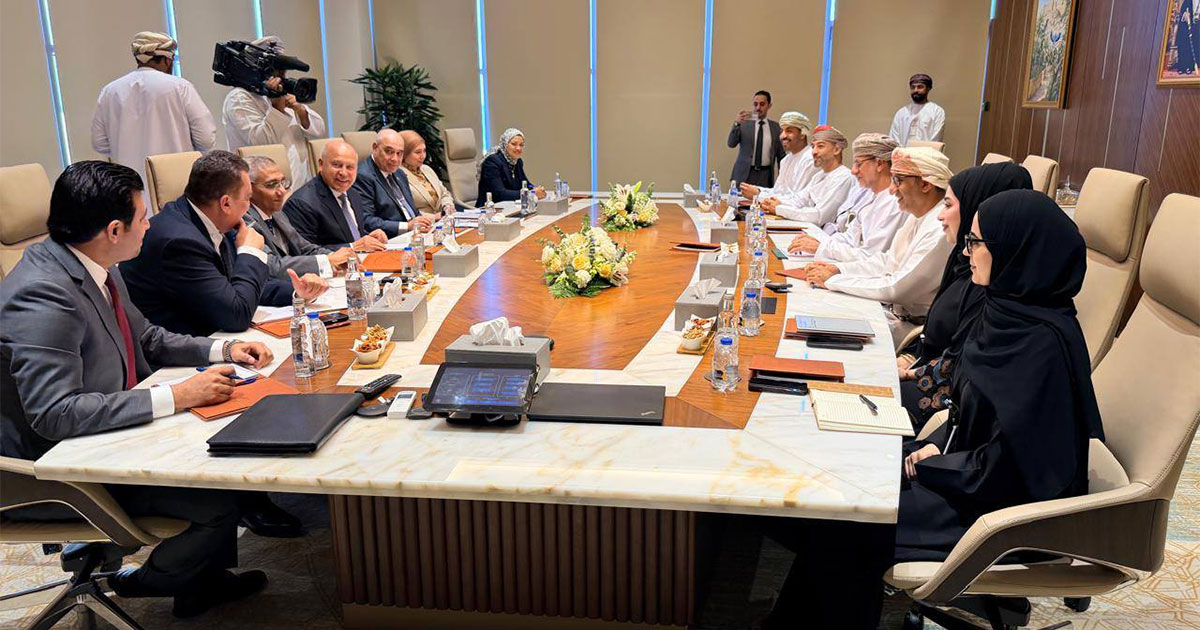

The Egyptian-Omani Forum discusses ways to enhance industrial development between the two countries
In a new step that reflects the depth of economic relations between Cairo and Muscat, and aims to support the paths ofsustainable industrial development, enhance Arab economic integration, and expand areas of joint cooperation to serve the goals of industrial growth, increase investments, and develop supply chains and logistics.
In this context, Egyptian-Omani cooperation reflects a strategic direction towards deepening local industrialization, creating job opportunities, and achieving real added value for the Egyptian and Omani economies, in a way that enhances regional integration and supports the stability of the national economies in the two countries, in addition to achieving the economic and social dimensions of the Sustainable Development Goals (SDGs).
Egyptian Business ForumOmani
Within the framework of the Ministry of Industry’s efforts to attract investments with the aim of deepening local manufacturing, meeting market needs, and reducing the import bill, in order to achieve comprehensive industrial development, Lieutenant General Eng. Kamel Al-Wazir, Deputy Prime Minister for Industrial Development and Minister of Industry and Transport met with Mr. Abdul Salam bin Muhammad Al-Murshidi, Chairman of the Oman Investment Authority, to discuss ways to enhance cooperation in concluding industrial partnerships and linking ports in the two countries.
This came during His Excellency’s current visit to the Omani capital, Muscat, to participate in the Egyptian-Omani Business Forum, during which the Minister affirmed the Egyptian side’s keenness to strengthen cooperation frameworks with the Omani Investment Authority, especially in the 28 promising and targeted industries identified by the Ministry of Industry to attract investments with the aim of deepening local manufacturing, meeting market needs, and reducing the import bill.
Promising investment opportunities for investors
The Minister invited serious Omani investors to pump new investments or expand into these promising and targeted industries in Egypt to benefit from the available advantages, which include the availability of energy, resources and primary raw materials, especially in the food and textile industries and production technologies.
In addition to the fact that Egypt has a large number of trained workers, especially in the ready-made clothing sector, and the great demand in the Egyptian market, which has a population of 110 million people, in addition to Egypt’s distinguished geographical location that guarantees the distribution of industrial products to all parts of the world, as well as the investment and tax facilities provided by the investment law, in addition to the trade agreements concluded between Egypt and various countries and economic blocs.
Activating the agreements concluded between EgyptAnd Oman
In the same context, Lieutenant General Engineer/ Kamel Al-Wazir pointed out the necessity of activating the agreements concluded between Egypt and Oman, especially the memorandum of cooperation concluded between the two countries in 2022 in the field of maritime transport and the memorandum of cooperation in the field of establishing and managing industrial zones, pointing to the necessity of strengthening joint maritime cooperation by linking the port of Sohar with the port of Sokhna for the passage of Egyptian imports from Asia through the port of Sohar before arriving in Egypt.
The Minister reviewed the successful experiences of Egyptian companies operating in the Sultanate of Oman in the field of construction and infrastructure, noting the possibility of enhancing their participation in Oman’s development and reconstruction plans by establishing a factory to produce construction supplies to meet the needs of contractors working in Oman, pointing out that Egypt is interested in water desalination projects and pharmaceutical industries.
For his part, Mr. Abdul Salam binMohammed Al Morshedi, Chairman of the Oman Investment Authority. The Authority was keen to strengthen cooperation with the Egyptian side in the field of pharmaceutical and food industries, real estate, construction and infrastructure. He welcomed the Egyptian side’s proposal regarding linking the Port of Sohar to the Port of Sokhna.
The role of transportation sectors in achieving industrial development
To activate industrial cooperation, the role of developing the transportation sector comes as it is a key factor in linking investments to industrial zones and ports, thus facilitating exports and imports, increasing the competitiveness of Egyptian products in global markets, and thus enhancing the country’s industrial development.

Railway
In this context, the Minister reviewed the investment opportunities available in a number of transportation sectors in Egypt, including the railway sector.(Operation, maintenance and exploitation of the Abu Tartur/Qena line, 350 km long, with the participation of the private sector. The development of these networks contributes to facilitating the transportation of raw materials and industrial goods between production areas and ports, which reduces transportation costs and increases the efficiency of local industry, and thus supports economic development.
Sea Transportation
In addition to the maritime transport sector in Egyptian ports, including investment opportunities in Alexandria Port and Damietta Port, which include constructing the superstructure, managing and operating 4 specialized stations in the Middle Port, in addition to establishing, managing and operating the first logistical zone in the Metras Basin – the second logistical zone, creating the superstructure, managing and operating the multi-purpose terminal “Long Live Egypt 2”, and constructing the superstructure and managing and operating a terminal for grains and grains. Accordingly, enhancing the competitiveness of Egyptian products in global markets,Enhancing export capacity and supporting local industrial growth.
Strengthening the Omani presence in the Egyptian economy
It is worth noting that Egypt has a large number of industrial zones, including industrial zones in new cities such as 10th of Ramadan and Burj Al Arab, as well as industrial zones established in the governorates near the sources of materials and raw materials necessary for manufacturing. The number of industrial zones in Egypt has reached 155 zones.
In addition to specialized industrial clusters or zones such as the Leather City in Rubiki and the Furniture City in Damietta, Egypt is keen to increase the Omani presence in the Egyptian industry by establishing a complete industrial zone to establish integrated industries or private Omani industries similar to the Chinese TEDA region in Egypt. These zones contribute significantly to supporting national partnerships and reducing dependence on imports, which has a positive impact onComprehensive industrial development.
The minister added that an industrial logistics zone is being established near the high-speed train station in the Administrative Capital to store, fill and package goods to meet needs, in addition to inaugurating a new station in Dabaa to produce clean nuclear energy to compensate for the lack of surplus gas and oil globally.
In turn, Dr. Ali bin Masoud Al-Sunaidi, CEO of the General Authority for Special Economic Zones and Free Zones, stressed the authority’s keenness to establish complementary industries between the two countries and exploit the capabilities and resources that Oman and Egypt enjoy to meet the needs of local markets and export abroad.
From the above it is clear that developing transportation infrastructure, expanding industrial zones, and attracting joint investments between Egypt and Oman represent an integrated strategy to support sustainable industrial development. The railwayModern ports link production areas and ports, which reduces costs and increases industry efficiency, while Omani investments contribute to establishing joint industries, deepening local manufacturing, and reducing dependence on imports.
Therefore, this cooperation constitutes a practical model for regional economic integration, while providing real job opportunities and increasing the added value of the Egyptian and Omani economies. It also reflects a balanced approach between economic growth and resource protection, in a way that serves the goals of comprehensive and future industrial development.
Hence you seeThe Earth Guards Foundationthat this cooperation plays a pivotal role in achieving the goals of sustainable development socially and economically through decent work, economic growth, and enhancing innovation and infrastructure.


