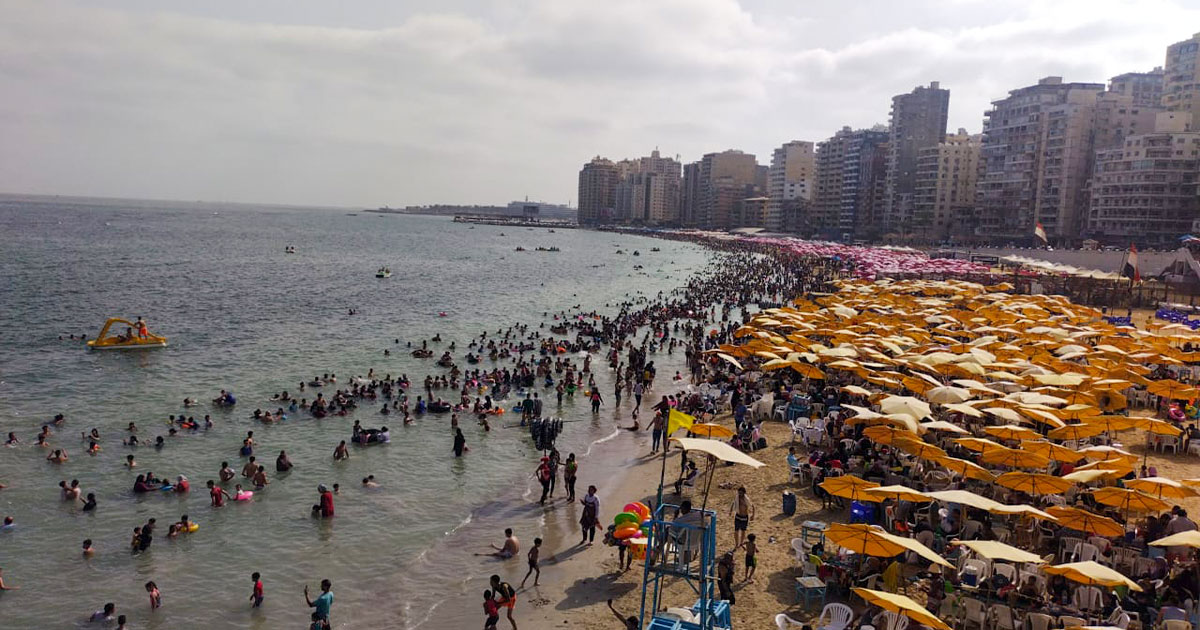
Beaches closed and waves rising.. How does Egypt face climate change on the coasts?
Beach closure procedures continued in a number of coastal governorates, in conjunction with turbulent sea conditions, high waves, and active winds, in a precautionary step aimed at protecting vacationers from the dangers of rip currents and reducing the possibility of drowning accidents, while the competent authorities continue to follow developments in weather conditions and raise the degree of preparedness.
Closing beaches is one of the measures to manage risks associated with weather fluctuations, at a time when the importance of enhancing the readiness of coastal areas to confront extreme climate events through early warning systems and raising the efficiency of response and community awareness is increasing. These measures also reflect a trend towards supporting efforts to adapt to the effects of climate change, which contributes to…Protecting lives and enhancing the ability of communities to confront increasing risks.
The coasts of the Mediterranean Sea were affected by a depression accompanied by noticeable activity of northwesterly winds, which led to disturbances in sea movement and the rise of waves along a number of open beaches, where their height exceeded two and a half meters in some areas, which caused an increase in the danger of water currents and made swimming and marine activities unsafe.
Dr. Ali Qutb, professor of climate at Zagazig University, explained that the rise of waves during this period is linked to the interaction of a group of climate factors, including temperatures, atmospheric pressure, wind speed, humidity, and solar radiation, noting that the difference in heating rates between land and bodies of water leads to changes in atmospheric pressure.It is reflected in the movement and speed of the wind.
He added that the sea surface retains heat for a longer period compared to land, and as temperatures begin to drop, it releases stored thermal energy, which leads to thermal and pressure differences that contribute to increased wind activity, sea state disturbance, and rising waves.
These scientific explanations confirm the importance of developing monitoring and follow-up tools for weather phenomena, in a way that enhances the ability of coastal communities to adapt to climate fluctuations and take appropriate measures at the right time, which is consistent with the thirteenth goal of the Sustainable Development Goals (SDGs) on climate action and confronting the effects of climate change.
Tourism
Coastal Governorate Procedures
The turbulent sea and high waves prompted actionA number of coastal governorates took precautionary measures to protect vacationers, including closing some beaches, raising warning flags, and prohibiting swimming in areas experiencing unsafe marine conditions.
In Marsa Matrouh, the local authorities continued to implement the decision to close open beaches for the second day in a row, while warning red flags continued to be raised, while some safe beaches received visitors normally under the supervision of rescue teams.
The beaches in Port Said Governorate continued to be closed for the second day, after wind speeds reached between 30 and 40 kilometers per hour and waves rose to two meters or more, with strong rip currents posing a danger to vacationers. The governorate also raised the level of preparedness and enhanced the deployment of lifeguards, watchtowers and marine rescue equipment.
Strengthening the role of rescue teams
As for Alexandria, the Central Administration for Tourism and Resorts raised red flags on a number of beaches, completely prohibiting swimming, while yellow flags were raised on other beaches, allowing people to go into the sea with caution in accordance with the instructions of lifeguards.
The effects of weather fluctuations extended to Ras al-Bar in Damietta Governorate. The local authorities warned of the height of the waves, which ranged between 1.2 and 1.9 metres, asking vacationers not to go into the sea when the waves become strong, not to leave children in the water without accompaniment, and to adhere to the instructions of the rescue teams.
In Gamasa, Dakahlia Governorate, the authorities warned of the sea falling after the waves rose to about 3 metres, stressing the need to avoid practicing any water activities until weather conditions stabilize.
These measures reflect the importance of strengthening prevention and safety measuresPublic policy to reduce the risks associated with sea turbulence, which contributes to protecting the lives of citizens and preserving their health and well-being, in addition to increasing the ability of coastal areas to deal with emergency risks and enhancing the readiness of local communities to face the challenges associated with natural phenomena. This is in line with the third goal of the Sustainable Development Goals (SDGs), which concerns good health and well-being, and the eleventh goal, which concerns building sustainable cities and communities that are resilient to urgent climate changes.
Sea turbulence affects navigation movement
The repercussions of the sea turbulence have extended to the ports, as the Al-Arish Sea Port administration announced the closure of the port to the entry and exit of ships due to bad weather conditions and high waves.
The Northern Governorate also warnedSinai citizens from swimming on the beaches of the city of Al-Arish, with warning flags raised on lifeguard towers, in light of the continued effects of instability on the coastal areas.
In conclusion, dealing with coastal disturbances has become part of a broader system to adapt to changing risks and enhance the resilience of communities. The high waves and turbulent sea movement reveal the importance of integration between the accuracy of scientific monitoring, the speed of taking preventive measures, and raising citizens’ awareness, in a way that reduces losses and preserves the safety of lives.
In turn, The Earth Guards Foundation confirms that protecting coastal areas represents one of the important aspects of the path of sustainable development, as the safety of communities is linked to their ability to understand natural risks and prepare for them before they turn into crises. Hence the importance of supportEarly warning systems, enhancing the readiness of the institutional structure, and establishing a culture of compliance with public safety guidelines.