

Egypt expands its international presence.. BRICS is a platform for major economic partnerships and African integration

Egypt expands its international presence.. BRICS platform for major economic partnerships and African integration
The successive transformations in the global economy and the reshaping of the balance of international cooperation require countries to expand their tools to build relationships more capable of supporting development and protecting national interests. In this context, economic partnerships are gaining increasing importance as an area for exchanging experiences and investments, opening new markets, enhancing trade, and building projects capable of creating sustainable value for economies and societies.
With the expansion of the challenges related to energy, food, supply chains and technology, countries are moving to diversify their circles of cooperation and develop frameworks for joint action to keep pace with international changes and give them a wider space for movement and influence. The importance of this trend is particularly evidentIn light of the growing role of international blocs and emerging markets, and the increasing need for cooperation based on mutual interests, supporting economic integration, and opening new horizons towards shaping the future of comprehensive global growth.
President Sisi participates in the BRICS summit
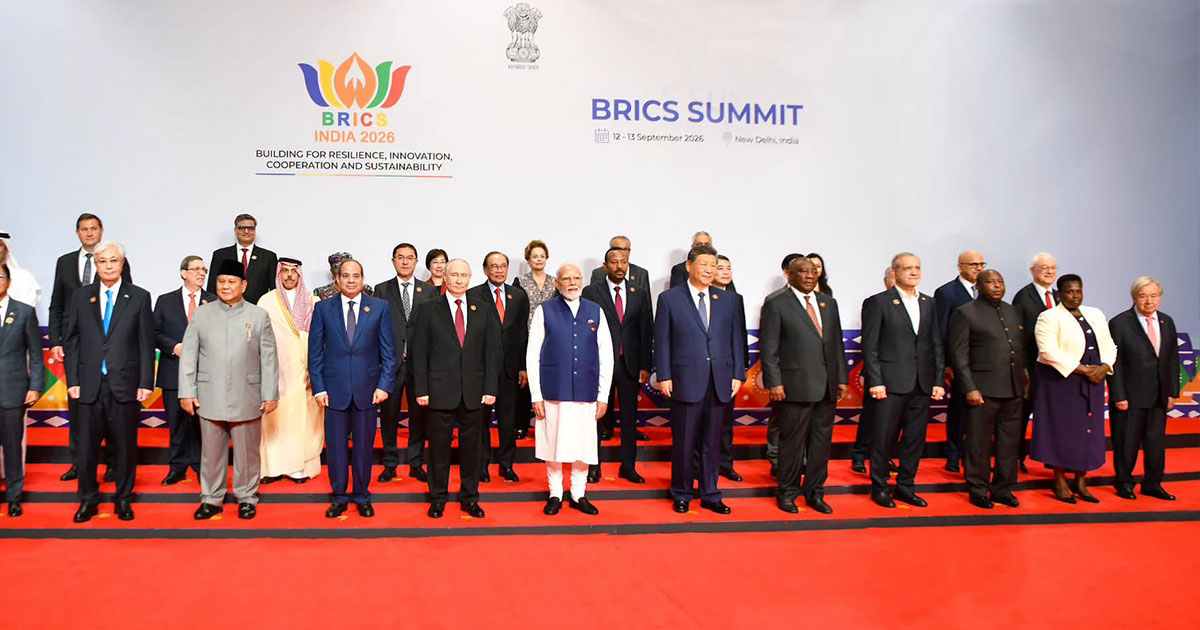
On this basis, President Abdel Fattah El-Sisi participated in the BRICS Heads of State and Government Summit, held in the Indian capital New Delhi.

Ambassador Mohamed El-Shenawy, the official spokesman for the Presidency of the Republic, stated that the Prime Minister of India, Narendra Modi, received Mr. President at the “Bharat Mandapam” Convention Center, the venue for the summit, where a souvenir photo was taken that brought the two leaders together. This was followed by the participation of Mr. President in the closed session of heads of state delegationsMembers, which was entitled: “Comprehensive global governance and strengthening multilateral action.” The session witnessed the adoption of the “New Delhi Declaration issued by the leaders of the BRICS” as a final document of the summit, in addition to the launch of a commemorative postage stamp on the occasion of the twentieth anniversary of the idea of establishing the group.

Egypt pushes towards strengthening economic partnerships
And in the beginning; Mr. President stressed the importance of the BRICS meeting, which allows the exchange of visions on ways to enhance joint action and translate it into executive and practical tools that respond to the development and economic challenges facing countries at a time when the world is witnessing intertwined crises, the repercussions of which extend to security, energy, trade and supply chains.

In this context; Acquires poolBRICS is of particular importance, as it is a framework that brings together major countries in the Global South, capable of playing a greater role in enhancing (South-South) cooperation to confront current challenges.
In this regard; Mr. President expressed Egypt’s appreciation for the tireless efforts made by the Indian Presidency of the BRICS to translate the Presidency’s priorities into practical projects and activities on various cooperation paths.
This trend reflects the link between economic cooperation and the goals of the eighth goal: decent work and economic growth, by expanding areas of investment and trade and supporting developing economies, in addition to the seventeenth goal: establishing partnerships to achieve the goals, which places international cooperation at the heart of supporting development paths.
No development without security
The current developments in the Middle East, and their negative effects on…The global economy, trade, energy and supply chains confirm the close interrelation between security and development. Egypt – by virtue of its strategic location and its pivotal role in the global trade movement – realizes the importance of maintaining the stability and freedom of international navigation.
Hence; We must continue to build on what has been achieved within the BRICS framework, and employ the capabilities of our countries, by establishing specific projects and programs that support Sustainable Development Goals (SDGs), diversify sources of growth, enhance productivity, and reduce development and technological gaps.
Economic partnerships and support for food and energy security
President Sisi has stressed that enhancing food security, water security, and energy security is of particular importance, in light of what developing countries are facing, of high food and energy costs, and supply chain disruptions, which confirms the importance of adopting an integrated approach, taking into accountClose interconnection between them.
Mr. President indicated that Egypt will continue to work on developing a center for grains and logistics, in a way that supports food security and enhances Egypt’s position. As a regional center for trade and logistics.
And in parallel; Egypt stresses the importance of strengthening cooperation in the field of climate change, facilitating developing countries’ access to climate finance, and supporting a fair and realistic transition towards low-emission economies, taking into account different circumstances, burdens, and development needs.
This path is linked to the objectives of the second goal: eradicating hunger, the sixth goal: clean water and hygiene, the seventh goal: clean and affordable energy, and the thirteenth goal: climate action, by supporting food and water security, enhancing energy security, and confronting the repercussions of climate change.
Side meetings on the sidelines of the BRICS summit
On the sidelines of the summit, Egypt continued its move on several tracks to strengthen its international relations and expand areas of cooperation, in parallel with consultations on a number of regional challenges and tensions. In this context, President Abdel Fattah El-Sisi met with UN Secretary-General Antonio Guterres, where the two sides discussed ways to enhance cooperation between Egypt and the United Nations, and support efforts to reform the UN work system, in addition to a number of current regional and international issues, in light of the Egyptian role in supporting dialogue, peace and stability.

The Secretary-General expressed his thanks to Mr. President for the Egyptian support he received during his two terms in office since 2017, praising the pioneering role played by Egypt, under the leadership of Mr. President, in promoting the values of dialogue, peace and coexistence, and supporting security.And stability in the Middle East and Africa, as well as its humanitarian efforts and fruitful cooperation with United Nations agencies and international organizations.
The President’s meetings on the sidelines of the summit also included discussions with a number of leaders, which dealt with ways to develop bilateral relations, enhance economic and investment cooperation, and support regional and continental integration, as well as consultation on international developments and regional tensions. These meetings reflected the expansion of the circles of Egyptian action, and Cairo’s keenness to employ its international relations to support common interests, strengthen economic partnerships, and advance stability and integration efforts at the regional and international levels.
Egypt and South Africa push towards economic integration
In this context, President Abdel Fattah El-Sisi and President Cyril Ramaphosa stressed the importance of improving Egyptian-South relations.Africa to the level of strategic partnership, while working to develop mechanisms for economic and trade cooperation and increasing mutual investments. The meeting also discussed ways to enhance connectivity between the countries of the continent by supporting trade and transport corridors between North and South Africa, which contributes to stimulating trade movement and advancing continental economic integration efforts.
The discussions witnessed consensus on the importance of unifying African positions and enhancing joint action across continental and international frameworks, in addition to supporting security, stability, and settling disputes by peaceful means. President Ramaphosa praised the active Egyptian role at the African and international levels, praising the ongoing coordination and consultation witnessed in relations between the two countries, while the two sides stressed the importance of respecting international law and the rights of states, in a way that supports the continent’s interests and enhances its ability to deal with common challenges.
PartnershipStrategy and major projects
In this context, President Abdel Fattah El-Sisi and his Russian counterpart, Vladimir Putin, discussed ways to further develop Egyptian-Russian relations, with a focus on major projects that represent basic pillars of the partnership between the two countries, most notably the Dabaa Nuclear Power Plant project and the Russian industrial zone in the Suez Canal Economic Zone. The discussions also dealt with expanding areas of cooperation in energy, trade, investment, food security and tourism, with the Egyptian side affirming its keenness to overcome any challenges that may hinder the implementation of joint projects, and to continue working according to the agreed upon timetables and specifications.

The cooperation extended to supporting the Russian tourism movement through the accreditation of Alexandria and El Alamein international airports, allowing the expansion of the scope of tourist destinations for…Russian visitors, at a time when President Putin affirmed his country’s commitment to continuing to support comprehensive development efforts in Egypt and implementing major projects. The meeting also witnessed an exchange of visions on a number of regional and international challenges, with an emphasis on the importance of reducing escalation, supporting political paths, and respecting the sovereignty, unity, and integrity of states’ institutions.
Thus, Egypt’s strong presence in the BRICS group embodies a clear trend towards strengthening its regional role and expanding its network of relations with member states, allowing it a broader space to discuss paths of economic, trade and investment cooperation, and deal with energy, food, finance and infrastructure files within a multilateral framework.
This participation gains its specificity from Egypt’s ability to combine its African location with its role in the international trade movement, making it a party capable of linking economic and geographical circles.Multiple, and take advantage of the transformations taking place in the global economy to expand opportunities for cooperation and build partnerships more closely related to development needs.
The numerous meetings and discussions held by President Sisi on the sidelines of the summit reveal that the Egyptian move goes beyond participation in collective frameworks to building parallel paths of cooperation with international powers and African countries, in a way that supports Egyptian interests and opens the way for projects, investments, and partnerships that can be built upon.


